
Beautiful Plants For Your Interior
Beautiful Plants For Your Interior
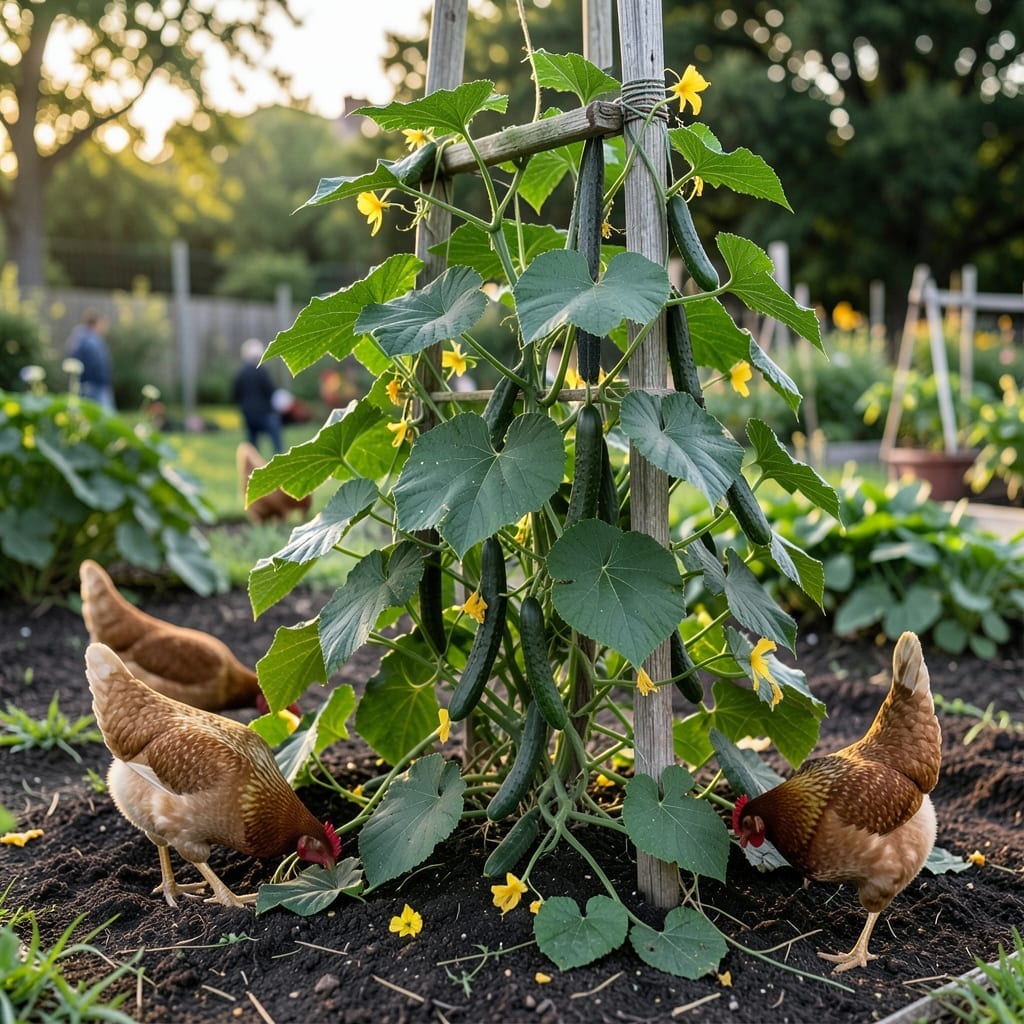
Chickens can safely eat cucumber leaves in moderation as they are non-toxic and provide fiber, but avoid wilted or moldy leaves which may cause digestive upset.
I’ve found these leaves offer a nice fiber boost that supports digestion, but their tough texture means chickens often prefer the actual cucumber fruit. 🔥 Fresh, vibrant leaves are ideal, while anything discolored or slimy should be discarded immediately to prevent issues.
What many backyard keepers overlook is that cucumber plants contain cucurbitacins, compounds that can be bitter but aren’t harmful in small amounts. ✨
💡 In This Article
Cucumber leaves contain 90% water and a notable 2-3% fiber content, which aids chicken digestion by promoting gut motility. Their nutritional profile includes small amounts of vitamin K, calcium, and magnesium—all beneficial in controlled portions. Chickens process plant cellulose more efficiently than humans due to their specialized gizzard, which grinds fibrous materials into digestible components.
The key safety factor lies in the cucurbitacin compounds present in cucumber plants. While these can taste bitter to humans, chickens tolerate them well at typical garden concentrations. 🔥 Fresh leaves contain minimal cucurbitacins (0.01-0.1%), but stressed plants may produce higher levels.
The real danger comes from wilted leaves, where mold and bacteria can develop within 24-48 hours of wilting.
What makes cucumber leaves particularly suitable is their softness compared to other garden greens. Young leaves are tender enough for chickens to peck and consume directly, while older leaves may require chopping. The fibrous strands in mature leaves can become stringy, potentially causing crop impaction if consumed in excess. ✨
Chickens’ digestive systems handle these leaves differently because of their 105-115°F body temperature, which helps break down plant materials faster than in mammals. Their short digestive tract (processing food in 2-4 hours) means they extract nutrients quickly but also pass waste frequently, reducing the risk of toxicity buildup.
Monitor your flock’s reaction when introducing cucumber leaves. Healthy chickens will show interest by pecking at fresh leaves, while disinterest or avoidance may indicate the leaves have become too bitter or tough. Always introduce new greens gradually, starting with small handfuls per 5-6 birds to observe any adverse effects. 💫
Only if they’re wilted or moldy, which can develop within 24-48 hours. Fresh leaves are safe, but stressed plants may have higher bitter compounds. Always inspect before feeding.
Limit to 10-20% of their diet, 2-3 times per week. Rotate with other greens to ensure balanced nutrition. Too much fiber can cause crop impaction.
Young, tender leaves can be left whole. Older, stringy leaves should be chopped into bite-sized pieces to prevent choking and aid digestion.
If they peck once and ignore them, the leaves may be too bitter or tough. Healthy chickens will eagerly consume fresh, tender leaves.