
Beautiful Plants For Your Interior
Beautiful Plants For Your Interior
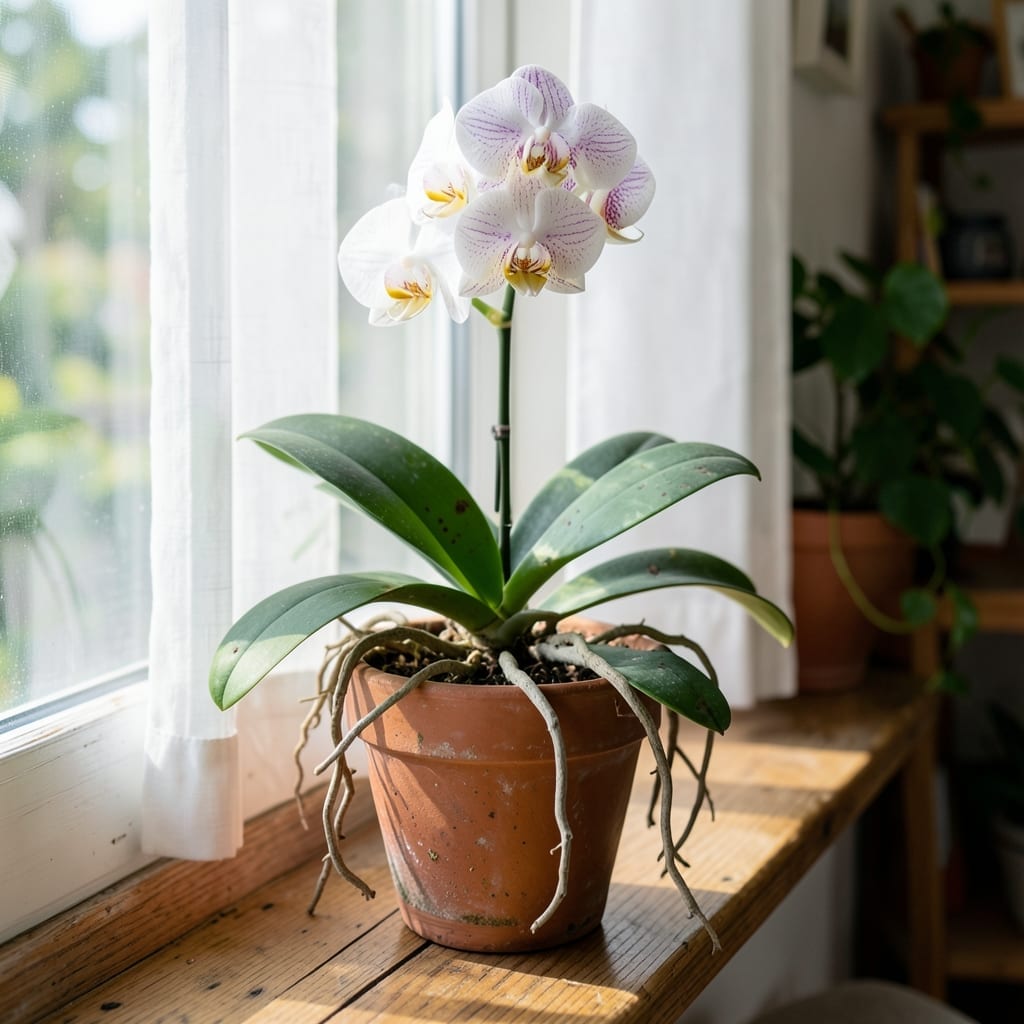
Those brown spots on your orchid leaves aren’t random—they’re messages. I learned this the hard way after losing two plants to what I thought was just “bad luck.”
Sunburn shows up as dry, crispy patches on leaves exposed to direct light. Fungal spots, meanwhile, appear as soft, dark splotches with yellow halos, often from too much moisture sitting on the foliage.
Here’s the thing—most cases are 100% preventable. Adjust your watering schedule, improve air circulation, and move plants away from harsh sunlight. Your orchids will thank you with healthy, spot-free growth.
Diagnosing early saves your plant. Check leaves weekly, especially after changing care routines or locations.
Brown spots on orchid leaves can be alarming, but understanding the cause is the first step to fixing it. Here are the most common culprits behind this issue:
Orchids thrive in bright, indirect light. When exposed to direct sunlight, especially intense midday rays, their leaves can suffer from photooxidative damage. This occurs because the chlorophyll in the leaves absorbs more light energy than it can process, leading to the production of reactive oxygen species (ROS). These ROS break down cell structures, resulting in brown or yellow patches, often with a scorched appearance. South- or west-facing windows are common hotspots for this issue.
Fungi like Phyllosticta or Colletotrichum thrive in humid, poorly ventilated environments. They infect orchid leaves through microscopic wounds or stomata (pores), leading to dark brown or black spots with defined edges. Overwatering, high humidity (above 70%), or splashing water on leaves creates ideal conditions for spores to germinate and spread. Left untreated, these spots may enlarge, merge, or develop yellow halos.
Orchids are epiphytes, meaning they hate soggy roots. Overwatering or poor drainage suffocates the roots, preventing oxygen uptake and promoting bacterial or fungal root rot. As roots decay, they fail to supply water and nutrients to the leaves, causing brown, mushy spots—often starting at the leaf base. This is compounded by edema (cell rupture) when roots absorb water faster than the plant can transpire it.
Sudden temperature swings—especially cold drafts below 50°F (10°C) or heat above 90°F (32°C)—disrupt orchid metabolism. Cold stress causes cell membrane damage, leading to necrotic (dead) brown patches. Heat stress, on the other hand, accelerates water loss, resulting in dry, crispy margins or spots. Orchids near air conditioners, heaters, or drafty windows are particularly vulnerable.
Excess salts from over-fertilizing (especially with high nitrogen or potassium) can cause leaf burn. As salts accumulate in the growing medium, they draw water out of the roots via osmosis, leading to dehydration and brown tips or spots. Conversely, deficiencies in calcium or magnesium may cause interveinal browning as essential cellular processes fail.
Addressing brown spots on orchid leaves starts with identifying the cause. Below are targeted solutions for the most common issues, paired with prevention tips to keep your orchid thriving.
If the spots are dry, yellowish-brown, and appear on leaves exposed to direct sunlight, your orchid is likely sunburned. Relocate it to a spot with bright, indirect light—east or north-facing windows are ideal. If natural light is too intense, use a sheer curtain to diffuse it.
Prevention tip: 💡 Rotate your orchid weekly to ensure even light exposure and prevent localized burning.
For soft, dark brown spots with yellow halos or a slimy texture, fungal or bacterial infections are the culprit. Remove affected leaves with sterilized scissors, then apply a copper-based fungicide or a diluted hydrogen peroxide solution (1 part 3% peroxide to 4 parts water) to the plant. Isolate the orchid to prevent spreading.
Prevention tip: ✨ Improve air circulation with a small fan on low and avoid overhead watering to keep leaves dry.
Mushy, dark brown spots often signal root rot from overwatering. Stop watering immediately, remove the orchid from its pot, and trim any black, soggy roots with sterilized tools. Repot in fresh, well-draining bark mix. Water only when the top inch of the medium is dry.
Prevention tip: 🌡️ Use a moisture meter or the “finger test” to check soil dryness before watering.
Brown tips or edges may indicate a lack of calcium or potassium. Switch to a balanced orchid fertilizer (20-20-20) and apply it at half-strength every 2 weeks during active growth. Flush the potting mix with water monthly to prevent salt buildup.
Prevention tip: 🎯 Test your water; if it’s hard (high in minerals), use distilled or rainwater to avoid nutrient imbalances.
Sunburn spots are dry and crispy with a scorched look, while fungal spots are soft with yellow halos. Check where they appear—sunburn hits leaves in direct light, fungus spreads in humid areas.
Yes, if the crown and roots are still healthy. Remove damaged leaves, treat the cause, and adjust care. New growth will replace affected leaves over 4-6 weeks.
Avoid misting if fungus is suspected—it spreads spores. For sunburn, misting won’t help the damage but won’t harm either. Focus on improving air circulation instead.
Only if the cause is root rot from overwatering. Repot in fresh bark mix and trim dead roots. For sunburn or fungus, repotting alone won’t solve the issue.