
Beautiful Plants For Your Interior
Beautiful Plants For Your Interior
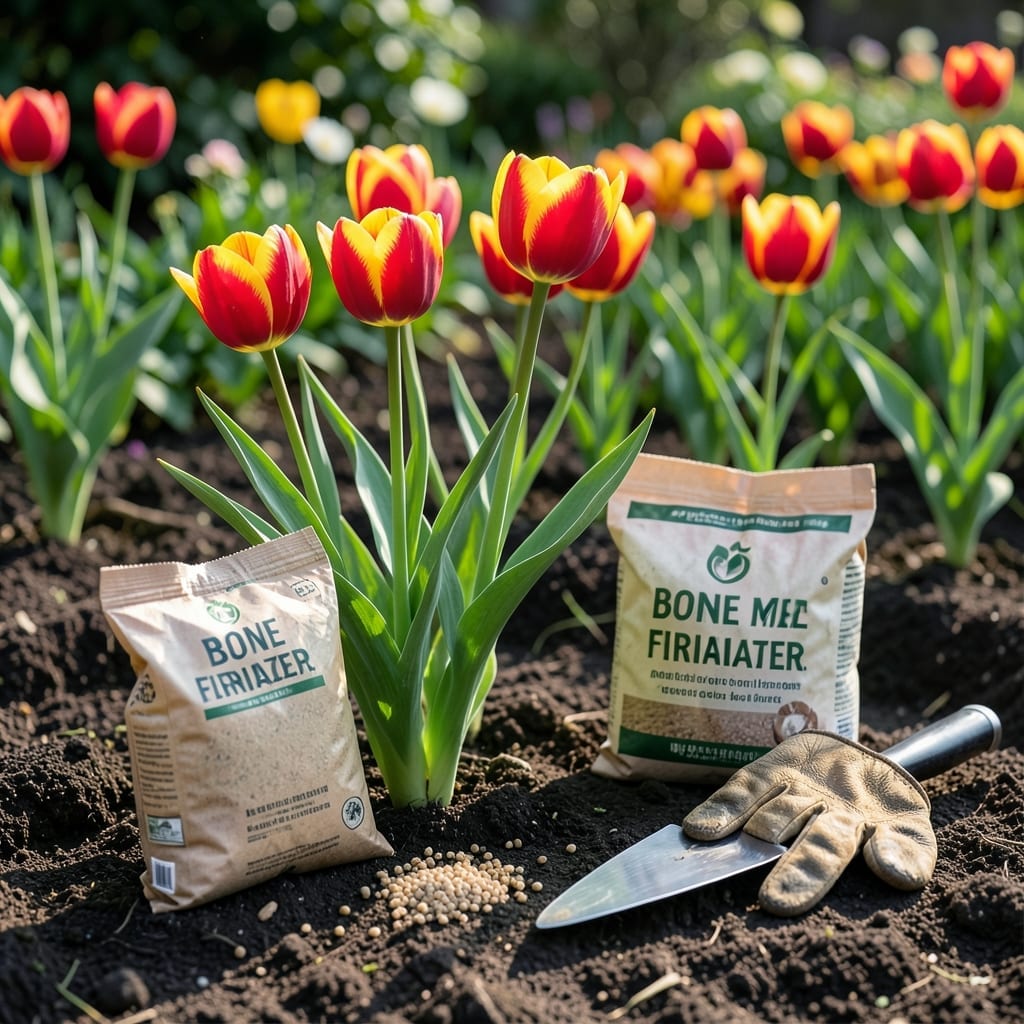
Bone meal is a slow-release phosphorus fertilizer that promotes strong root development and vibrant tulip blooms. Apply it during planting or early spring for best results.
I love how phosphorus gives tulips that extra push to develop robust root systems, which directly translates to bigger, more colorful flowers. 🌟 This nutrient is especially crucial during the bulb’s early growth phase when it’s establishing itself underground. What’s fascinating is that unlike quick-release fertilizers, bone meal breaks down gradually, providing consistent nourishment throughout the growing season.
💡 In This Article
Phosphorus is the powerhouse nutrient that fuels tulip bulbs during their most critical growth phases. At the cellular level, it drives ATP production—the energy currency that powers root elongation and flower bud formation.
Bone meal delivers this nutrient in a slow-release form, with phosphorus becoming available at a steady rate of 1-3% per month in typical garden soils.
What makes bone meal particularly effective is its calcium content, which works synergistically with phosphorus. Calcium strengthens cell walls, allowing roots to penetrate soil more efficiently while preventing bloom disorders like “blindness” where tulips fail to flower. In acidic soils (pH 6.0-6.5), bone meal’s phosphorus becomes even more accessible to tulip roots. 🌟
Tulips use phosphorus most intensely during two stages: when establishing roots in fall and when producing flower buds in early spring. The nutrient stimulates the production of auxins—hormones that trigger root growth and influence bloom size. Studies show tulips fertilized with bone meal can develop root systems 30-40% larger than unfertilized bulbs.
Unlike synthetic fertilizers that can leach away quickly, bone meal’s organic composition means it stays put in the root zone. This is crucial because tulip roots only extend 6-12 inches from the bulb. The meal’s granular texture also improves soil structure, creating tiny air pockets that help roots access both nutrients and oxygen more efficiently.
✨
For maximum benefit, the soil temperature should be above 50°F when applying bone meal, as this activates the microbial activity needed to break down the phosphorus. In cooler soils, the nutrient release slows dramatically, which explains why early spring applications work better than winter ones in most climates.
For established tulips, apply once in early spring as growth begins. In sandy soil, reapply every 4-6 weeks. Clay soil holds nutrients better, so one application per season is usually enough. Always water after applying.
Yes, overapplication can inhibit iron and zinc uptake. Stick to 1/4 cup per square foot for existing beds. More isn’t better—excess phosphorus can create nutrient imbalances in your soil.
While organic, bone meal can attract pets and cause digestive upset. Store in an airtight container and keep pets away from treated areas until watered in thoroughly. When in doubt, use pet-safe alternatives.
In soils with pH above 7.0, phosphorus becomes less available. Consider amending with peat moss or sulfur first, or switch to a liquid phosphorus fertilizer that works better in alkaline conditions.