
Beautiful Plants For Your Interior
Beautiful Plants For Your Interior
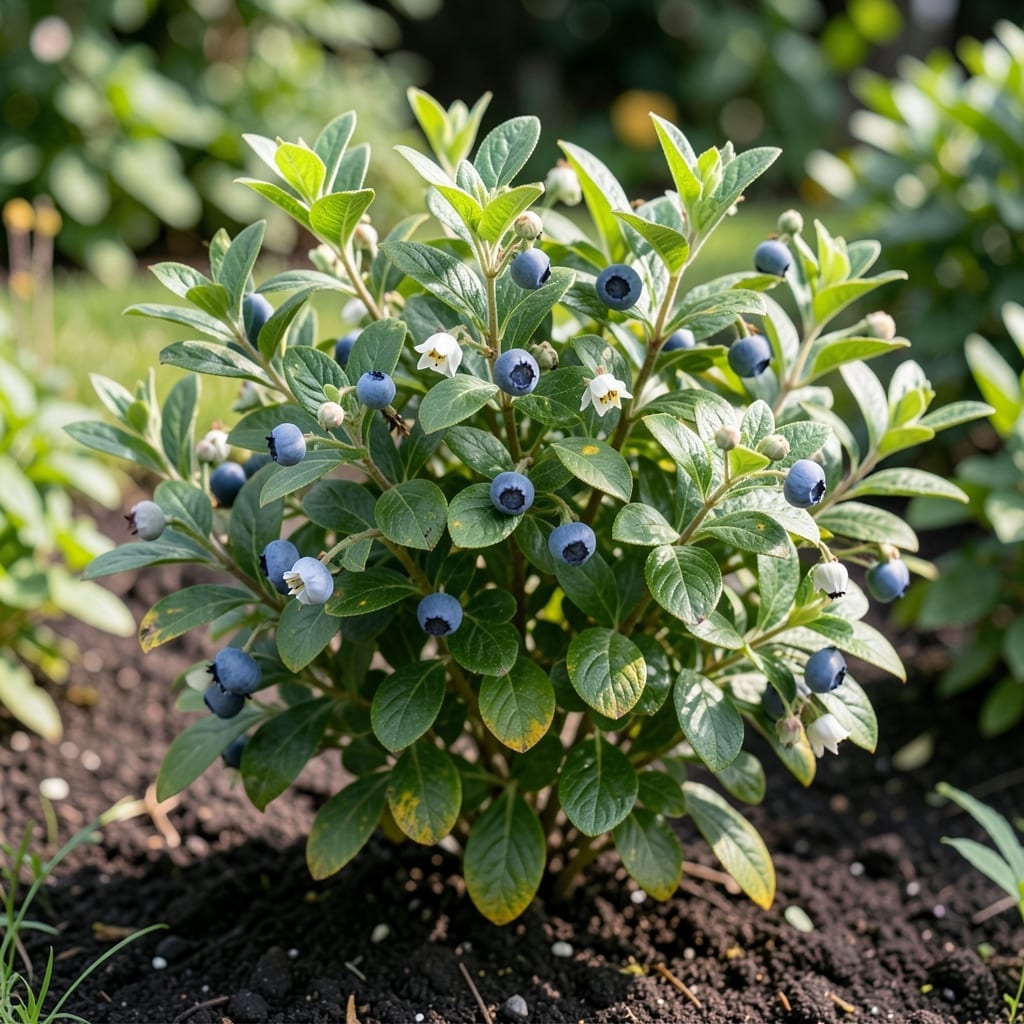
Yellow leaves on blueberries always signal something’s off. I’ve seen this happen too many times to ignore the early signs.
Most often, it’s the soil talking to you. Blueberries demand acidic conditions, and when pH drifts too high, roots can’t absorb iron and other nutrients. The result? Leaves turn yellow between the veins while veins stay green.
Other culprits include overwatering, poor drainage, or even a nitrogen deficiency. Each leaves its own pattern—uniform yellowing, spots, or edges browning first.
Fix it fast, and your bushes bounce back with dark green growth in 2-3 weeks. Let’s diagnose what your plants are trying to tell you.
Blueberry leaves turning yellow often signal underlying issues that disrupt their health. Here are the primary causes, explained scientifically:
Blueberries thrive in acidic soils (pH 4.0–5.5). When soil pH rises above 5.5, iron, manganese, and zinc become less soluble, leading to deficiencies. Iron deficiency, for example, causes interveinal chlorosis—yellowing between leaf veins—while nitrogen deficiency leads to uniform yellowing, starting with older leaves. A soil test can confirm which nutrients are lacking.
Excess water suffocates roots, reducing oxygen uptake and causing root rot. This stress prevents the plant from absorbing essential nutrients, even if they’re present in the soil. Yellowing often appears first in lower leaves. Ensure your blueberry bushes are planted in well-draining, peat-amended soil and avoid waterlogged conditions.
Pathogens like Phytophthora or Botrytis can infect blueberry plants, disrupting nutrient transport. Early symptoms include yellowing leaves, often accompanied by brown spots or wilting. Fungal issues thrive in wet, humid conditions, so improve air circulation and avoid overhead watering to reduce risk.
Extreme heat, drought, or sudden temperature swings can shock blueberry plants, leading to yellowing. Heat stress, for instance, accelerates water loss, while cold snaps damage leaf tissues. Mulching with pine bark helps regulate soil temperature and retain moisture, mitigating these effects.
Identifying the root cause is key to restoring your plant’s health. Test soil pH, inspect roots, and monitor watering habits to pinpoint the issue.
Yellow leaves on your blueberry bushes often signal a fixable issue. Below are targeted solutions for the most common causes, along with prevention tips to keep your plants thriving.
Iron or Magnesium Shortage: If the soil pH is too high, blueberries can’t absorb these essential nutrients. Lower the pH to 4.0–5.0 by amending the soil with elemental sulfur or a sulfur-based fertilizer. For a quick fix, apply a chelated iron foliar spray or Epsom salt (magnesium sulfate) to the leaves.
Prevention: Test soil pH annually and maintain acidity with peat moss or pine bark mulch. Avoid lime or wood ash, which raise pH.
Soggy roots suffocate the plant and block nutrient uptake. Improve drainage by mixing in perlite or coarse sand. If the bush is in a container, ensure the pot has drainage holes. Water only when the top inch of soil feels dry.
Prevention: Use raised beds or containers if your soil is heavy clay. Mulch with pine needles to retain moisture without waterlogging.
Too much nitrogen can cause lush growth but yellow leaves. Reduce high-nitrogen fertilizers and switch to a balanced, acid-loving plant fertilizer (e.g., 10-10-10 for blueberries). If deficiency is the issue, apply a slow-release nitrogen source like cottonseed meal.
Prevention: Fertilize sparingly in early spring and avoid late-season nitrogen, which can promote tender growth vulnerable to frost.
Inspect leaves for aphids, spider mites, or fungal spots. Treat pests with neem oil or insecticidal soap. For fungal issues, apply a copper fungicide and remove infected leaves. Prune to improve airflow, reducing humidity that fuels disease.
Prevention: Keep the area weed-free and avoid overhead watering. Plant resistant varieties like ‘Duke’ or ‘Bluecrop’ if problems persist.
💡 Pro Tip: Always water at the base of the plant to keep foliage dry and prevent fungal spread.
Use a soil pH test kit from any garden center. Collect samples from 4-6 inches deep near the roots. For accurate results, test multiple spots and average the readings.
Once leaves turn yellow, they won’t recover. Focus on correcting the underlying issue to support new, healthy growth. Expect 2-3 weeks to see improvement after treatment.
Amend soil with elemental sulfur or aluminum sulfate. For immediate results, use a chelated iron foliar spray. Always follow package instructions carefully.
Yes, prune severely yellowed leaves to redirect energy. Use clean shears and remove only 1/3 of foliage at a time to avoid stressing the plant.