
Beautiful Plants For Your Interior
Beautiful Plants For Your Interior
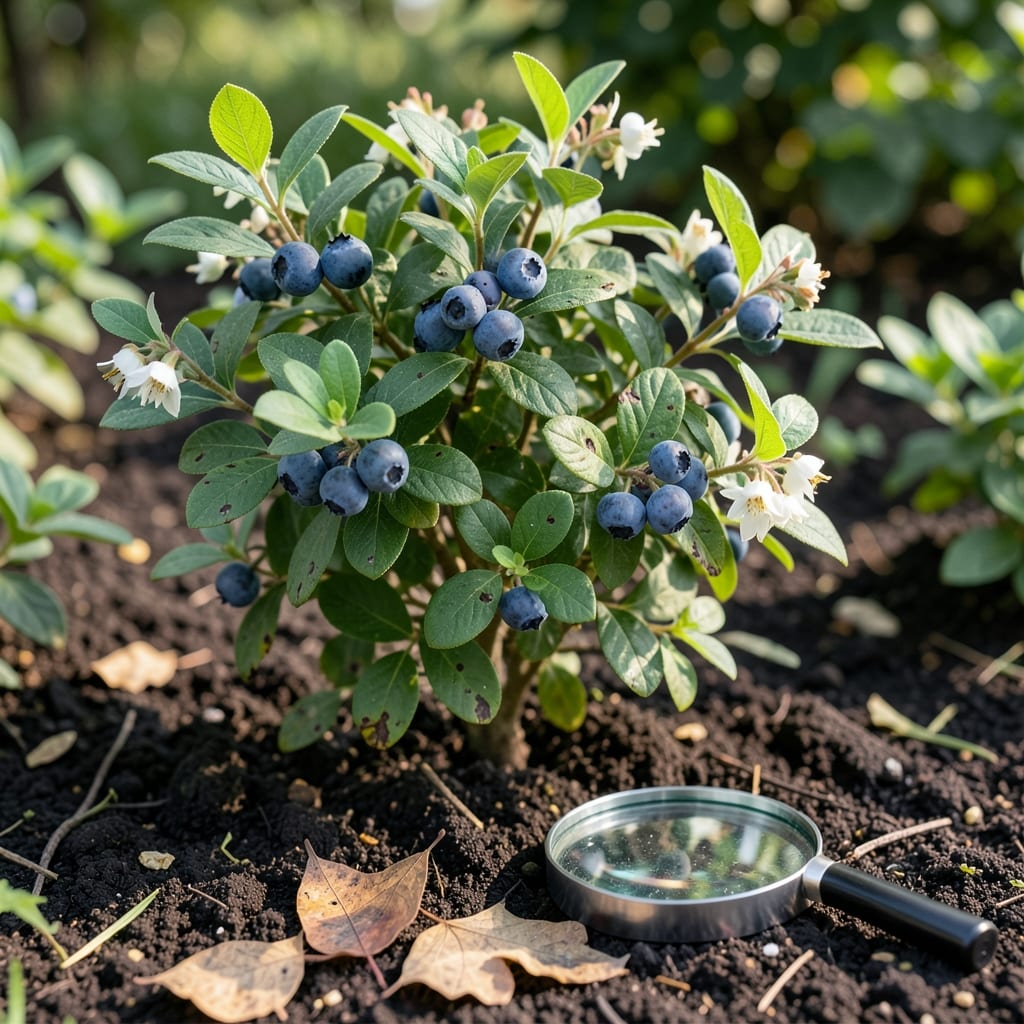
Last summer, I nearly lost my entire blueberry harvest to a silent invader. The first sign was subtle—just a few brown spots on leaves that I dismissed as sunburn.
By the time I identified the mummy berry fungus, it had spread through half my bushes. Early detection is everything with blueberry diseases, and most gardeners miss the first warning signs because they look like normal stress.
You’ll catch problems faster when you know what healthy blueberry leaves and fruit should look like at every stage. The difference between a minor issue and a crop-ending disaster often comes down to one week of action.
Works for all blueberry varieties, whether you’re growing in containers or open ground. Here’s how to spot trouble before it’s too late.
Understanding why diseases strike your blueberry plants is the first step in prevention. Here are the primary causes, broken down by category:
Blueberries thrive in acidic soil (pH 4.0–5.5) and require consistent moisture. Poor drainage or drought conditions weaken plants, making them susceptible to fungal infections like Phytophthora root rot. Similarly, extreme temperatures (frost or heatwaves) can stress plants, lowering their defenses against pathogens such as Botrytis (gray mold).
Fungal, bacterial, and viral pathogens are major culprits. Fungi like Exobasidium (leaf spot) and Monilinia (mummy berry) spread via spores in wet conditions. Bacteria, such as Pseudomonas, cause leaf spots and cankers, often entering through wounds. Viruses, though less common, can stunt growth and reduce yields.
Insects like aphids and blueberry maggots don’t just damage plants directly—they also transmit diseases. For example, aphids spread Blueberry shock virus, while contaminated tools or infected plant material can introduce Xylella fastidiosa, a bacterial pathogen.
Overcrowding plants, failing to prune, or using non-sterilized tools can exacerbate disease spread. Poor air circulation encourages fungal growth, while over-fertilization (especially with nitrogen) can promote lush, disease-prone foliage. Always sanitize tools and rotate crops to minimize risks.
Once you’ve identified the issue, it’s time to take action. Below are targeted solutions for common blueberry diseases, paired with prevention tips to keep your plants thriving.
Look for white or gray powdery coatings on leaves, dark spots with yellow halos, or shriveled berries. Powdery mildew appears as a white film, while anthracnose causes sunken, circular spots.
Early signs include small, pale pink or tan blisters on new shoots. Infected berries turn hard and shriveled, resembling raisins. Remove and destroy these immediately to prevent spread.
Brown leaf edges often indicate environmental stress like drought, salt burn from fertilizer, or Phytophthora root rot. Check soil moisture and drainage first.
If caught early, improve drainage and trim affected roots. Severe cases usually require removal to protect nearby plants. Always plant in acidic, well-draining soil.