
Beautiful Plants For Your Interior
Beautiful Plants For Your Interior
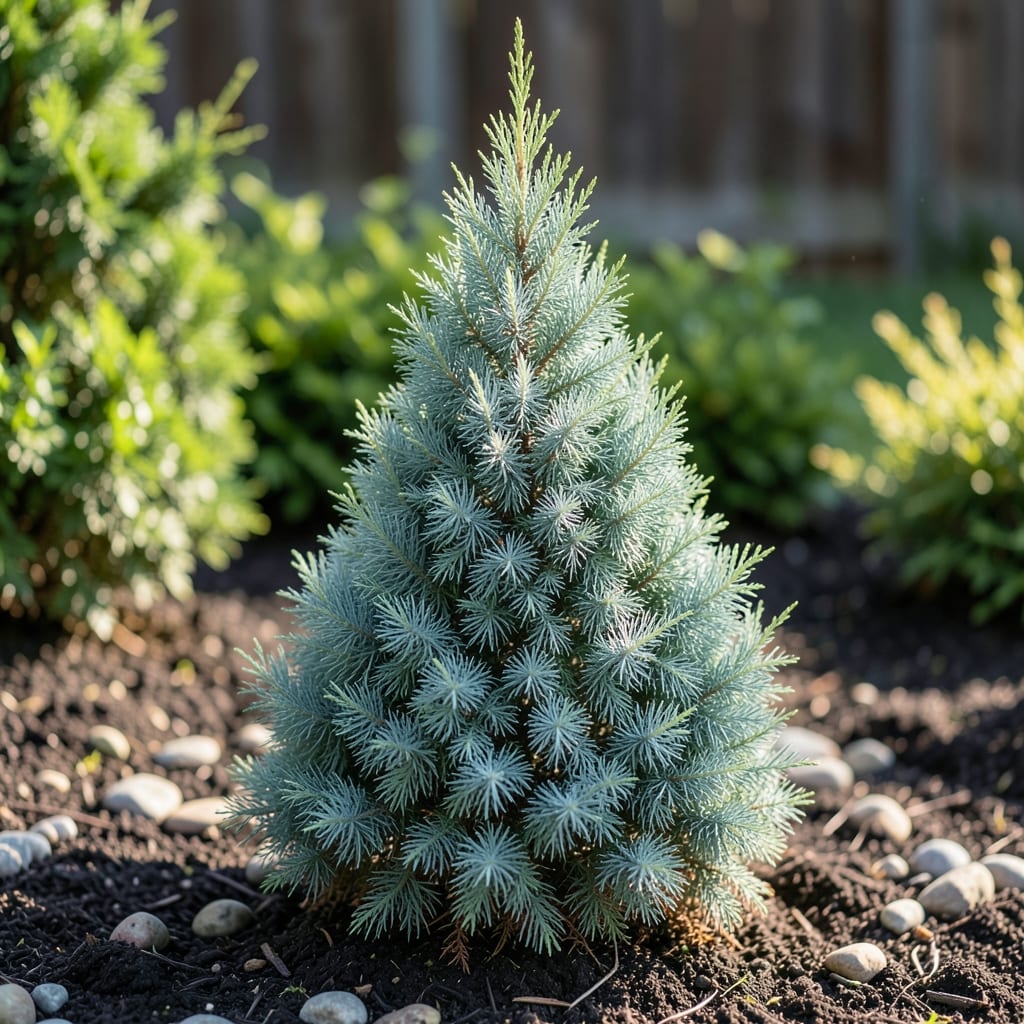
Blue Point Juniper typically reaches a mature width of 4 to 6 feet, forming a dense, pyramidal shape that works well for hedges or solitary plantings.
I love how this cultivar grows into a compact, upright form that’s perfect for privacy screens or as a statement piece. Its 4 to 6-foot spread is ideal for medium-sized gardens, where it won’t overwhelm the space but still delivers year-round structure. The dense branching also makes it a favorite for windbreaks or wildlife habitats. 🌟
💡 In This Article
Soil type dramatically impacts how wide your Blue Point Juniper will spread. In well-draining, slightly acidic soil (pH 6.0-7.5), roots develop more extensively, supporting a fuller 4-6 foot canopy. Heavy clay soils restrict root growth, often limiting the mature width to the lower end of that range. 🔥
Sunlight exposure plays a crucial role too. Full sun (6+ hours daily) encourages the densest growth and maximum width. In partial shade, the shrub tends to grow more upright and narrow as it stretches toward light. This is why north-facing plantings often appear more slender than their sun-drenched counterparts.
Pruning practices directly influence the final dimensions. Regular light trimming maintains the natural pyramidal shape while encouraging bushier growth. However, aggressive pruning can stress the plant, potentially reducing its overall spread. The best approach is to prune only 10-15% of new growth annually. ✨
Climate conditions create regional variations. In cooler zones (4-6), growth is slower, and the shrub may take 8-10 years to reach full width. Warmer climates (7-9) accelerate growth, with some specimens exceeding 6 feet in ideal conditions. Consistent moisture during the first 2-3 years establishes the root system needed for full width development.
What most gardeners don’t realize is that wind exposure affects width too. Sheltered locations allow the branches to spread more horizontally, while windy sites often result in a more compact, vertical growth habit as the plant adapts to resist wind damage. 💫
In ideal conditions, expect 4-6 feet of spread within 8-10 years. Growth is faster in warmer climates (zones 7-9) and slower in cooler areas (zones 4-6).
Yes, but limit trimming to 10-15% of new growth annually. Heavy pruning stresses the plant and may reduce its natural density. Light, consistent shaping works best.
Allow at least 6-8 feet of open space for a single specimen to maintain its pyramidal form. Crowding can lead to poor airflow and disease.
Well-draining, slightly acidic soil (pH 6.0-7.5) supports the fullest growth. Heavy clay may restrict width to the lower end of its range.