
Beautiful Plants For Your Interior
Beautiful Plants For Your Interior
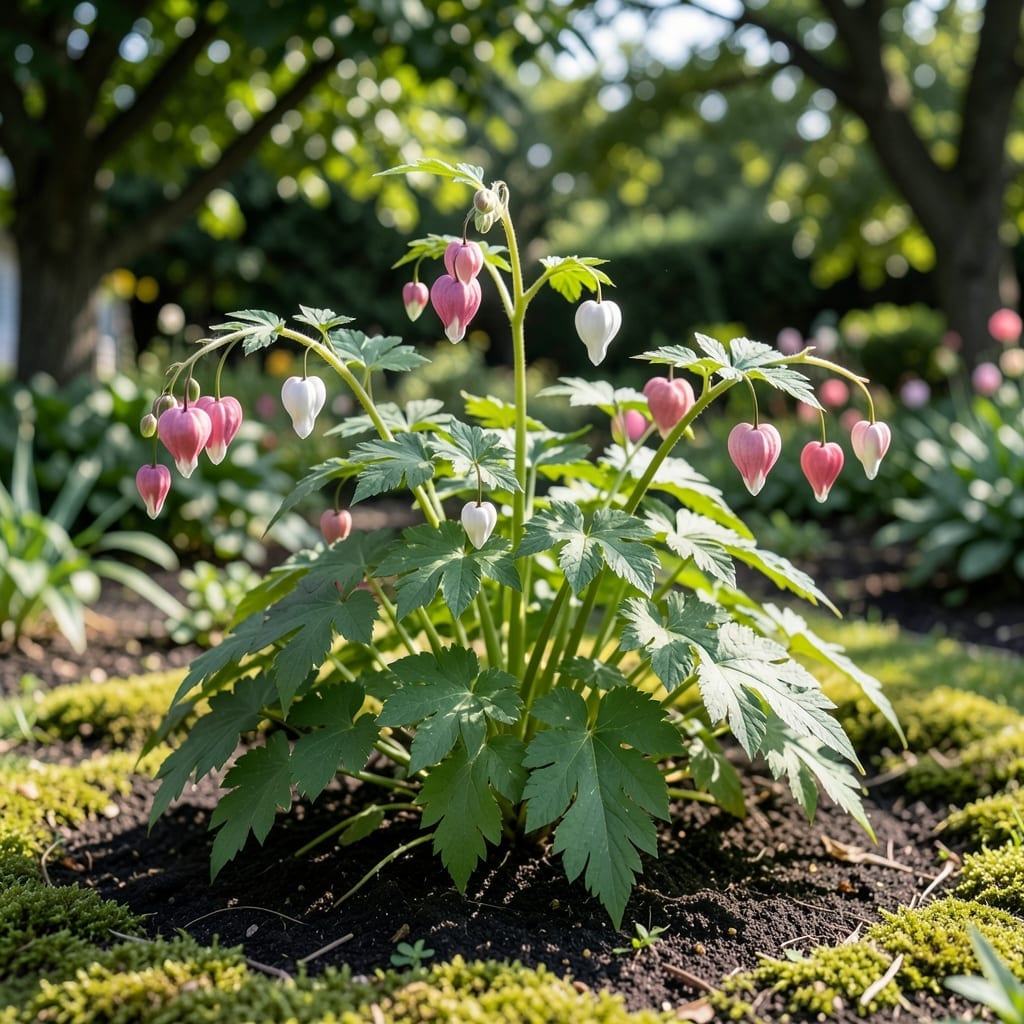
Bleeding heart plants thrive in full shade, especially in hotter climates, where their delicate foliage stays protected from harsh sunlight. They prefer moist, well-draining soil and can bloom beautifully with minimal direct light.
I’ve found these plants do best under trees or on north-facing walls where they mimic their natural forest floor habitat. 🌿 Their fern-like leaves scorch easily in direct sun, so consistent shade helps maintain vibrant blooms. The key is keeping the soil rich in organic matter to support their shallow root systems.
💡 In This Article
Bleeding hearts evolved in the cool, dim understory of Asian forests. Their delicate foliage contains thin cuticles that burn easily under intense UV exposure. This adaptation makes them naturally suited to 50-70% shade, where light is filtered through tree canopies. 🌿
In full sun, their leaves develop scorch marks within hours as chlorophyll breaks down. The plant conserves energy by reducing photosynthesis in direct light, instead thriving at 100-500 foot-candles of illumination. This mimics their native habitat beneath deciduous trees.
Their root systems are shallow and fibrous, designed to quickly absorb moisture from forest floors. In sunlit areas, the soil dries 3-4x faster, stressing these moisture-dependent plants. Shade maintains the consistent humidity they need to produce their signature heart-shaped blooms.
Even in cooler climates, afternoon shade is crucial. Morning light (before 10 AM) is tolerable, but the harsher rays after noon can bleach the pink flowers and yellow the foliage. This is why north-facing or dappled light locations work best.
Their natural growing season aligns with spring forest conditions. As temperatures rise above 75°F, bleeding hearts enter dormancy. Shade gardens extend their active growth period by 2-3 weeks by preventing premature heat stress.
Yes, they thrive in deep shade, especially in hotter climates. Their natural habitat is the forest understory, where they receive dappled or filtered light. Just ensure the soil stays consistently moist but well-draining.
More than 2-3 hours of direct sun, especially afternoon light, can scorch their leaves. Morning sun is tolerable, but they prefer locations with 50-70% shade coverage.
Leaves will develop brown scorch marks, and flowers may fade or wilt prematurely. In extreme cases, the plant may enter dormancy early to protect itself from heat stress.
Amend the soil with 2-3 inches of compost to improve moisture retention and drainage. They prefer slightly acidic to neutral soil with plenty of organic matter.
Water deeply 1-2 times weekly, keeping the soil consistently moist. In hotter climates, increase to every 2-3 days during dry spells to prevent drought stress.