
Beautiful Plants For Your Interior
Beautiful Plants For Your Interior
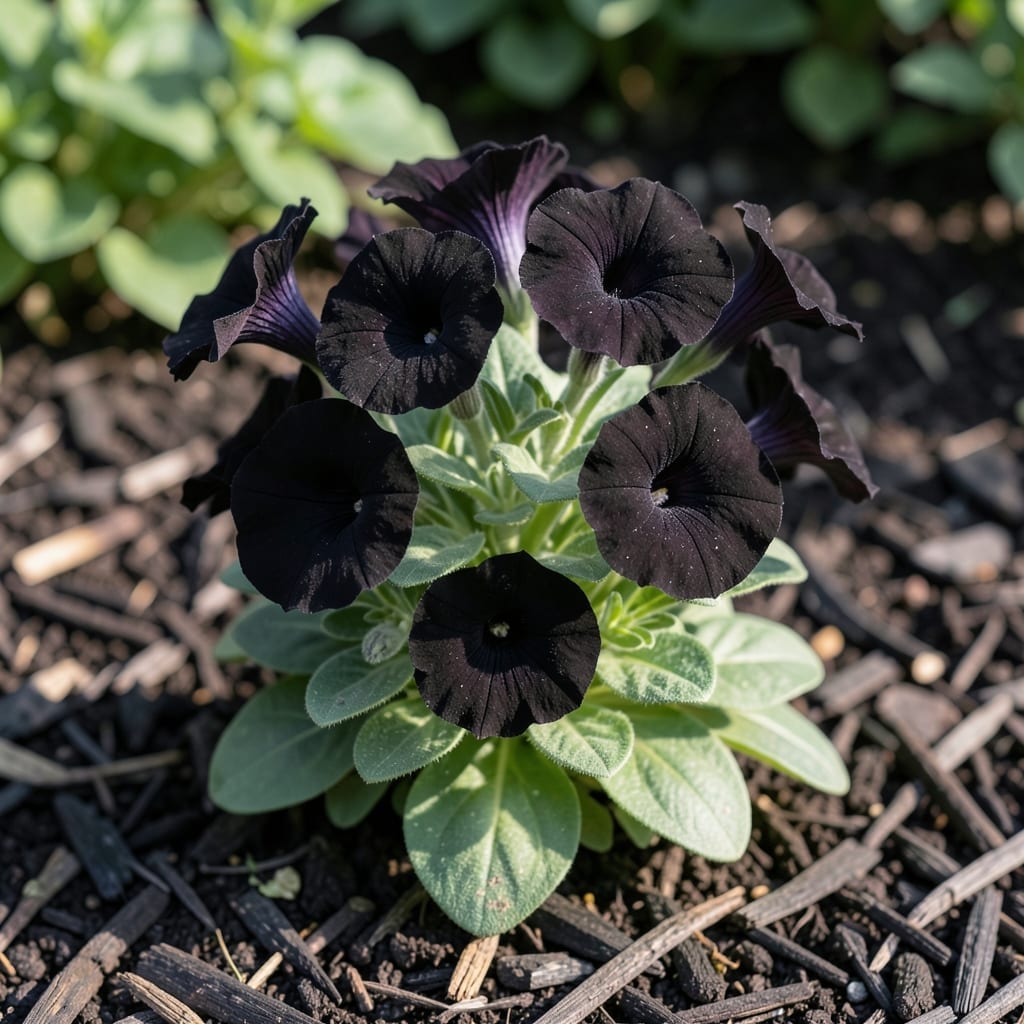
I fell for black velvet petunias the first time I saw their deep, velvety blooms. These aren’t your typical petunias—they’re dramatic, almost black in certain light, and stop garden visitors in their tracks.
They thrive in full sun with well-draining soil, blooming nonstop from spring to frost. The secret is consistent moisture without waterlogging. Once established, they’re surprisingly low-maintenance for such a showstopping plant.
📚 In This Guide
This method ensures deep, velvety blooms that thrive in both containers and garden beds.
Select a spot with full sun exposure—at least 6-8 hours of direct sunlight daily. Black Velvet petunias perform best in warm, well-drained soil with a pH of 6.0-7.0. If planting in containers, ensure pots have drainage holes to prevent waterlogging.
I’ve found these petunias tolerate partial shade, but the deep purple color intensifies with more sun. Avoid low-lying areas where cold air settles, as they’re sensitive to frost. Test your soil pH with a kit if unsure—adjust with lime or sulfur as needed.
Loosen the soil to a depth of 12-15 inches and mix in 2-3 inches of organic compost to improve fertility and drainage. Black Velvet petunias prefer slightly sandy, well-aerated soil. If your soil is heavy clay, amend it with perlite or coarse sand.
For container planting, use a high-quality potting mix with added perlite for drainage. I always add a slow-release fertilizer at planting to give them a strong start. Water the soil lightly after amending to help it settle before planting.
Space plants 10-12 inches apart in garden beds to allow for air circulation, which reduces disease risk. For containers, plant one per 8-10 inch pot to prevent overcrowding. Dig a hole slightly larger than the root ball and place the plant at the same depth it was in its nursery container.
Gently firm the soil around the base and water thoroughly to eliminate air pockets. If planting in hanging baskets, line them with coconut coir or moss to retain moisture while allowing excess water to drain. Mulch lightly to keep roots cool and conserve moisture.
Keep the soil evenly moist but not soggy—water when the top inch of soil feels dry. Black Velvet petunias are drought-tolerant once established but bloom best with consistent moisture. Use a drip irrigation system or water at the base to avoid wetting the foliage, which can lead to fungal issues.
Fertilize every 2-3 weeks with a balanced, water-soluble fertilizer to promote continuous blooming. I switch to a high-phosphorus formula mid-season to encourage more flowers. Deadhead spent blooms regularly to redirect energy into new growth and extended flowering.
Pinch back the tips of young plants when they’re 6-8 inches tall to encourage bushier growth. This also delays early flowering, leading to a more compact, floriferous plant. Remove any leggy or yellowing stems to maintain shape and vigor.
Monitor for pests like aphids or spider mites, especially in dry conditions. A strong spray of water or insecticidal soap usually resolves minor infestations. In late summer, trim back overgrown plants by one-third to rejuvenate them for a late-season flush of blooms.
These insights will help you avoid common pitfalls and cultivate thriving plants.
The Sunlight Factor: The 6-8 hours of full sun in Step 1 isn’t just a suggestion—it’s essential for that deep purple color. I’ve noticed plants in partial shade produce less vibrant blooms. If your garden gets intense afternoon sun, consider some dappled shade to prevent scorching.
Drainage Test: In Step 1, that 12-inch deep hole test is your best insurance against root rot. If water doesn’t drain within 1-2 hours, don’t just add more compost—mix in perlite or coarse sand to create channels for water to escape.
Planting Depth: The ¼ inch above soil line detail in Step 2 prevents stem rot. I learned this the hard way after losing several plants to over-planting. Press the soil gently but don’t pack it down—roots need room to breathe.
Pruning Timing: For Step 4, pinching back at exactly 6 inches tall seems counterintuitive, but it forces the plant to branch out. Use sharp scissors and make clean cuts just above a leaf node to avoid tearing the stems.
Keep the soil well-drained and avoid overhead watering to prevent fungal issues like powdery mildew. Space plants properly for airflow, and remove dead or infected foliage promptly.
Plant after the last frost in spring when soil temperatures reach at least 60°F (15°C). These heat-loving annuals thrive in warm weather and bloom best in full sun.
Yes! Use a well-draining potting mix and ensure containers have drainage holes. They’re perfect for hanging baskets or pots, but may need more frequent watering.
Wilting can signal underwatering, overwatering, or root rot. Check soil moisture—it should be damp but not soggy. If roots are mushy, improve drainage and reduce watering.
For similar deep hues, try ‘Black Prince’ snapdragons, ‘Queen of Night’ tulips, or ‘Black Beauty’ hollyhocks. These offer dramatic color with varying care needs.