
Beautiful Plants For Your Interior
Beautiful Plants For Your Interior
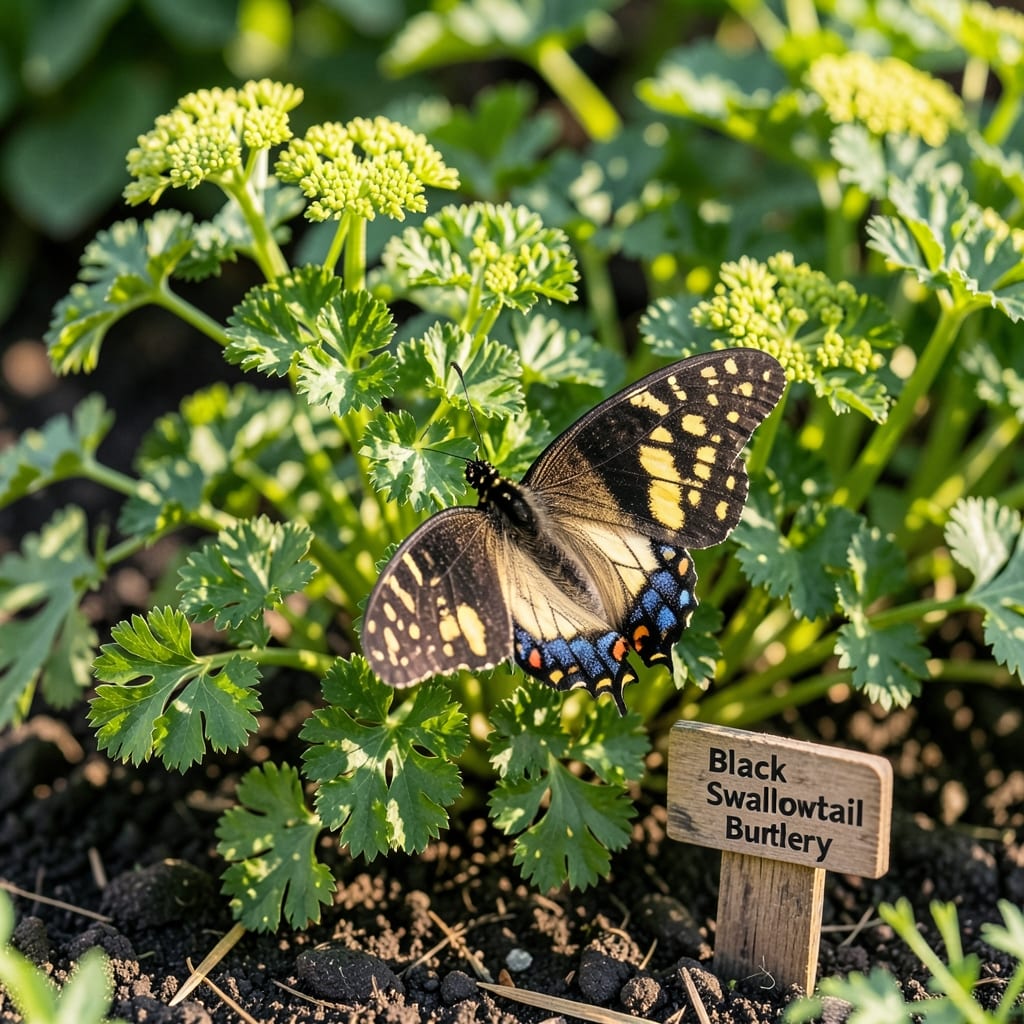
The black swallowtail butterfly undergoes four stages: egg, larva (caterpillar), pupa (chrysalis), and adult. It thrives in open woodlands, gardens, and meadows with host plants like parsley, dill, and carrots.
I’ve found these butterflies particularly fascinating because their transformation is so visible to gardeners. Parsley and dill aren’t just herbs to them—they’re nurseries for the next generation. What’s more, their adult stage plays a key role in pollination, making them valuable allies in any ecosystem. 🌟
Their preference for sunny, open spaces means even small backyard gardens can become thriving habitats with the right plant choices.
💡 In This Article
The journey begins when a female lays tiny, round yellow eggs—only about 1-1.5mm in diameter—on host plants. These eggs hatch in just 3-5 days, revealing minuscule caterpillars that immediately start consuming their eggshells for initial nourishment. This first instar is so small it’s often mistaken for a speck of dirt. 🌟
As larvae, they undergo 5 instars over 10-30 days, molting between each stage. The caterpillars grow from 2mm to nearly 5cm, changing appearance dramatically. Early stages resemble bird droppings for camouflage, while later stages develop vibrant green with black stripes and yellow dots.
Their rapid growth requires consuming host plants at an astonishing rate—often their entire body weight daily.
The pupal stage, lasting 9-18 days, is where the magic happens. Inside the chrysalis, the caterpillar’s body liquefies almost completely through a process called histolysis. Specialized cells called imaginal discs, present since the larval stage, rapidly divide and differentiate to form all adult structures.
This complete metamorphosis is why butterflies emerge so different from their larval form. ✨
Adult emergence typically occurs in the morning when temperatures reach 60-70°F. The butterfly pumps fluid into its wings to expand them, then waits 1-2 hours for them to dry and harden before its first flight.
Their 3-4 inch wingspan features striking black and yellow patterns with iridescent blue markings on the hindwings, serving as both camouflage and warning to predators. 🔥
This entire cycle from egg to adult takes about 30-40 days in warm weather, though overwintering pupae may delay emergence until spring. The number of generations varies by location, with 2-3 broods common in northern regions and up to 4-5 in southern areas where the climate remains warm for longer periods.
The pupal stage typically lasts 9-18 days, though overwintering chrysalises may delay emergence until spring. Temperature plays a key role in development speed.
Host plants like parsley, dill, and carrots attract females for egg-laying. For adults, nectar-rich zinnia and butterfly bush provide essential energy.
In northern areas, you’ll see 2-3 broods per year. Southern regions with longer warm seasons can have 4-5 generations. Each cycle takes about 30-40 days in ideal conditions.
Early instars mimic bird droppings as a survival tactic. This camouflage protects them from predators while they’re most vulnerable. Later stages develop bright colors as a warning.