
Beautiful Plants For Your Interior
Beautiful Plants For Your Interior
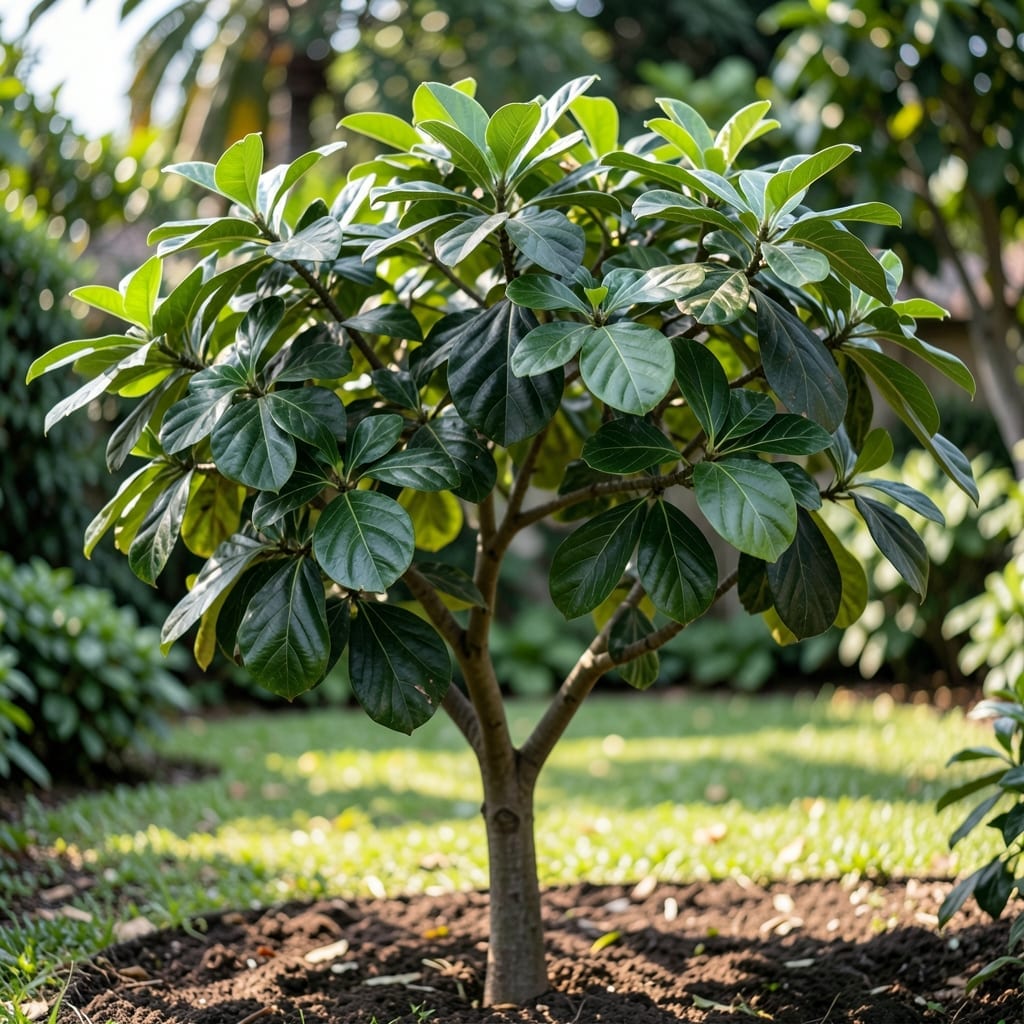
Black sapote trees reward you with glossy, deep green leaves that signal a healthy tropical fruit producer. I learned the hard way that leaf health is your first warning system for problems with this finicky fruit tree.
These leaves thrive in warm climates with consistent moisture, but they’ll protest with yellowing or drop if conditions aren’t right. The key is matching their native tropical environment as closely as possible in your garden.
📚 In This Guide
This method delivers healthy growth and glossy leaves every time, even in less-than-ideal climates.
Choose a spot with full sun for at least 6-8 hours daily. Black sapote thrives in warm climates, so a south-facing position works best. I always check the soil drainage first—dig a 1-foot deep hole and fill it with water. If it drains within 1-2 hours, you’re good to go.
This tree hates soggy roots, so avoid low areas where water pools. A slight slope or raised bed improves drainage. You’ll see the difference in leaf color and vigor within weeks of planting in the right spot.
Dig a hole twice as wide as the root ball but no deeper. Set the sapling in so the soil line on the stem matches the surrounding ground level. Planting too deep suffocates the trunk and causes leaf yellowing.
Backfill with native soil mixed with 20% compost for nutrients. Water deeply after planting until the soil settles, then add more mix if needed. I’ve found that staking young trees prevents wind damage to delicate new leaves.
Water newly planted trees 2-3 times weekly for the first month, then taper to once weekly as roots establish. The goal is moist but not soggy soil—stick your finger 2 inches deep to check.
Drought stress causes leaf drop, but overwatering turns leaves yellow and mushy. During extreme heat, increase frequency but water deeply at dawn to prevent evaporation. You’ll know you’re doing it right when leaves stay dark green and firm.
Black sapote needs warmth year-round—temperatures below 30°F damage leaves and young branches. In cooler zones, plant near a south-facing wall or use frost cloth during cold snaps.
Watch for leaf curling or browning edges, which signals heat stress. Afternoon shade helps in scorching climates. I’ve seen trees bounce back quickly once moved to a spot with consistent warmth and filtered light.
Prune in early spring before new growth starts. Remove dead or crossing branches first, then shape the tree to allow light penetration. Thin the canopy to improve air circulation, which prevents fungal issues on leaves.
Always use clean, sharp tools and make cuts at a 45-degree angle just above a leaf node. This encourages bushier growth and more leaf production. You’ll notice fuller, glossier foliage within a few weeks of proper pruning.
These practical insights will help you avoid pitfalls and achieve thriving trees with glossy leaves.
Sunlight Prioritization: In Step 1, that 6-8 hours of full sun daily isn’t just a suggestion—it’s critical for leaf health. I’ve seen trees in partial shade develop sparse, dull foliage. A south-facing spot with unobstructed sunlight gives the best results, especially in cooler climates where every ray counts.
Drainage Test: The 1-2 hour drainage test from Step 1 is your best defense against root rot. If water doesn’t drain within that window, consider building a raised bed. Soggy soil turns leaves yellow faster than drought stress, and recovery takes weeks.
Planting Depth: In Step 2, planting too deep is the most common mistake I see. When the soil line on the stem sits below ground level, it suffocates the trunk. Always match the surrounding grade—this simple step prevents leaf yellowing and stunted growth.
Pruning Precision: For Step 5, that 45-degree angle cut just above a leaf node isn’t just for looks. It directs energy to the right growth points, producing fuller foliage. Clean tools prevent disease, and I sharpen mine before every pruning session.
While the fruit is delicious, black sapote leaves are not typically consumed. They contain trace amounts of toxic compounds found in the Annonaceae family. Stick to enjoying the fruit and avoid using the leaves in teas or dishes.
Yellowing leaves often signal overwatering, nutrient deficiency (like nitrogen), or poor drainage. Check soil moisture and ensure balanced fertilization. If the issue persists, test soil pH (ideal: 6.0–7.0).
Yes! Leaves decompose well and add organic matter to compost. Avoid large quantities at once to prevent toxic compound buildup. Mix with other greens/browns for a balanced pile.
Prune lightly after harvest (late winter/early spring) to shape the tree and remove dead leaves/branches. Avoid heavy pruning—it can stress the tree and reduce fruiting. Aim for yearly maintenance.
For aphids or scale, spray leaves with neem oil or insecticidal soap. Introduce beneficial insects like ladybugs. Keep the area clean to deter pests naturally.