
Beautiful Plants For Your Interior
Beautiful Plants For Your Interior
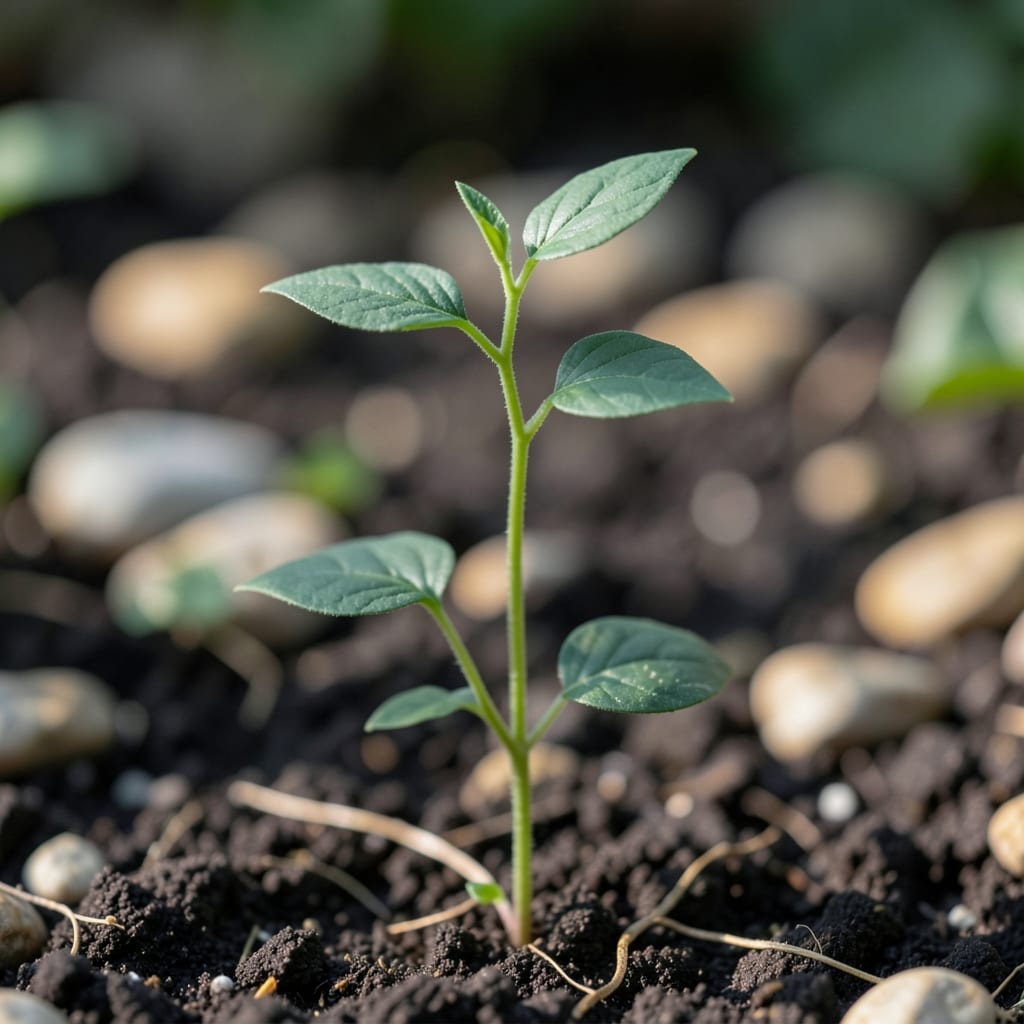
Black bindweed seedlings have heart-shaped leaves with pointed tips, often appearing in dense clusters. Their vining habit and dark green foliage make them easy to spot in garden beds or lawns.
I notice these plants thrive in disturbed soil, so they often pop up after tilling or weeding. The leaves start small but grow quickly, forming a mat that can smother desired plants. Early removal is key because their roots establish deep networks that are tough to eradicate later. ✨
💡 In This Article
Black bindweed seedlings emerge with distinctive cordate leaves—heart-shaped with pronounced pointed tips—measuring about 0.5-1 inch wide at first. These leaves grow on slender, twining stems that can stretch 3-6 feet in a single season, creating dense ground cover.
The foliage color is a deep, matte green, often with a slightly velvety texture that catches morning dew beautifully. 🌿
The growth pattern is a dead giveaway: young plants send out tendrils that coil around anything they touch, including neighboring plants, fences, or garden stakes. Unlike morning glories, black bindweed vines twist counterclockwise as they climb.
The leaves arrange themselves alternately along the stem, with each new leaf emerging at a 90-degree angle from the previous one.
Within 2-3 weeks of germination, the seedlings develop their signature vining habit. You’ll notice the stems thicken slightly at the nodes where leaves attach. This is where the plant’s future strength lies—these nodes will eventually produce roots if they contact soil, allowing the vine to spread horizontally and establish new growing points. 🔥
Early identification becomes easier when you examine the leaf veins. Black bindweed seedlings display palmate venation, where multiple veins radiate outward from a central point at the leaf base, resembling the palm of a hand. This differs from the parallel venation of grasses or the netted patterns of many other weeds.
The undersides of the leaves often show a lighter green hue and tiny hairs along the veins. When crushed, the foliage releases a mild, earthy scent that’s more noticeable in the morning. This sensory detail, combined with the visual characteristics, helps distinguish black bindweed from look-alike plants like wild buckwheat or hedge bindweed. ✨
Look for the leaf shape and vine direction. Black bindweed has heart-shaped leaves with pointed tips and twists counterclockwise, while morning glories have rounder leaves and twist clockwise.
Morning is ideal when plants are turgid. The soil is often perfectly moist, making it easier to pull entire root systems without breaking them.
Never compost them. Even small root fragments can regrow. Always bag and dispose of plant material to prevent spreading.
Inspect your garden every 3-4 days during growing season. These seedlings emerge quickly and can establish roots within a week.