
Beautiful Plants For Your Interior
Beautiful Plants For Your Interior
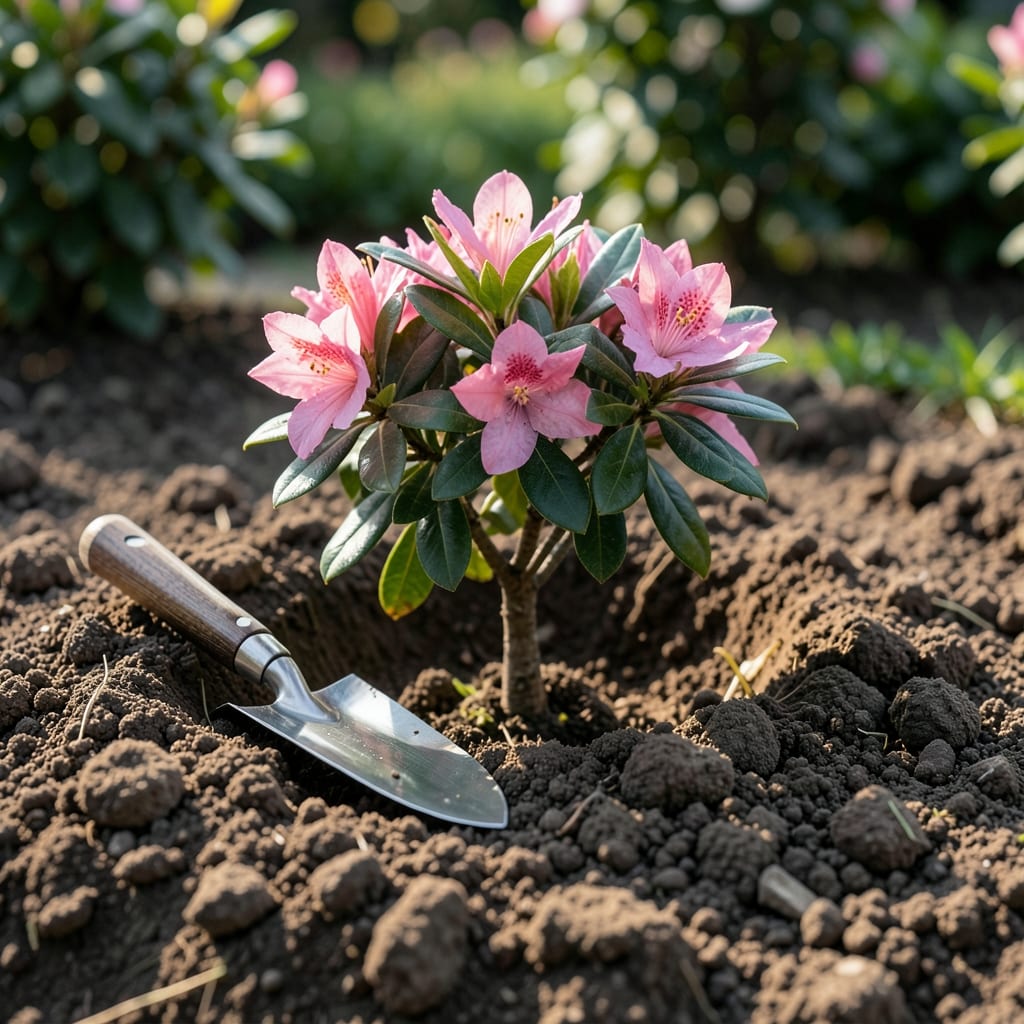
Azaleas thrive in acidic, well-draining soil with a pH of 4.5 to 6.0. Use a mix of peat moss, pine bark, and perlite to ensure the right moisture retention and aeration for healthy roots.
I’ve seen these shrubs suffer in heavy clay or alkaline conditions. Acidic soil unlocks vital nutrients like iron, which keeps leaves vibrant and green. Without it, you risk yellowing foliage and stunted growth. A loose, organic-rich mix also prevents root rot by allowing excess water to drain quickly. ✨
💡 In This Article
Azaleas evolved in forest environments where decaying organic matter creates naturally acidic conditions. Their roots have adapted to absorb nutrients most efficiently at a pH between 4.5 and 6.0, where iron and manganese become soluble and readily available. In alkaline soil, these elements lock up, starving the plant of what it needs to produce chlorophyll.
🔥
Iron deficiency is the most visible consequence. When soil pH climbs above 6.5, azaleas develop interveinal chlorosis—yellow leaves with green veins—as the plant struggles to access iron. The roots essentially can’t “see” the nutrient even when it’s present in the soil. This is why gardeners often call acidic soil the plant’s “natural habitat.”
Acidic conditions also support beneficial soil microbes that form symbiotic relationships with azalea roots. These microscopic helpers break down organic matter into plant-available nutrients and protect against harmful pathogens. In neutral or alkaline soil, these helpful microbes decline while harmful ones thrive. ✨
The physical structure matters too. Azalea roots need oxygen to breathe, which is why compacted or waterlogged soil spells trouble. Acidic, organic-rich soil typically has better structure, with pores that allow both water and air to reach the roots efficiently. This is why peat moss and pine bark are such effective amendments. 🌟
Consider the plant’s native range in eastern Asia and North America, where forest floors are covered with a thick layer of decaying leaves and needles. This creates a spongy, acidic humus layer that azalea roots naturally seek out. Recreating this environment in your garden gives the plant its best chance to thrive.
Test your soil pH every 3-6 months for azaleas. This helps you catch any shifts before they affect plant health. Use a simple home test kit for convenience.
Regular potting soil is often too alkaline for azaleas. Look for mixes labeled for acid-loving plants, or amend with peat moss and pine bark to create the right conditions.
Azaleas develop yellow leaves with green veins, a condition called chlorosis. This means the plant can’t absorb iron from the soil. Lowering pH to 4.5-6.0 fixes this.
Sand alone isn’t ideal—it compacts over time and doesn’t improve acidity. Instead, use perlite or pine bark fines for better drainage and structure.
Elemental sulfur can take 2-3 months to fully lower pH. For quicker results, mix in organic amendments like composted leaves or cottonseed meal.