
Beautiful Plants For Your Interior
Beautiful Plants For Your Interior
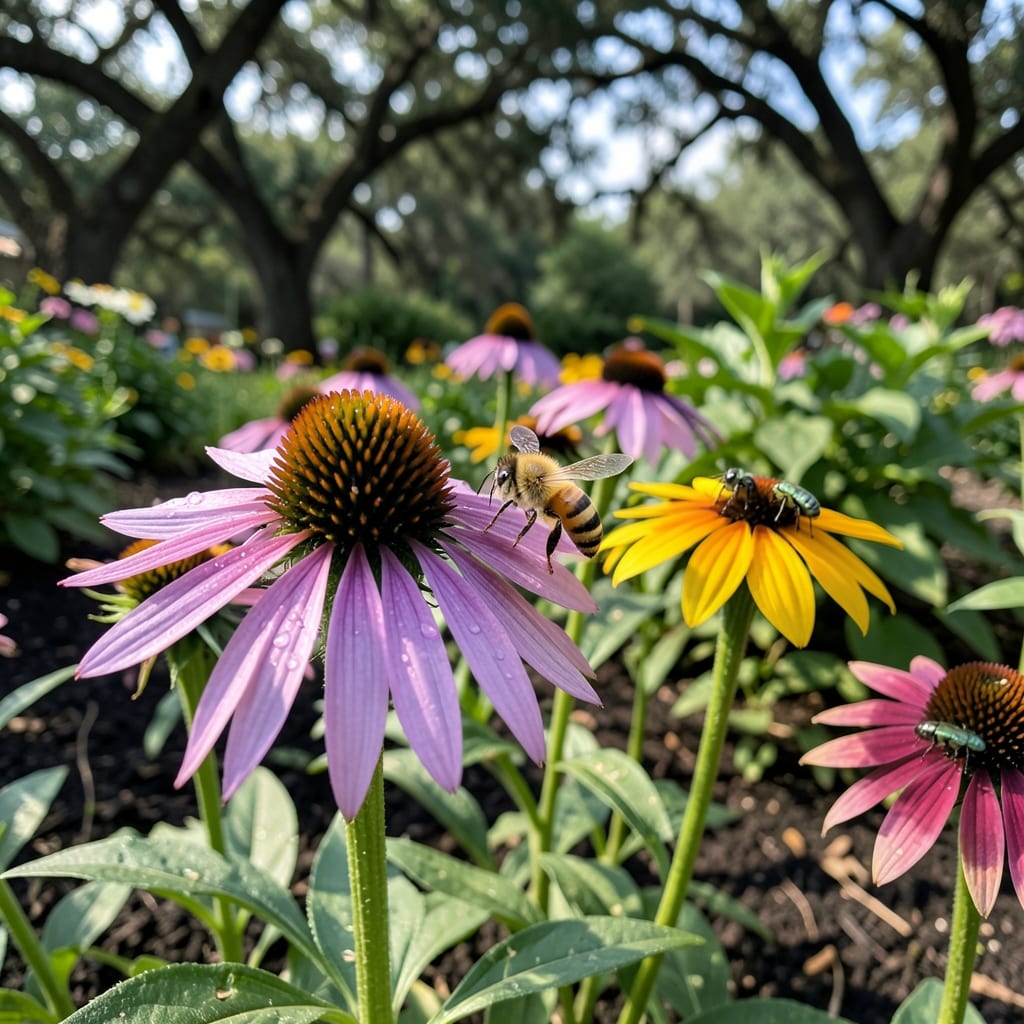
Louisiana hosts over 200 bee species, including native bumblebees and solitary bees, vital for pollinating crops like cotton, soybeans, and local wildflowers in its humid subtropical climate.
I’ve seen firsthand how these pollinators transform local ecosystems, from bustling agricultural fields to quiet backyard gardens. Their diversity ensures resilience—some thrive in wetlands while others prefer sandy soils. Supporting them means preserving biodiversity that keeps our food systems stable. ✨
What’s fascinating is their specialized roles. Certain bees co-evolved with specific plants, creating a delicate balance that benefits both. 🌟
💡 In This Article
Louisiana’s humid subtropical climate creates ideal conditions for a remarkable diversity of bees. The eastern bumblebee (Bombus impatiens) dominates with its fuzzy black-and-yellow body, thriving in open fields and forest edges. Its long tongue allows it to access nectar from deep tubular flowers like trumpet vine, giving it a competitive edge over shorter-tongued pollinators. 🔥
Solitary bees make up about 90% of the state’s species, including the metallic green sweat bee (Agapostemon spp.), which nests in sandy soils near wetlands. These bees collect pollen on specialized leg hairs, transporting it in a dry form unlike honeybees that mix it with nectar.
Their nesting burrows can extend up to 2 feet underground, lined with waterproof secretions to protect against flooding. ✨
Carpenter bees (Xylocopa spp.) are another standout, known for chewing into soft wood to create nesting galleries. Unlike termites, they don’t consume the wood—just excavate it to form perfectly circular tunnels. Females can drill up to 1 foot deep in a single day, with each tunnel housing multiple brood cells stocked with pollen and nectar.
💫
Mason bees (Osmia spp.) utilize mud to partition their nests, often in pre-existing cavities like hollow stems or man-made bee houses. A single female may lay 20-30 eggs in a season, with each offspring provisioned with enough food to develop independently.
Their efficiency in pollination is legendary—100 mason bees can pollinate as much as 1,000 honeybees. 🌟
What sets Louisiana’s bees apart is their adaptation to the state’s unique ecosystems. Coastal species like the seaside sweat bee (Lasioglossum spp.) tolerate saline soils, while upland species prefer the well-drained loams of the Mississippi River’s natural levees. This ecological specialization ensures year-round pollination services across diverse habitats. ⚡
Louisiana is home to over 200 species, including eastern bumblebees, metallic green sweat bees, and carpenter bees. Each plays a unique role in pollination across the state’s varied habitats.
Plant native wildflowers like purple coneflower and black-eyed Susan. Leave patches of bare soil for nesting and provide a shallow water source with pebbles. Avoid pesticides at all costs.
Yes! About 70% of native bees nest in the ground, including solitary sweat bees and mining bees. They prefer sandy or well-drained soils.
Spring through fall is critical. Plant early bloomers like Virginia bluebells for spring bees and add goldenrod for late-season pollinators. Continuous blooms ensure food is always available.