
Beautiful Plants For Your Interior
Beautiful Plants For Your Interior
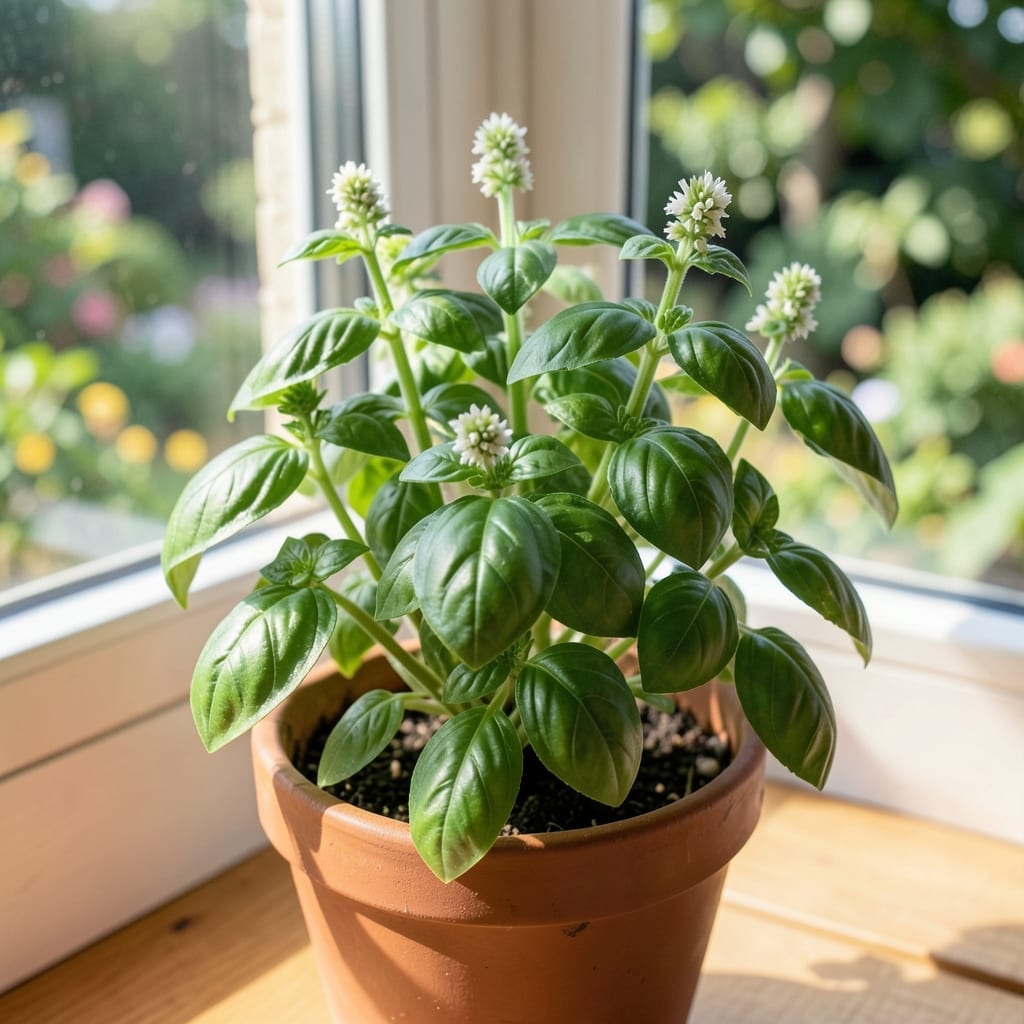
Those little white blooms on your basil aren’t a mistake. 🌱 I noticed the same thing last summer—tiny flowers appearing where I expected only leaves.
Flowering means your plant’s shifted from leaf production to reproduction. It happens when basil gets stressed by heat, inconsistent watering, or simply matures. The leaves may turn slightly bitter, but they’re still usable.
Here’s the thing—you can pinch off the flower buds to redirect energy back to leaf growth. It’s a simple fix that keeps your plant productive for weeks longer.
With the right care, your basil will stay lush and leafy. I’ve extended my harvest well into fall using this method.
Basil plants flower as a natural part of their life cycle, but several factors can trigger or accelerate this process. Understanding the causes helps you manage growth and prolong leaf production. Here’s why it happens:
Basil is an annual herb, meaning it completes its life cycle in one growing season. As the plant matures (typically after 6-8 weeks), it shifts energy from leaf production to reproduction, producing flowers to create seeds. This is a biological imperative—once the plant senses it’s nearing the end of its life, flowering begins.
Stress is a major trigger for premature flowering. Common stressors include:
Basil is sensitive to daylight duration. When days grow longer (typically in late spring or summer), the plant perceives it as a cue to flower. This is called photoperiodism. Even artificial grow lights left on too long (14+ hours/day) can trigger blooming.
If you don’t regularly pinch off the top sets of leaves (where flower buds form), the plant will naturally progress to flowering. Pruning delays this by redirecting energy to lateral (side) growth, but skipping this step accelerates the process.
If your basil plant starts flowering, don’t panic—there are simple ways to redirect its energy back to leaf production. Here’s how to address the most common causes and keep your herb lush and productive.
As soon as you spot flower buds or blooms, snip them off at the base of the stem. Use clean, sharp scissors or pruning shears to avoid damaging the plant. Removing flowers prevents the plant from diverting energy to seed production, encouraging bushier growth instead. For best results, prune regularly—every 2-3 weeks—to maintain a compact, leafy shape.
Basil flowers often appear when the plant feels it’s completed its lifecycle. Harvest leaves frequently (even just a few at a time) to signal the plant to keep producing foliage. Pinch off the top sets of leaves to promote branching. Aim to harvest in the morning when essential oils are most concentrated for the best flavor.
Stress from heat, poor soil, or inconsistent watering can trigger early flowering. Ensure your basil gets 6-8 hours of sunlight daily but provide afternoon shade in scorching climates. Use well-draining, nutrient-rich soil and water when the top inch feels dry. Avoid over-fertilizing, especially with high-nitrogen formulas, as this can also push the plant to flower prematurely.
💡 Pro Tip: If your basil is already flowering heavily, consider propagating cuttings from non-flowering stems. Root them in water or soil to grow fresh, vibrant plants for a continuous harvest.
Not at all! It’s a natural stage in the plant’s life cycle. Flowering simply means your basil is maturing. With proper pruning, you can extend its leaf production for weeks longer.
Yes, the leaves remain safe to eat. They may develop a slightly bitter taste, but this doesn’t affect edibility. Regular harvesting and pruning can help maintain flavor quality.
Check your plant weekly. Remove any flower buds as soon as you spot them to prevent energy from shifting to seed production. This encourages bushier growth.
No, it actually helps! Pruning stimulates new growth and prevents premature seeding. Use clean scissors to snip just above a leaf node for best results.