
Beautiful Plants For Your Interior
Beautiful Plants For Your Interior
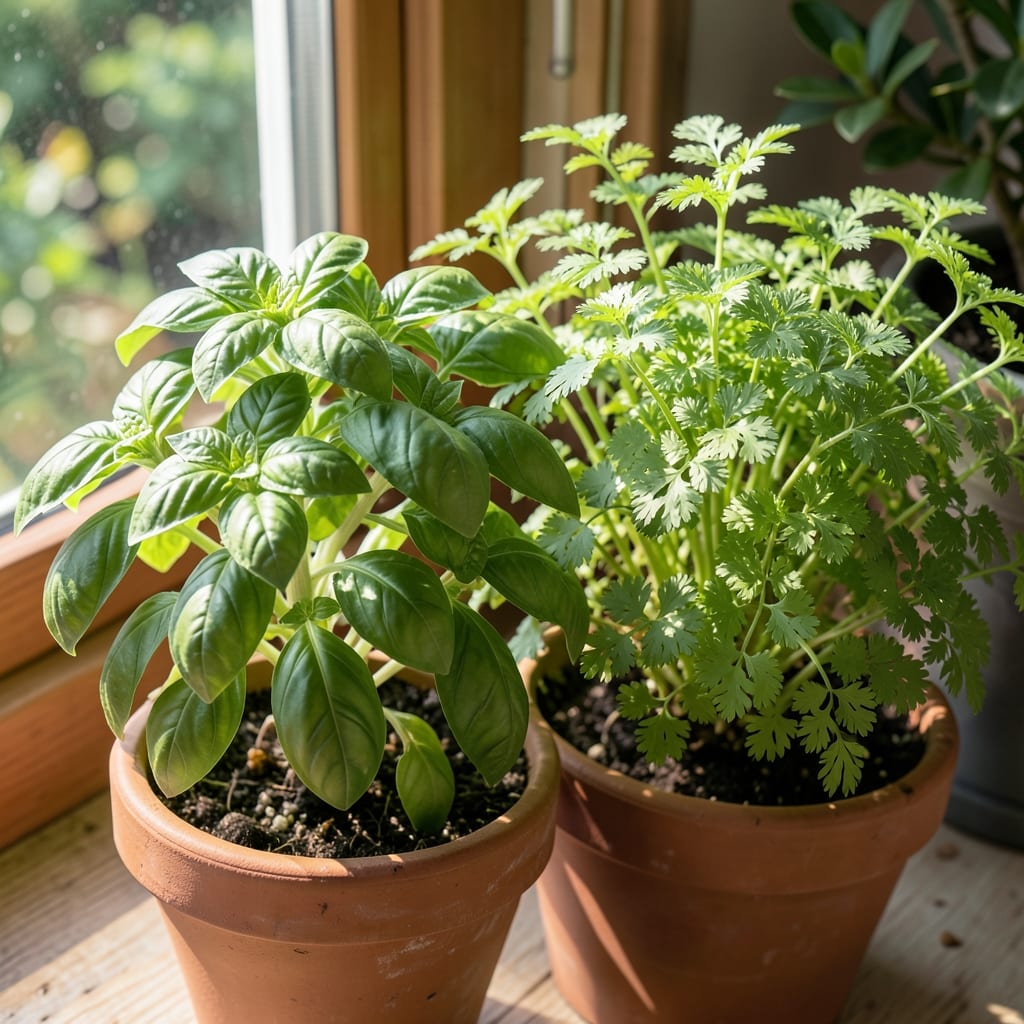
Basil and cilantro pair beautifully in dishes like salsas, Thai curries, and fresh salads, offering complementary sweet and citrusy notes that enhance each other’s brightness.
I love how these herbs create a dynamic contrast in any dish. The sweet anise-like aroma of basil balances cilantro’s sharp, citrus-forward punch, making them a powerhouse duo in Mediterranean and Southeast Asian cooking. This combination works so well because their volatile oils complement rather than compete. ⚡
You’ll notice the magic particularly in fresh applications where their raw flavors shine through. 💫
💡 In This Article
The secret lies in their terpene profiles. Basil is rich in linalool and estragole, compounds that deliver its sweet, floral notes with hints of anise. Cilantro, on the other hand, contains aldehydes like E-2-decenal, which give it that bright, citrusy kick.
These volatile oils don’t clash—they create a layered aroma that’s more complex than either herb alone. 🔥
When combined, basil’s eugenol (a warm, clove-like compound) softens cilantro’s sharpness, while cilantro’s limonene (a citrus terpene) lifts basil’s sweeter notes. This synergy is why they’re staples in Thai green curries, where basil’s warmth balances cilantro’s zesty edge, or in pesto variations that swap pine nuts for cilantro’s fresh bite.
The ratio matters: 2 parts basil to 1 part cilantro keeps the blend harmonious.
Cultural cuisines leverage this chemistry intentionally. Vietnamese pho often finishes with both herbs, where basil’s sweetness complements cilantro’s herbal punch in the broth. In Mexican salsas, their combination adds depth—basil’s mild sweetness rounds out cilantro’s bold acidity, making each ingredient taste more vibrant. ✨
Heat changes the equation. Cooking mellows cilantro’s aldehydes (reducing its soapy edge for some palates) while intensifying basil’s aromatic oils. A 30-second sauté in hot oil releases their essences without bitterness. For raw applications, like Caprese salads with cilantro, add cilantro last to preserve its crisp, citrusy pop against basil’s softer profile.
What most people don’t realize is that their chlorophyll content also plays a role. Both herbs contain high levels, which means they share a fresh, green undertone that unifies their flavors. This is why they work so well in herb butter or chimichurri— their shared green base ties everything together. ⚡
Thai green curries, Vietnamese pho, and fresh salsas shine with this combo. The 2:1 basil-to-cilantro ratio works perfectly in pesto or herb butter.
About 4-12% of people have a genetic sensitivity to cilantro’s aldehydes, perceiving a soapy taste. Basil’s sweetness helps mask this for many.
Yes! Use a 5-gallon pot with drainage. Plant 1 basil and 2-3 cilantro together, ensuring 6-8 hours of sun daily.
A 30-second sauté mellows cilantro’s sharpness while intensifying basil’s aroma. Add cilantro last for raw dishes to preserve its citrus pop.