
Beautiful Plants For Your Interior
Beautiful Plants For Your Interior
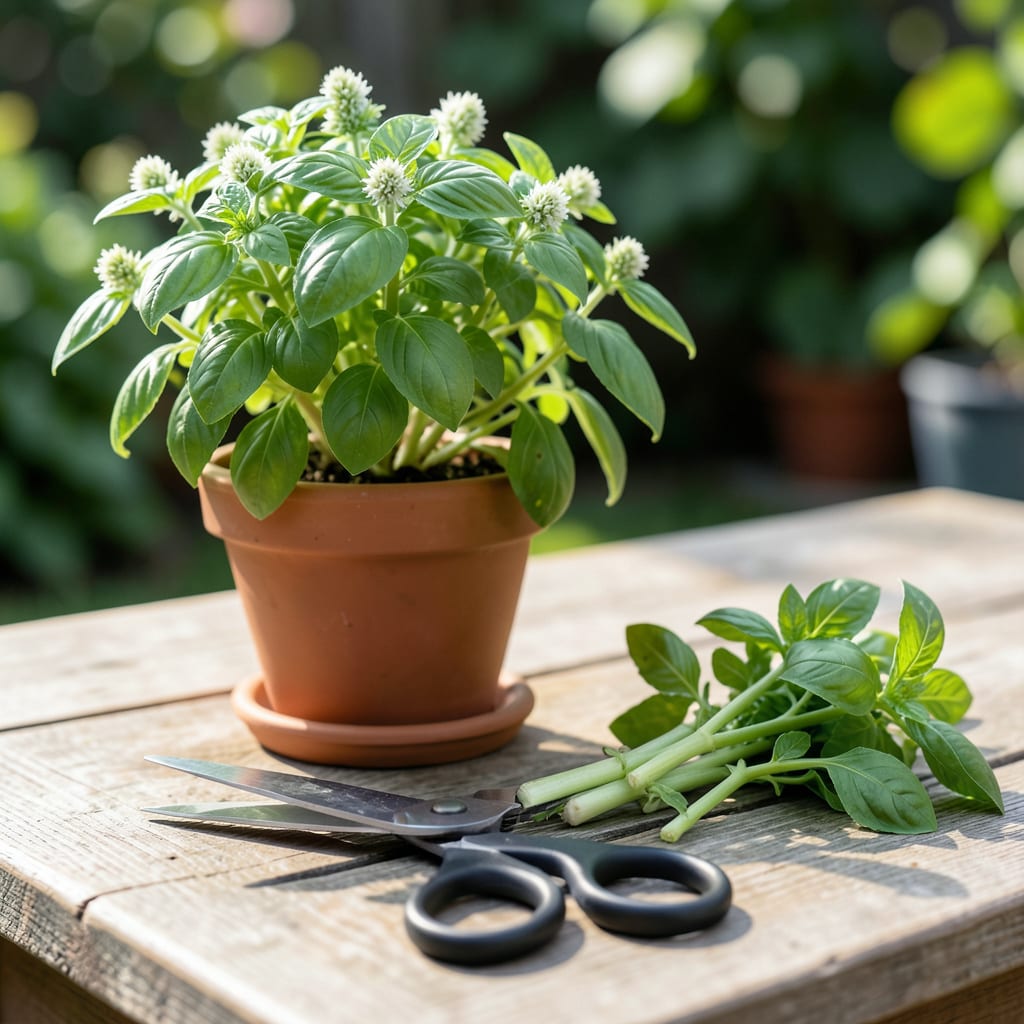
That first basil harvest feels magical – until your 🌿 plant stops growing. The difference between a one-time pick and a season-long supply comes down to how you trim.
I’ve turned single plants into endless herb producers with this simple method. Let me show you the exact cuts that keep basil thriving all summer long.


I’ve learned that proper harvesting is what separates a one-time harvest from a season-long supply. The key is making cuts that encourage the plant to branch out and grow more leaves.
With basil, you’re not just picking leaves—you’re shaping the plant’s future growth. The right technique turns a single stem into a bushy, productive plant that keeps giving. 🌿
Start by examining your basil plant for the right signs of readiness. I look for multiple sets of leaves and stems that are firm and woody at the base. This tells me the plant is strong enough to handle pruning.
When making the cut, focus on the leaf nodes—those little bumps where leaves emerge. Cutting just above them signals the plant to produce two new stems from that point, doubling your future harvest.
I always use sharp scissors or pruning shears to make clean cuts. Dull tools can crush the stems, making the plant more susceptible to disease and slower to recover.
Timing matters too. I harvest in the early morning when the plant’s natural oils are most concentrated. This also gives the plant the rest of the day to recover before the heat of the afternoon sets in.
Another pro tip: never harvest more than one-third of the plant at once. Removing too much foliage shocks the plant and can stunt its growth for weeks. I stick to light, frequent trims instead.
If you notice flower buds forming, pinch them off immediately. Once basil flowers, the leaves often turn bitter, and the plant focuses its energy on producing seeds rather than leaves.
With consistent care, your basil will reward you with lush growth all season long. I’ve had plants that produced continuously for 4-5 months using these techniques. ✂️
Even with the best intentions, small errors can ruin your basil harvest. I’ve seen gardeners accidentally kill their plants by making just one wrong cut. The good news? These mistakes are easy to avoid once you know what to watch for.
Most issues stem from improper timing or poor technique. Your basil wants to grow—it just needs the right conditions and care to bounce back after each harvest. 🌿
Cutting too low: Never trim below the second leaf set from the bottom.
Removing too much: Taking more than 1/3 of leaves stresses the plant.
Using dull tools: Crushed stems invite disease and slow recovery.
Harvesting at noon: Midday heat can wilt fresh cuts before they heal.
One of the most common mistakes is cutting too close to the base. I always leave at least two sets of leaves on the stem to ensure the plant can still photosynthesize and recover. Without these, your basil may not have enough energy to regrow.
Another issue is over-harvesting. It’s tempting to take as much as possible, but removing more than one-third of the foliage at once can shock the plant. I stick to light, frequent trims instead of heavy, infrequent ones.
Dull tools are a silent killer. Crushed stems heal more slowly and are more prone to infection. I always use sharp scissors or pruning shears for clean cuts that help the plant recover quickly.
Timing also matters. Harvesting in the heat of the day can cause the fresh cuts to lose moisture rapidly. I always aim for the early morning when the plant is hydrated and the temperature is cooler.
By avoiding these common pitfalls, your basil will stay healthy and productive for months. I’ve kept plants thriving well into fall by following these simple rules. ✂️
Timing your basil harvest can make all the difference between a struggling plant and a thriving herb garden. I’ve found that consistency is key to keeping my plants productive all season long.
Harvesting at the right time of day and with the right frequency ensures your basil stays healthy and continues to produce new growth. Morning is always my go-to time for the best results. 🌿
| Harvest Factor | Optimal Specification |
|---|---|
| Time of Day | Early morning |
| Frequency | Every 2-3 weeks |
| Plant Height | 6+ inches tall |
| Leaf Condition | Dark green, fragrant |
| Amount to Remove | Max 1/3 of foliage |
I always aim to harvest in the early morning when the essential oils in the leaves are most concentrated. This also gives the plant plenty of time to recover during the cooler part of the day.
For frequency, I stick to harvesting every 2-3 weeks. This schedule gives the plant enough time to regrow while preventing it from becoming too woody or leggy. I’ve noticed my plants stay bushier and more productive with this routine.
Pay attention to your plant’s signals. When it reaches about 6 inches tall with multiple sets of leaves, it’s ready for its first trim. After that, regular harvesting keeps it in a constant growth cycle. ✂️
Harvest every 2-3 weeks for optimal regrowth. This schedule keeps your plant bushy and productive without stressing it.
Cutting below the second leaf set can prevent regrowth. Always leave at least 2 sets of leaves to ensure recovery.
Yes, but ensure they’re sharp and clean. Dull tools crush stems, slowing recovery and increasing disease risk.
Leggy growth usually means it needs more light or was harvested too infrequently. Maintain 6+ hours of sun daily.
