
Beautiful Plants For Your Interior
Beautiful Plants For Your Interior
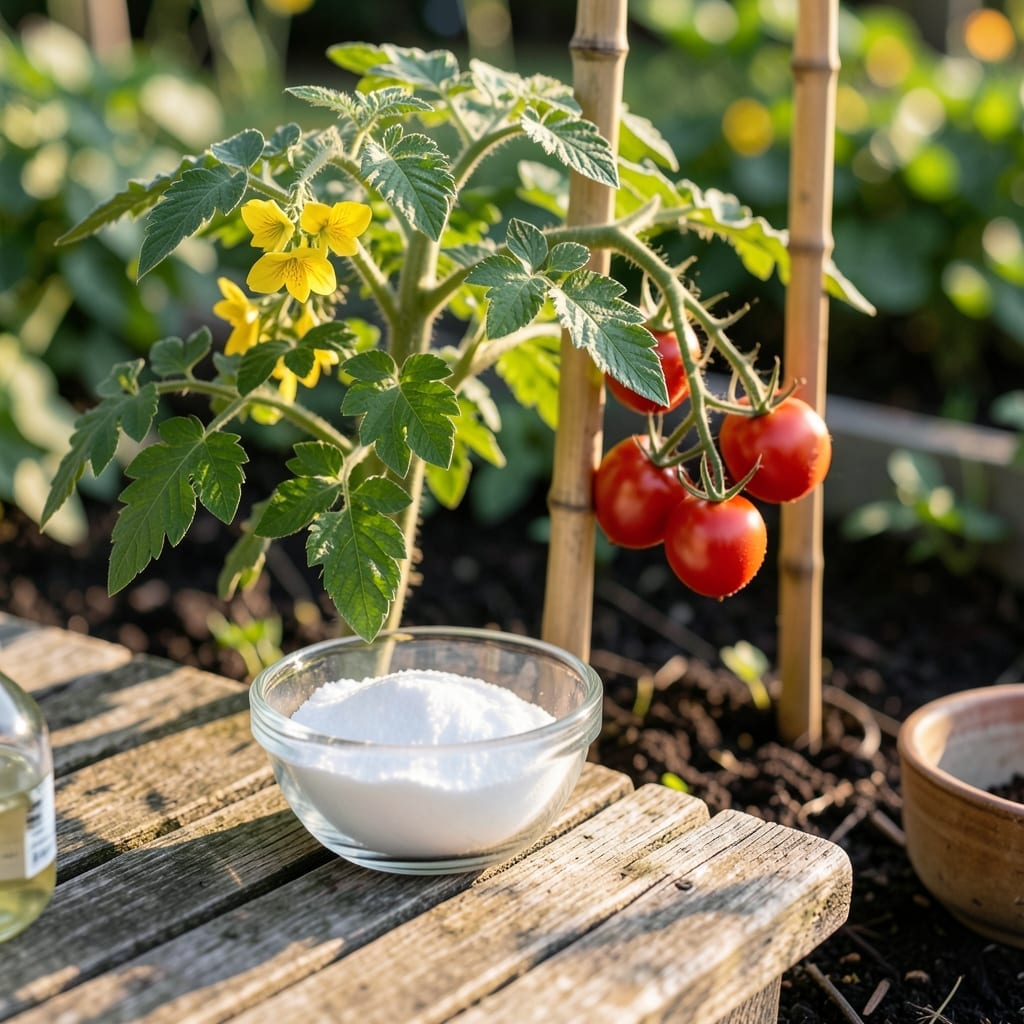
Tomato leaves turning spotted or curling? I found a simple fix hiding in my pantry. This household staple transformed my struggling plants into thriving producers with just a weekly spray.
Fungal issues and pests don’t stand a chance against this natural solution. My plants now show fewer signs of stress and bounce back faster after rain. The best part? It works alongside your regular care routine without harsh chemicals.
You’ll notice healthier foliage within 1-2 weeks of starting treatments. The trick is consistency and proper dilution—too much can harm your plants as much as it helps.
Works for both container and in-ground tomatoes. Here’s how to mix and apply it safely for season-long protection.
Understanding why baking soda affects tomatoes starts with its chemical properties and how they interact with plant biology. Here’s a breakdown of the key causes:
Baking soda (sodium bicarbonate) is alkaline, with a pH of around 8.3. Tomatoes thrive in slightly acidic soil (pH 6.0–6.8). When baking soda is applied, it raises the soil pH, disrupting nutrient uptake. Iron, manganese, and phosphorus—essential for tomato growth—become less available in alkaline conditions, leading to deficiencies like yellowing leaves (chlorosis).
Baking soda contains sodium, which can accumulate in the soil. Excess sodium displaces calcium and potassium, critical for cell wall strength and fruit development. This imbalance may cause blossom end rot or stunted growth, as tomatoes struggle to absorb water and nutrients efficiently.
While baking soda is often used as a natural fungicide, its effectiveness is limited. It works by creating an alkaline surface that inhibits fungal spores (like powdery mildew). However, overuse can damage plant tissues, as the high pH disrupts the cuticle—the protective layer on leaves—making tomatoes more vulnerable to other diseases or environmental stress.
If baking soda isn’t properly diluted, it can leave a white, chalky residue on leaves. This residue blocks stomata (tiny pores), reducing photosynthesis and gas exchange. Over time, this weakens the plant and may even attract pests like aphids, which are drawn to stressed plants.
If you’ve noticed issues with your tomato plants, using baking soda can be a simple and effective solution. Below are targeted fixes for common problems, along with prevention tips to keep your plants thriving.
Blossom end rot is often caused by calcium deficiency. Mix 1 tablespoon of baking soda in a gallon of water and spray it on the leaves and soil. This helps restore calcium levels. Prevention tip: 💡 Ensure consistent watering and add crushed eggshells to the soil for long-term calcium.
Baking soda disrupts fungal growth. Combine 1 teaspoon of baking soda, 1 quart of water, and a few drops of dish soap. Spray this mixture on leaves every 7–10 days. Prevention tip: 🌡️ Improve air circulation around plants and avoid overhead watering to reduce humidity.
For pests like aphids, a baking soda spray can deter them without harsh chemicals. Mix 1 tablespoon of baking soda and 1 teaspoon of dish soap in a quart of water. Spray directly on pests. Prevention tip: ✨ Encourage beneficial insects like ladybugs by planting companion flowers.
If your soil is too acidic, baking soda can help balance the pH. Sprinkle a light dusting around the base of the plant and water it in. Prevention tip: 🎯 Test your soil regularly and amend it with compost for optimal health.
These solutions are easy, natural, and budget-friendly. With a little care, your tomato plants will be back on track in no time!
Apply a baking soda solution every 7-10 days as a preventive measure. For active fungal issues, you can increase to weekly until symptoms disappear. Always spray in the morning to allow leaves to dry.
Yes, but sparingly. A light dusting around the base can help with minor pH imbalances. Avoid overuse, as too much can raise soil pH beyond what tomatoes prefer (6.0-6.8).
Mix 1 teaspoon of baking soda with 1 quart of water and a few drops of dish soap. This concentration is effective yet gentle enough to avoid leaf burn.
Only if overused. Excess baking soda can raise soil pH too much or leave residue that clogs leaf pores. Stick to recommended dilutions and frequencies to keep plants healthy.