
Beautiful Plants For Your Interior
Beautiful Plants For Your Interior
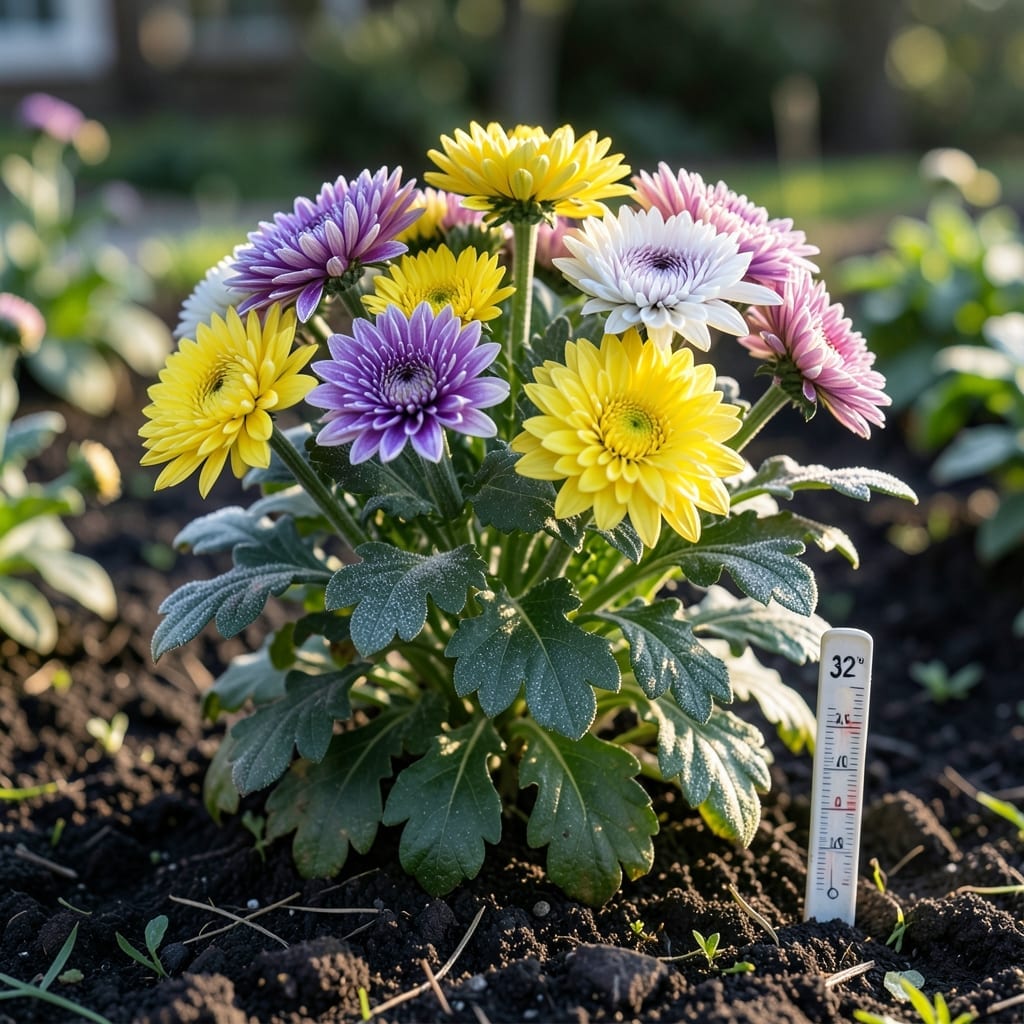
Hardy mums can withstand light frost and even survive temperatures down to 20°F, but tender varieties may suffer damage. Prolonged freezes or poor drainage increase risk of plant loss.
In my garden, I’ve found that established hardy mums often bounce back after light frosts, thanks to their deep root systems that store energy. 🔥 The key difference lies in variety—garden mums tend to be tougher than florist mums, which are bred for looks over resilience. I always check soil drainage before winter, as soggy roots are more vulnerable to cold damage than the foliage.
💡 In This Article
Chrysanthemums trigger a natural survival response as temperatures drop. Hardy varieties enter semi-dormancy, redirecting energy to their extensive root systems. These roots can extend 12-18 inches deep, storing carbohydrates that fuel regrowth when warmth returns. The above-ground foliage may wilt, but the crown stays protected just below the soil surface. 🔥
Florist mums, bred for showy blooms, lack this resilience. Their shallow roots and soft growth can’t withstand temperatures below 32°F for extended periods.
In contrast, garden mums (like ‘Mammoth’ or ‘Sheet’ series) contain higher levels of natural antifreeze proteins that prevent ice crystal formation within plant cells, similar to how some Arctic plants survive harsh winters.
The timing of frost matters greatly. A light frost in early fall often just nips the flowers, while the plant itself remains healthy. However, a hard frost (28°F or below) can damage stems. I’ve observed that mums in well-drained soil recover better because waterlogged roots are more susceptible to freezing and rotting.
The soil acts as insulation, with temperatures 4-5°F warmer at 6-inch depth than the surface. ✨
Dormancy is key to their survival strategy. As daylight shortens and temperatures drop below 50°F, mums begin producing abscisic acid, a hormone that slows growth and prepares the plant for winter. This process is similar to how deciduous trees shed leaves. The plant’s metabolism nearly stops, conserving energy until spring. 💫
Even hardy mums have limits. Prolonged exposure to 10°F or lower without snow cover can kill the crown. Snow acts as nature’s mulch, providing insulation. In my garden journals, I’ve noted that mums with a thick layer of organic mulch survive 5-10°F colder temperatures than unprotected plants.
Hardy garden mums handle light frost and temps down to 20°F. Florist mums struggle below 32°F. Prolonged freezes or wet soil increase risk of harm.
Yes, use frost cloth or old sheets in late afternoon. Secure edges with stones. Remove covers mid-morning after frost passes to allow airflow.
Plant at least 6 weeks before first hard frost. This gives roots time to establish. Spring planting often works better in harsh climates.
Containers expose roots to colder temps than ground soil. Move pots to sheltered areas or wrap in burlap. Group them for shared warmth.