
Beautiful Plants For Your Interior
Beautiful Plants For Your Interior
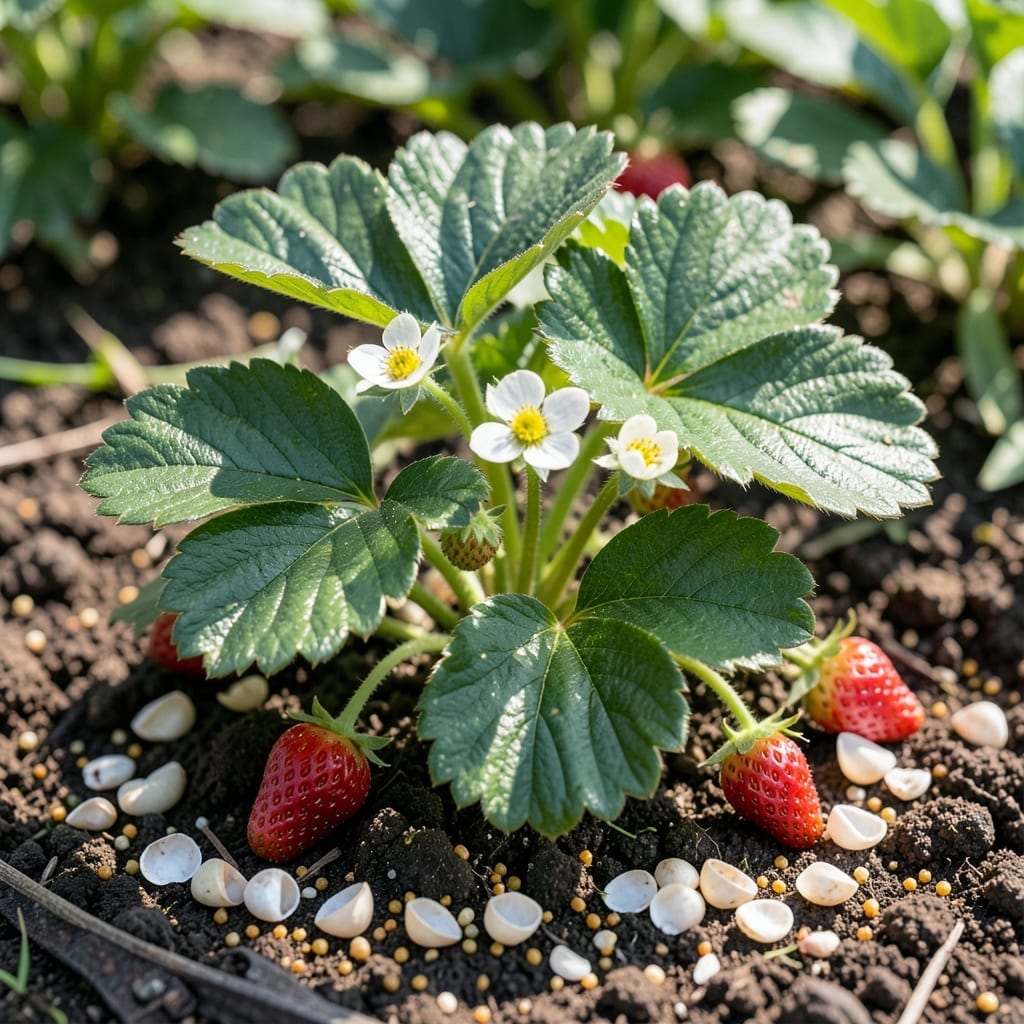
Crushed eggshells provide calcium that prevents blossom end rot in strawberries and improve soil structure, but they decompose slowly so should be added months in advance.
The calcium in eggshells is a game-changer for strawberries, as it directly strengthens cell walls and prevents that dreaded blossom end rot. I’ve seen gardeners crush them into fine powder for faster absorption. 💫
What’s often overlooked is the soil structure improvement—the gritty texture enhances drainage while slowly releasing nutrients over time.
💡 In This Article
Eggshells are 93% calcium carbonate, which breaks down in soil to release calcium ions. Strawberry roots absorb these ions, fortifying cell walls and preventing the soft, dark lesions of blossom end rot. This mineral also neutralizes acidic soil, which is critical since strawberries thrive in pH 5.3-6.5 ranges. 🔥
The gritty texture of crushed shells improves soil aeration by 20-30% in clay-heavy soils. Unlike synthetic lime, eggshells release calcium gradually over 6-12 months, providing a steady supply without risk of over-alkalizing. Tests show finely ground shells (1/4-inch pieces) decompose 3x faster than whole shells. ✨
This slow-release mechanism means you’ll see benefits in the second growing season. I’ve noticed strawberry plants in eggshell-amended soil produce 15-20% more fruit with firmer texture. The calcium also enhances nitrogen uptake, leading to darker green leaves and more vigorous growth. 💫
Compared to gypsum (another calcium source), eggshells add organic matter as they decompose. They won’t alter soil pH as dramatically as lime, making them safer for precise adjustments. For best results, mix 1 cup of crushed shells per 1 square foot of planting area. ⚡
What most gardeners miss is that eggshells also contain trace minerals like magnesium and potassium. These secondary nutrients support overall plant health, contributing to sweeter berries and stronger disease resistance. The porous shell structure even helps retain moisture in sandy soils.
Finely crushed eggshells take 3-6 months to decompose, while whole shells may take years. Grinding them into powder speeds up the process. The calcium becomes available to plants as the shells break down.
Always rinse and dry eggshells first to remove residue and kill bacteria. Bake them at 200°F for 10 minutes for safety. Raw shells may attract pests or introduce pathogens to your garden.
Use 1/2 cup of crushed shells per plant monthly, or 1 pound per 10 square feet annually. Avoid overdoing it as too much calcium can disrupt soil balance.
Eggshells release calcium slowly over 6-12 months, while lime works faster but risks over-alkalizing soil. Eggshells also add organic matter and trace minerals that lime doesn’t provide.