
Beautiful Plants For Your Interior
Beautiful Plants For Your Interior
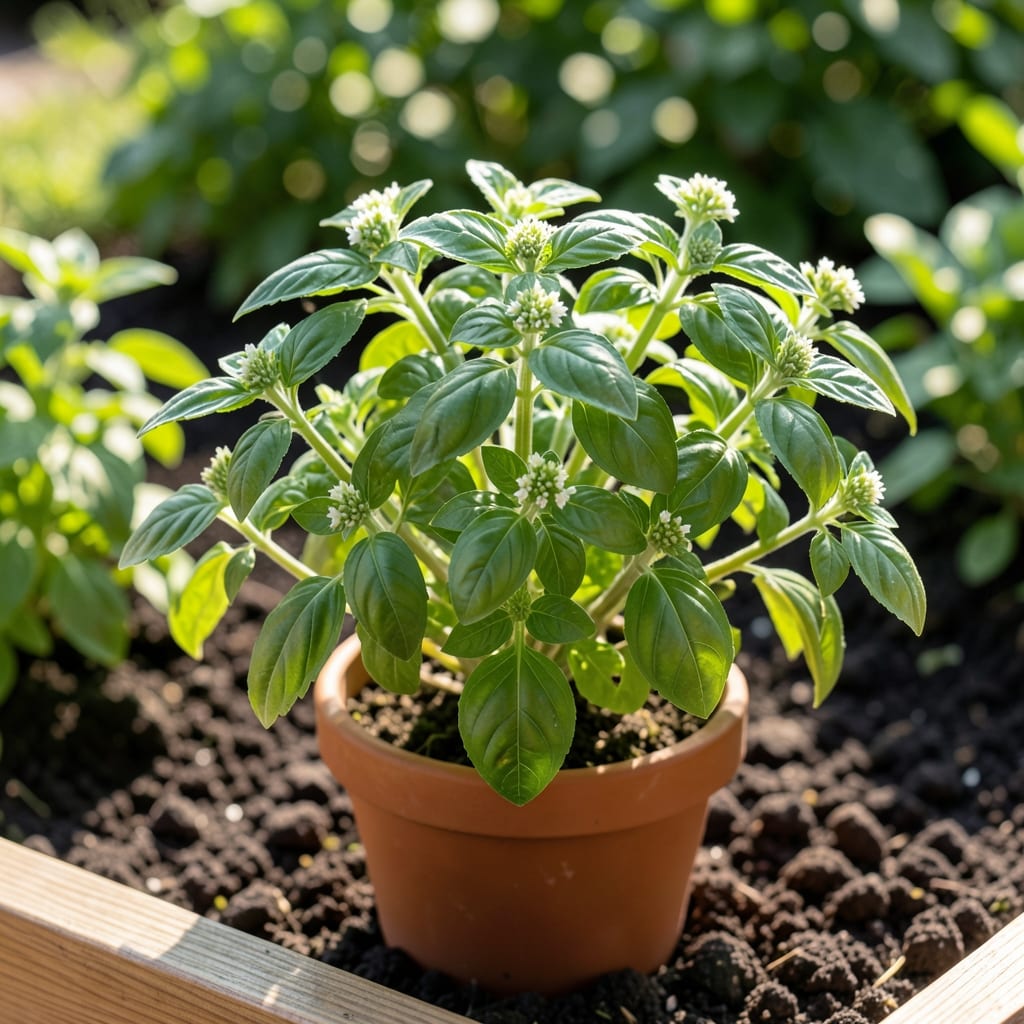
Yes, basil blossoms are completely edible and non-toxic. They have a milder, sweeter flavor than the leaves, making them a great garnish or salad topping.
I love using these delicate flowers in my kitchen because they add a subtle floral note that elevates simple dishes. Their natural compounds are entirely safe, and they’ve been used in cooking for centuries across Mediterranean and Asian cuisines. Try them in herbal teas or as a colorful finish for pasta dishes to experience their unique character. ✨
💡 In This Article
Basil belongs to the Ocimum genus, part of the mint family, and its flowers contain the same safe, aromatic compounds as the leaves. These blossoms are rich in eugenol, a natural phenolic compound that gives basil its distinctive scent and mild antiseptic properties.
Unlike some ornamental plants, basil has evolved without toxic defenses, making all parts—leaves, stems, and flowers—edible. 🌟
Historical records show basil flowers have been consumed for over 2,000 years across Mediterranean, Indian, and Southeast Asian cuisines. Ancient Greeks used them in sacred rituals, while Ayurvedic medicine incorporated them for digestive benefits. The flowers contain approximately 0.5-1.5% essential oils, which are concentrated but harmless in culinary amounts.
The key difference from potentially dangerous flowers lies in basil’s cultivated nature. Wild flowers often develop toxic alkaloids as protection, but domesticated basil has been selectively bred for safety and flavor. This makes its blossoms as safe as the leaves you regularly use in pesto or caprese salads. ✨
Scientifically, basil flowers contain no known anti-nutrients or harmful substances when consumed in normal food quantities. Their mild bitterness comes from tannins, the same compounds found in tea leaves, which are actually beneficial in moderation. The flowers’ cellular structure is also identical to the leaves, just with a higher concentration of nectar-producing glands.
This biological safety extends to all common basil varieties—sweet, Thai, lemon, or purple basil. Each produces edible flowers with slightly different flavor profiles, from the citrus notes of lemon basil blossoms to the clove-like warmth of Thai basil flowers. The color variation comes from anthocyanins, water-soluble pigments that are completely harmless. 💫
No, the flowers have a milder, sweeter profile with subtle floral notes. They lack the peppery sharpness of leaves but retain a familiar basil undertone. Many describe the flavor as a delicate cross between anise and mint.
Rinse gently under cool water and pat dry with paper towels. Remove any green sepals at the base if desired. Use whole flowers for garnishes or pull petals apart for even distribution in dishes.
Add them to soups, sauces, or stir-fries during the last 2-3 minutes of cooking to preserve their color and flavor. They also make a beautiful edible garnish for finished plates.
Yes, all common culinary basil types—sweet, Thai, lemon, or purple—produce edible blossoms. Each variety’s flowers carry the same safety profile as their leaves, just with slightly different flavor nuances.