
Beautiful Plants For Your Interior
Beautiful Plants For Your Interior
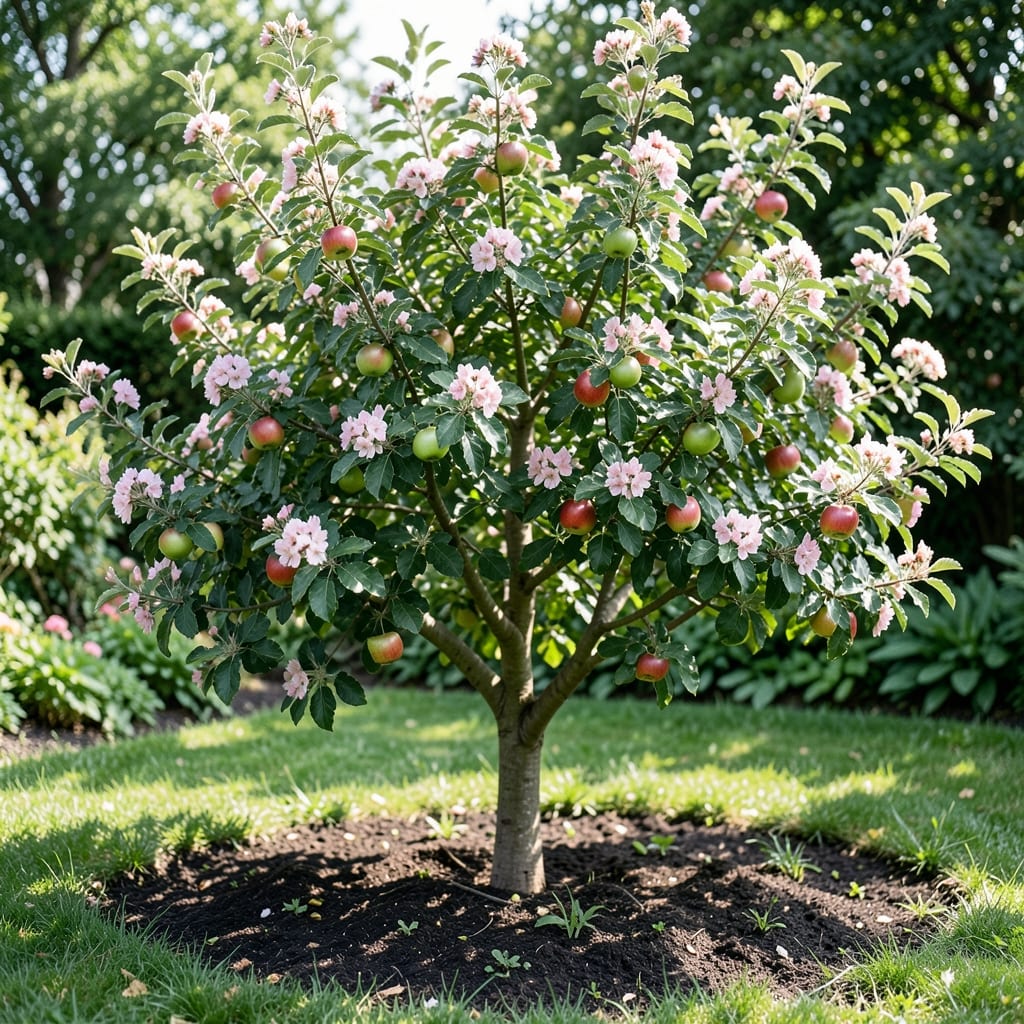
There are over 7,500 known apple varieties worldwide, with the exact count constantly growing as new cultivars are developed by growers and researchers.
I find it fascinating that this diversity comes from centuries of careful cultivation, with each region developing its own unique types. From crisp Honeycrisp to tart Granny Smith, the range covers every taste preference and culinary use imaginable. 🔥
What’s even more impressive is how breeders continue to expand this number through selective cross-pollination and modern genetic techniques.
💡 In This Article
The classification of apple varieties starts with their genetic origins. Each cultivar traces back to Malus domestica, but subtle genetic differences create distinct types. Botanists use DNA fingerprinting to identify unique varieties, with each apple’s genetic code containing over 57,000 genes that determine traits like color, sweetness, and disease resistance. 🔥
New cultivars emerge through controlled cross-pollination in research orchards. Breeders might cross a Honeycrisp (known for its crisp texture) with a Liberty (disease-resistant) to create a new variety combining both traits. This process takes 15-20 years from first cross to commercial release, with thousands of seedlings evaluated for desirable characteristics.
Grafting plays a crucial role in preserving and propagating varieties. A single bud from a parent tree can be grafted onto rootstock to produce an exact genetic replica. This method allows growers to maintain consistency in flavor and appearance across generations.
Commercial orchards often use dwarfing rootstocks, which keep trees at 6-10 feet tall for easier harvesting. ✨
Modern genetic research has accelerated variety development. Scientists now use marker-assisted selection to identify desirable traits early in a seedling’s life. The Cosmic Crisp, released in 2019, resulted from 20 years of research at Washington State University, combining the best traits of Honeycrisp and Enterprise varieties.
Climate adaptation drives much of the variation we see today. Varieties like Granny Smith thrive in warm climates, while Haralson was developed specifically for cold Minnesota winters. This regional specialization explains why certain varieties dominate in particular areas, with local nurseries often carrying the most suitable types for their climate zone. ⚡
Centuries of selective breeding created this diversity. Growers developed new varieties for specific tastes, climates, and uses like baking or cider. Each region also developed its own unique cultivars.
Granny Smith and Braeburn hold their shape and tartness when cooked. Their firm texture prevents mushiness in pies. Jonagold offers a sweeter baked flavor.
From cross-pollination to commercial release takes 15-20 years. Thousands of seedlings are tested for flavor, texture, and disease resistance. Cosmic Crisp took 20 years to perfect.
Yes! Dwarf rootstocks keep trees at 6-8 feet tall. You can even grow them in containers on patios. Just ensure 15 feet between full-size trees.