
Beautiful Plants For Your Interior
Beautiful Plants For Your Interior
Apple scab can turn a promising harvest into a disappointing mess of spotted fruit. I’ve fought this fungal menace in my own orchard for years, and neem oil became my secret weapon—not just for treatment, but for prevention that actually works. The key is timing: apply it before symptoms appear, and you’ll stop the fungus […]
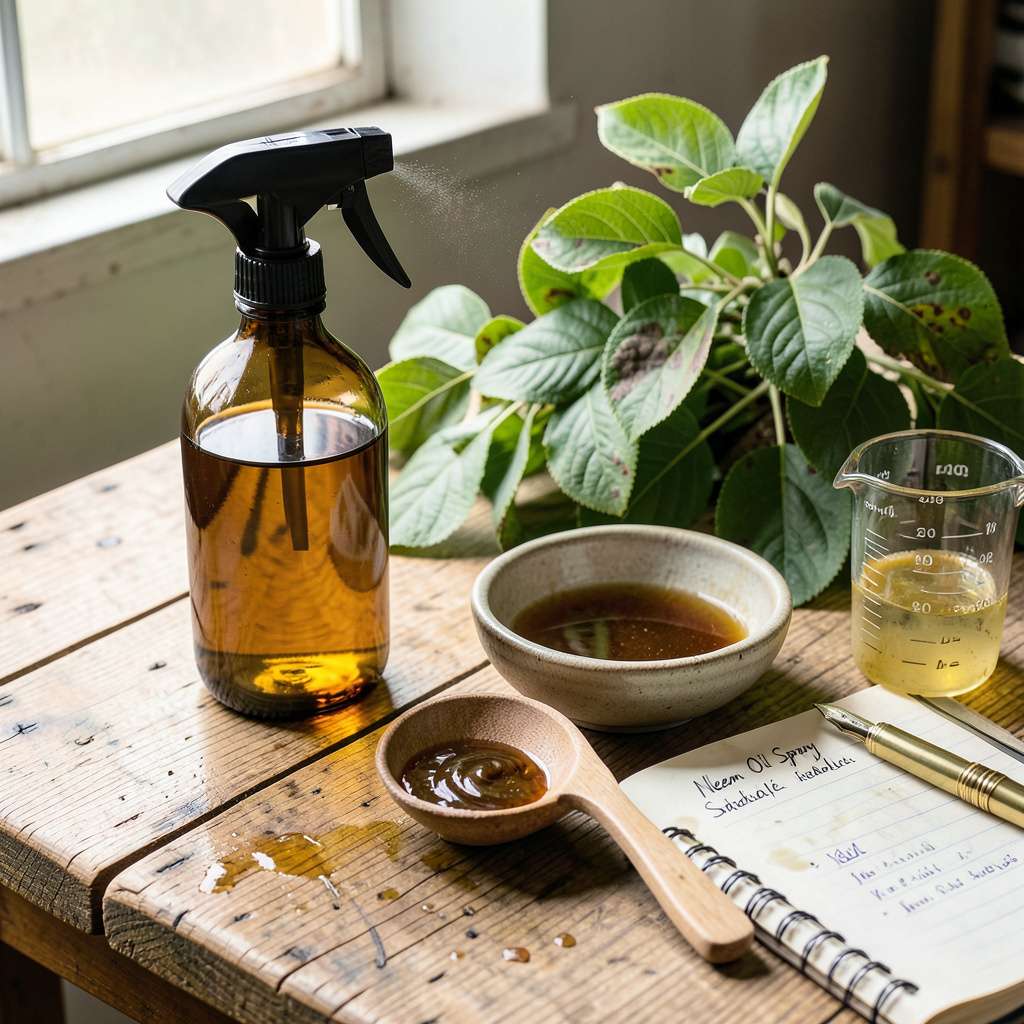
Apple scab can turn a promising harvest into a disappointing mess of spotted fruit. I’ve fought this fungal menace in my own orchard for years, and neem oil became my secret weapon—not just for treatment, but for prevention that actually works. The key is timing: apply it before symptoms appear, and you’ll stop the fungus before it even starts.
What makes neem oil so effective is its dual action. It smothers existing spores while preventing new ones from taking hold. I use a 1-2% dilution (that’s about 1-2 tablespoons per gallon of water) with a drop of dish soap to help it stick. First application goes on at bud break, then every 7-14 days through petal fall—this is when your trees are most vulnerable.
The results speak for themselves: cleaner leaves, healthier fruit, and no chemical residue. My trees went from 50% scab coverage to nearly spotless after two seasons of consistent neem treatments. You’ll notice the difference by midsummer when other growers are dealing with outbreaks.
Fair warning: neem works best as prevention, not cure. If you’re already seeing heavy scab, you’ll need to combine this with sanitation practices. But start early next season, and you’ll be amazed at how much cleaner your harvest stays. Here’s exactly how to mix and apply it right.
📚 In This Guide
Timing and technique make all the difference—here’s how to apply neem oil effectively for healthy trees and clean fruit.
Start with 100% cold-pressed neem oil labeled for horticultural use. I avoid pre-mixed sprays because you can’t adjust the concentration for different conditions. Look for products that specify they’re safe for edible crops—this ensures no harmful additives that could linger on your fruit.
Check the expiration date too. Neem oil degrades over time, especially if exposed to heat or light. A fresh bottle with a tight seal works best. Store any unused oil in a cool, dark place to maintain its effectiveness for future applications.
Mix 1 tablespoon of neem oil with 1 teaspoon of mild liquid soap (as an emulsifier) per 1 gallon of warm water. The soap helps the oil disperse evenly in water—without it, the oil will float uselessly on the surface. Shake vigorously in a spray bottle until the mixture turns milky white.
Test the solution on a small section of the tree first. Wait 24 hours to check for any adverse reactions like leaf burn. This precaution matters most for young trees or those already stressed by disease. If no issues appear, you’re ready for full application.
Spray when apple buds show green tissue (just before they open) and repeat every 7-10 days until petal fall. This timing interrupts the scab fungus’s life cycle before it can infect new growth. Cover all surfaces—top and bottom of leaves, branches, and the trunk—until the solution drips slightly.
Apply in the early morning or late evening to avoid direct sunlight, which can cause the oil to burn foliage. Avoid spraying during rain or when rain is forecast within 24 hours—the treatment needs time to absorb and won’t work if washed off immediately.
Check treated areas weekly for new scab lesions, which appear as olive-green to brown spots on leaves or fruit. If you spot new infections, apply another treatment immediately. Neem oil works best as a preventative, but it can slow the spread of existing infections if caught early.
Continue applications through the growing season, especially during wet springs when scab pressure is highest. I mark my calendar for regular treatments—consistency prevents the fungus from gaining a foothold. Always reapply after heavy rain, as water will dilute the protective coating.
Stop neem oil applications at least 14 days before harvest to allow residues to break down. While neem oil is considered safe for edible crops, this waiting period ensures no lingering taste or film on your apples. Wash fruit thoroughly before eating, even from treated trees.
Store your neem oil mixture in a cool, dark place if you have leftovers. It remains effective for about 8 hours after mixing, so use it the same day for best results. For future applications, always prepare fresh solution—old mixtures lose potency quickly.
After years of battling apple scab in our orchard, we’ve learned these key lessons the hard way—so you don’t have to.
Solution Stability: The 24-hour test period in Step 2 isn’t just precautionary—it’s your safety net. I once skipped this with a stressed tree and ended up with burned leaves that took weeks to recover. Young trees and varieties with delicate foliage (like Honeycrisp) are particularly sensitive, so never rush this waiting period.
Application Timing: That 7-10 day window in Step 3 becomes critical during wet springs when scab spores spread fastest. I mark my calendar in two colors: green for “spray day” and red for “rain check days” when I need to reapply after storms. Missing even one application during peak spore release can set you back weeks in disease control.
Mixture Potency: The 8-hour effectiveness window for your neem solution means you’ll need to plan your spraying schedule carefully. I divide my orchard into sections and mix fresh batches as I go rather than trying to cover everything with one mixture. This ensures maximum potency when the spray actually hits the trees, especially important for larger orchards where you might not finish in one session.
Residue Management: Those 14 days before harvest aren’t just about residue breakdown—they’re your final quality check. I once harvested too soon after treatment and noticed a faint bitter taste on the apple skins. Now I do a taste test with one apple at day 12 to confirm the neem flavor has completely dissipated before full harvest.
Apply neem oil every 7–14 days during wet spring weather (when spores spread). Start at bud break and continue until petal fall. Reapply after heavy rain, as water can wash it off. Consistency is key—skipping treatments may reduce effectiveness!
Yes, but it works best as a preventative. Once scab lesions form, neem oil can slow progression but won’t cure existing infections. Prune infected branches and combine with copper fungicide for severe cases. Early action saves your harvest!
Spray in the early morning or late evening to avoid leaf burn (neem oil + sunlight = risk!). Choose a calm, dry day—wind can drift spray, and rain may wash it away. Always test a small area first to check for sensitivity.
If scab persists, try:
Rotate methods to prevent resistance!
Residue happens if the oil isn’t properly emulsified. Mix neem oil with a mild soap (like Castile) or commercial emulsifier before adding water. Shake well! Residue won’t harm the tree but can block sunlight—rinse with water if excessive.
Neem oil offers a safe, organic solution to combat apple scab without harsh chemicals—protecting both your trees and the environment. 🌿 By applying it early and consistently, you can prevent fungal spores from taking hold and ensure a healthier, more bountiful harvest.
Ready to give it a try? Start with a small test spray on a few leaves, then scale up as you gain confidence. For best results, pair neem oil with good orchard hygiene—like removing fallen leaves—and watch your apple trees thrive! 🍏💚
