
Beautiful Plants For Your Interior
Beautiful Plants For Your Interior
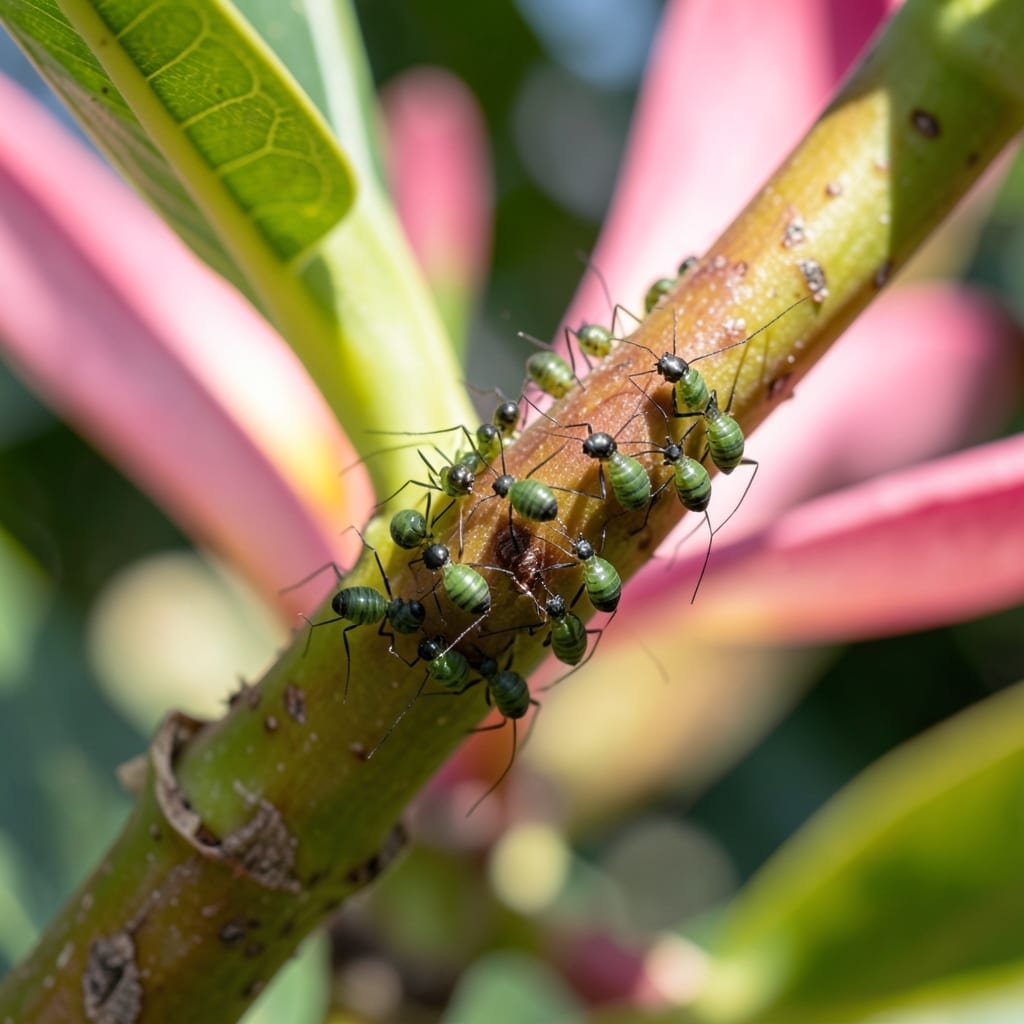
Tiny green invaders on your plumeria leaves can ruin a perfect blooming season. I spotted my first aphid outbreak during a heat wave last July, and it spread faster than I expected.
These pests suck the life out of new growth, leaving curled leaves and sticky residue. The good news? A strong spray from the hose knocks them off immediately, and they don’t climb back up easily.
Within 48 hours of treatment, new leaves start to unfurl normally. You’ll see the plant recover quickly with the right approach, and blooms return to their vibrant best.
Works for potted plants, garden beds, or any plumeria in your care. Here’s how to keep them aphid-free for good.
Aphids flock to plumeria for a few key reasons, often tied to the plant’s environment or its own biology. Understanding these causes helps you prevent infestations before they start.
Plumeria thrives on balanced nutrition, but excess nitrogen in fertilizer promotes lush, soft new growth—aphids’ favorite food. These pests are drawn to tender leaves and stems, which are easier to pierce and suck sap from. Stick to a low-nitrogen, high-phosphorus fertilizer (like 10-30-10) to encourage strong growth without overfeeding pests.
Both overwatering and underwatering stress plumeria, weakening its natural defenses. Overwatered plants develop soft tissue that aphids adore, while drought-stressed ones produce stressed sap, which can be more attractive to pests. Aim for deep, infrequent watering (1–2 times per week in warm weather) to keep your plumeria resilient.
Aphids thrive when their natural enemies—like ladybugs, lacewings, or parasitic wasps—are absent. If your garden lacks biodiversity, aphids face no resistance. Introduce beneficial insects or plant companion species (e.g., marigolds, alyssum) to create a balanced ecosystem that keeps aphid populations in check.
Plumeria grown in dense groupings or with limited airflow traps humidity and heat, creating an ideal aphid breeding ground. Ensure proper spacing (3–5 feet between plants) and prune regularly to improve air circulation. This reduces hiding spots for aphids and discourages rapid infestation.
Dealing with aphids on your plumeria can be frustrating, but these practical solutions will help you restore your plant’s health and prevent future infestations.
A strong blast of water from a garden hose can dislodge aphids from your plumeria leaves and stems. Do this early in the day so the foliage dries quickly, reducing the risk of fungal issues. Repeat every few days until the pests are gone.
Mix 1 teaspoon of mild dish soap with 1 liter of water and spray it directly onto the aphids. The soap disrupts their cell membranes, causing them to dehydrate. For a more potent option, use neem oil (1 tablespoon per gallon of water) and apply it in the evening to avoid harming beneficial insects.
Encourage natural predators like ladybugs, lacewings, or parasitic wasps to your garden. These insects feed on aphids and can significantly reduce their numbers without chemicals. Plant companion flowers like marigolds or alyssum to attract them.
🎯 Pro Tip: Always test sprays on a small section of the plant first to ensure it won’t cause damage.
Check the undersides of new leaves for clusters of tiny green or black insects. Look for curled leaves and a sticky residue called honeydew on the plant or ground below.
No, if diluted correctly. Use 1 teaspoon of mild dish soap per 1 liter of water and spray only affected areas. Avoid harsh detergents and test on a small section first.
Yes! Encourage natural predators like ladybugs by planting marigolds nearby. Ensure good airflow and avoid over-fertilizing with nitrogen. These steps create an aphid-unfriendly environment.
For mild cases, a strong water spray every 2-3 days can work. For heavier infestations, apply neem oil or insecticidal soap every 7-10 days until gone.