
Beautiful Plants For Your Interior
Beautiful Plants For Your Interior
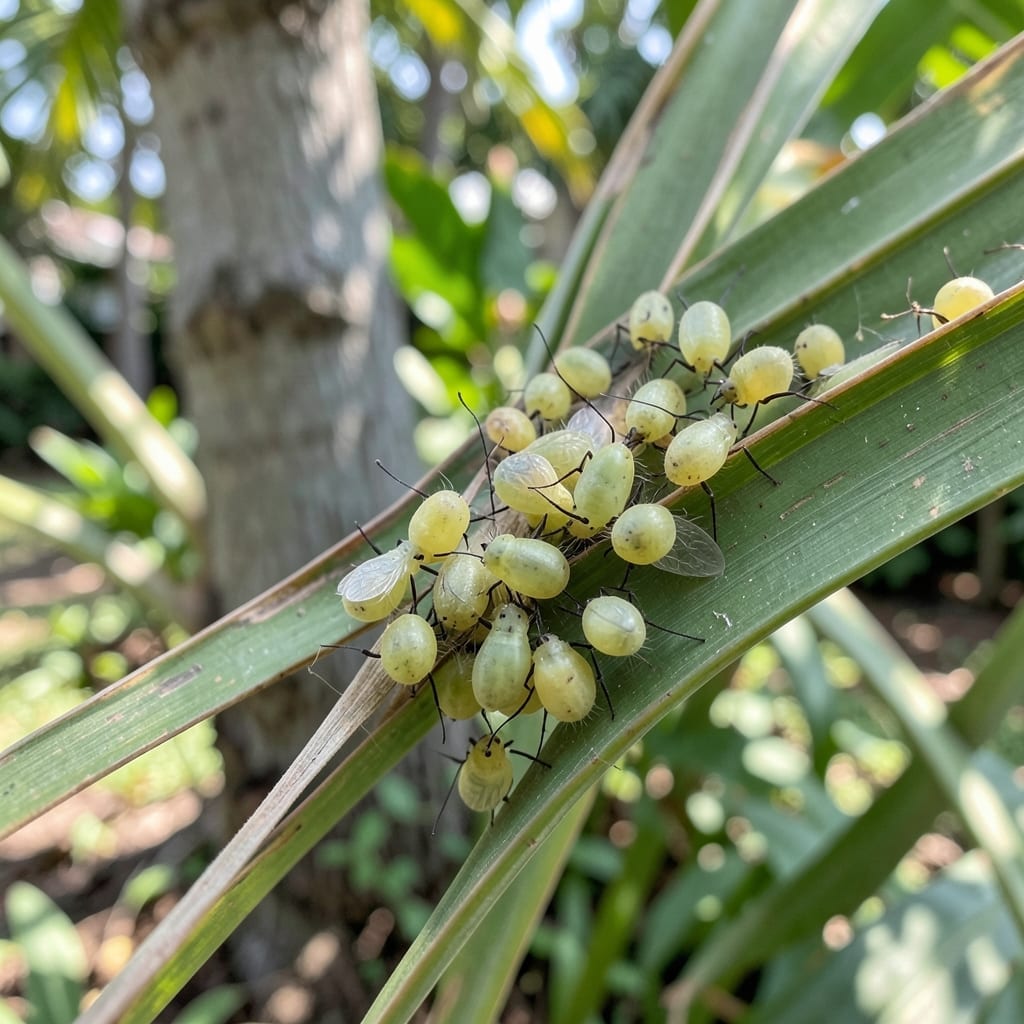
Those tiny green invaders on your palm fronds aren’t just ugly—they’re stealing your tree’s life. I’ve battled aphids on palms for years, and the organic solutions actually work better than harsh chemicals.
The key is early action. Left unchecked, aphids multiply daily, coating leaves in sticky honeydew and attracting ants. My palms bounce back within 2 weeks using simple sprays and beneficial insects.
You’ll notice fresh growth returning as the infestation clears. The leaves regain their deep green color, and new fronds emerge unscathed. No more curled, yellowing damage.
Works for all palm varieties, from small potted ones to towering landscape specimens. Here’s what to do first.
Aphids thrive on palm trees due to a combination of environmental, biological, and cultural factors. Understanding these causes helps prevent and manage outbreaks effectively.
Excess nitrogen in soil promotes soft, succulent growth—aphids’ favorite food. Palm trees fertilized heavily with nitrogen-rich products (e.g., synthetic lawn fertilizers) often develop tender new fronds that attract aphids. Action: Use balanced, slow-release organic fertilizers and avoid over-application.
Both drought stress and waterlogged roots weaken palm trees, reducing their natural resistance. Stressed palms produce higher levels of amino acids in their sap, which aphids detect and are drawn to. Action: Maintain consistent moisture with well-draining soil and mulch to retain water without sogginess.
Aphids reproduce rapidly in warm temperatures (70–80°F) and low humidity. Palm trees in arid or semi-arid regions, especially during spring and early summer, are prime targets. Action: Use overhead misting or companion planting with moisture-loving species to increase humidity around the canopy.
When beneficial insects like ladybugs, lacewings, or parasitic wasps are absent, aphid populations explode unchecked. This often happens after pesticide use, which kills predators faster than pests. Action: Avoid broad-spectrum pesticides and introduce or preserve native predator populations.
Aphids target newly emerging fronds and flower buds because they’re rich in nutrients and low in defensive compounds. Palm trees that flush frequently (e.g., Phoenix or Washingtonia species) are especially susceptible. Action: Monitor new growth weekly and apply horticultural oil or insecticidal soap at first sign of infestation.
Dealing with aphids on your palm trees doesn’t have to be a losing battle. Here’s how to tackle the issue head-on with practical, easy-to-follow solutions for every scenario:
If you spot aphids early, a strong blast of water from a garden hose can knock them off the fronds. Do this in the morning so the leaves dry quickly, reducing the risk of fungal growth. For stubborn clusters, wipe them away with a soapy cloth (mild dish soap + water).
Mix 1 tablespoon of neem oil or insecticidal soap with a gallon of water and spray evenly over the affected areas. Reapply every 5–7 days until the aphids are gone. These treatments suffocate the pests without harming beneficial insects like ladybugs.
Introduce natural predators to your garden. Ladybugs, lacewings, and parasitic wasps feast on aphids. Purchase them from garden centers or attract them by planting dill, fennel, or marigolds nearby. This creates a long-term defense system!
With consistency, these methods will help you restore your palm tree’s health without harsh chemicals. Stay vigilant, and your trees will thank you! 🌴✨
Inspect your palm trees weekly, focusing on new growth and undersides of fronds. Early detection prevents rapid infestation spread.
No, neem oil is safe when mixed correctly (1 tablespoon per gallon of water). Always spray in the evening to avoid leaf burn from sun exposure.
Yes, mild dish soap works but use 1 teaspoon per quart of water. Avoid soaps with degreasers or additives that could damage foliage.
They thrive on stressed palms. Reduce nitrogen fertilizer, improve drainage, and introduce beneficial insects like ladybugs for long-term control.