
Beautiful Plants For Your Interior
Beautiful Plants For Your Interior
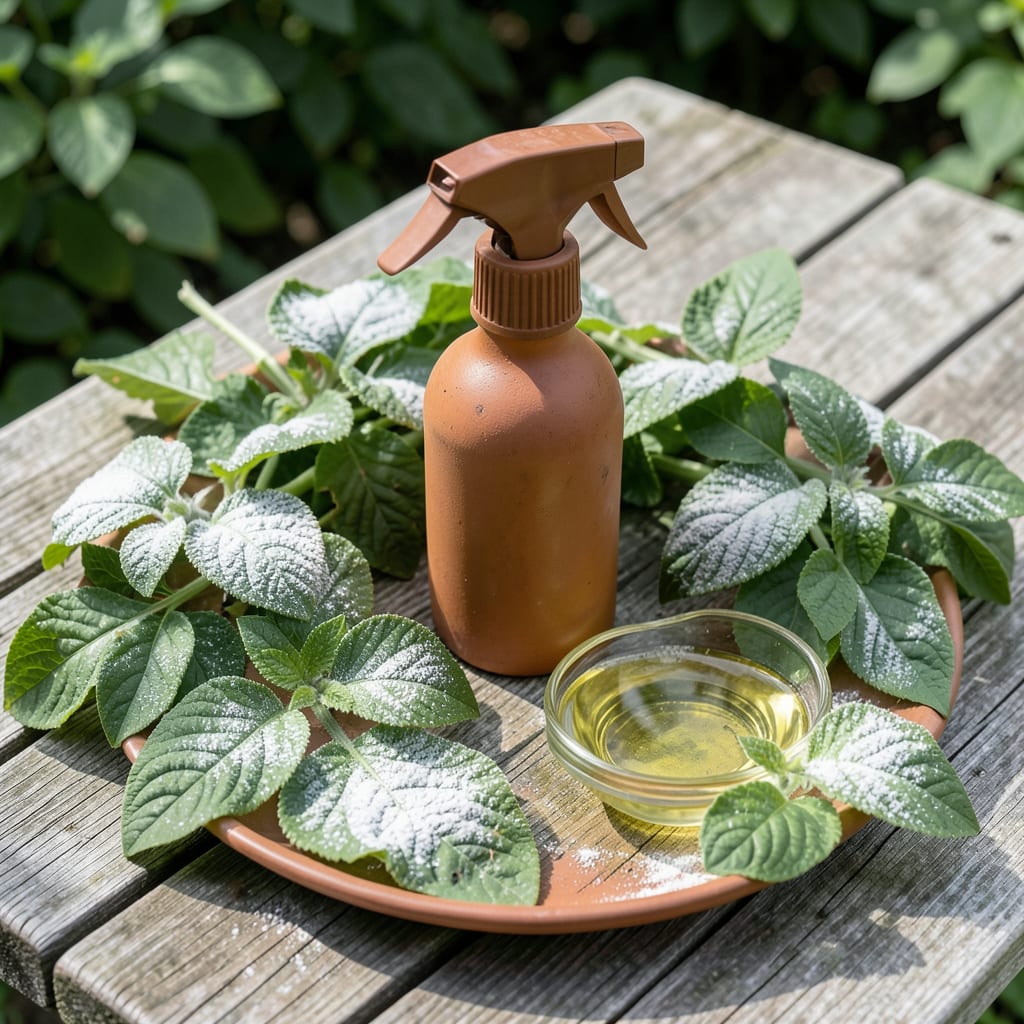
Powdery mildew on your plants looks worse than it feels. I’ve cleared it from roses, squash, and phlox using horticultural oil—no harsh chemicals, just consistent application.
Apply in early morning to dry foliage, covering both sides of leaves. The oil smothers spores without harming the plant, and you’ll see clear leaves within a week if you stay on schedule.
📚 In This Guide
Here’s the method I rely on to treat powdery mildew without harming your plants.
First, confirm you’re dealing with powdery mildew by checking for white, powdery spots on the upper surfaces of leaves, stems, and sometimes flowers. This fungus thrives in high humidity with moderate temperatures (60-80°F) and often appears on the newest growth first.
I always inspect plants in the morning when dew is present, as the fungal growth becomes more visible. Don’t confuse it with downy mildew, which typically appears on the undersides of leaves and prefers wetter conditions.
Mix 1 tablespoon of horticultural oil with 1 gallon of water in a clean sprayer. Add 1 teaspoon of mild liquid soap as an emulsifier to help the oil disperse evenly in water. Shake thoroughly before each use to ensure the solution is well-mixed.
I use a fine mist sprayer to create an even application, which is critical for covering all plant surfaces. Avoid using on plants under stress or during the hottest part of the day, as this can cause phytotoxicity.
Spray the solution on all plant surfaces, focusing on the areas with visible mildew. Cover both the upper and lower leaf surfaces, as well as stems, until the plant is evenly coated but not dripping. The oil works by smothering the fungal spores and disrupting their cell membranes.
I apply the treatment in the early morning or late evening to minimize evaporation and reduce the risk of leaf burn. Reapply every 7-10 days or after rain, as the protective coating wears off over time.
Check treated plants after 24-48 hours for signs of improvement. The powdery spots should begin to darken and shrink as the fungus dies. If the infection persists after two applications, consider reducing humidity around the plants by improving air circulation.
I’ve found that pruning dense foliage to increase airflow and avoiding overhead watering helps prevent future outbreaks. For severe cases, you may need to remove and destroy heavily infected leaves or stems to stop the spread.
Here are the key details that will help you get the best results with this treatment method.
Application Timing: In Step 3, always apply the solution in the early morning or late evening as specified. This timing minimizes evaporation and reduces the risk of leaf burn, especially during the moderate temperatures (60-80°F) when powdery mildew thrives. Midday applications can cause phytotoxicity, which defeats the purpose of the treatment.
Coverage Technique: When spraying in Step 3, focus on thorough coverage of both upper and lower leaf surfaces. The oil needs to contact every part of the plant to smother fungal spores effectively. I use a fine mist sprayer and take my time to ensure no spots are missed, especially on dense foliage.
Reapplication Schedule: The 7-10 day reapplication window in Step 3 is critical. This fungus can regrow quickly, and the protective coating wears off over time. I set calendar reminders to stay consistent, especially after rain, which can wash away the treatment prematurely.
Monitoring Progress: After the initial 24-48 hours mentioned in Step 4, don’t expect immediate disappearance of the white spots. Instead, look for them to darken and shrink as the fungus dies. If you don’t see improvement after two applications, it’s time to reassess your air circulation and humidity levels.
Apply every 7–10 days during active growth or at first signs of infection. Avoid spraying in extreme heat or drought to prevent leaf burn. Consistency is key for controlling outbreaks!
Yes! Apply it in early spring or before mildew typically appears in your region. A light, dormant-season spray can also protect plants before buds break. Prevention is easier than treatment!
Absolutely! Neem oil, baking soda sprays, or sulfur-based fungicides are effective organic options. Rotate treatments to prevent resistance and boost results.
Check for proper coverage—mildew hides on leaf undersides! Also, avoid spraying in rain (it washes off) or mixing with certain pesticides. Reapply after heavy rain or new growth.
