
Beautiful Plants For Your Interior
Beautiful Plants For Your Interior
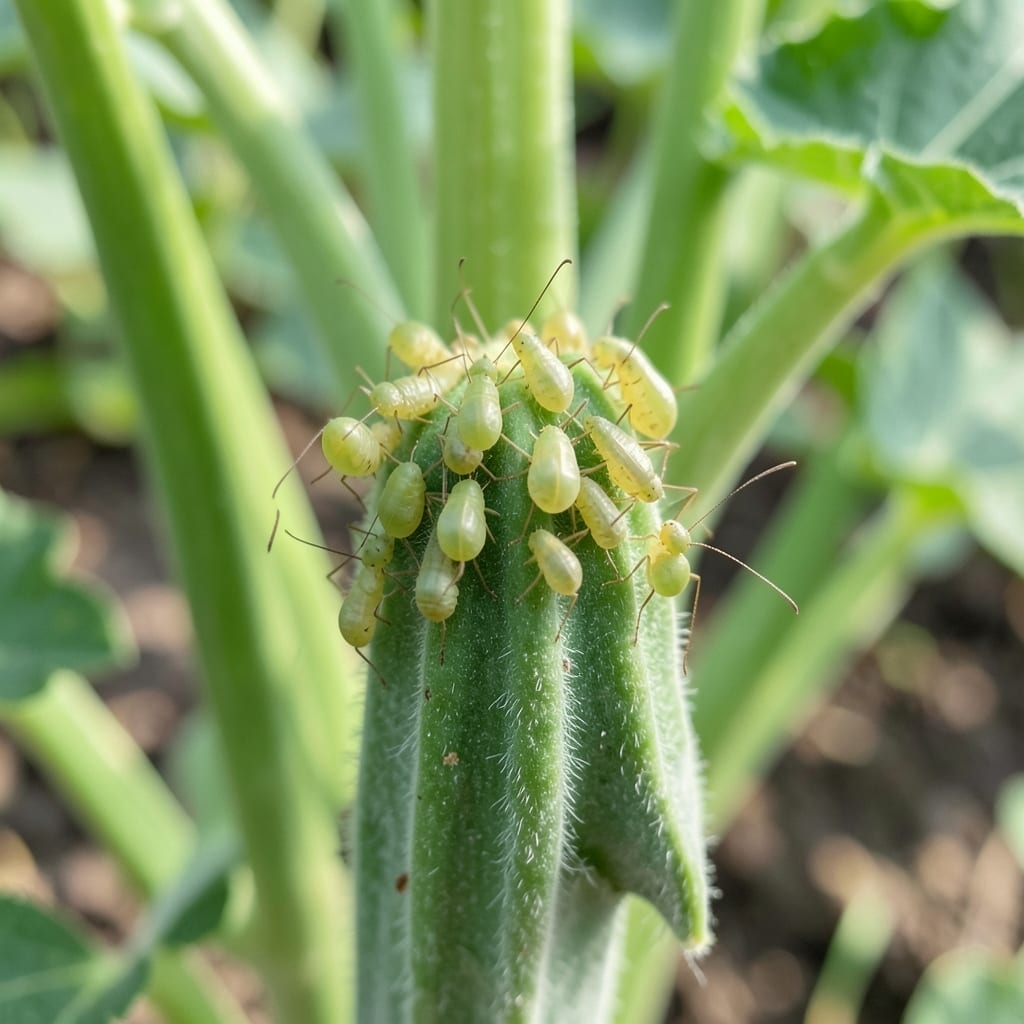
Tiny green invaders clustering on your okra’s undersides. I’ve lost entire crops to these pests before learning the 24-hour window for action.
They multiply fast, but a strong blast from the hose knocks them off immediately. Follow up with insecticidal soap or neem oil for a foolproof one-two punch.
Prevention starts with healthy plants—well-drained soil, full sun, and regular checks for early signs. Strong okra resists infestations better than stressed ones.
Your pods stay productive, and the plants bounce back within days. No chemicals needed unless you’re dealing with a severe outbreak.
Aphids thrive on okra plants due to several key factors, often tied to environmental conditions and plant health. Understanding these causes helps you prevent and manage outbreaks effectively.
When okra plants are spaced too closely, air circulation suffers, creating a humid, sheltered environment that aphids love. Poor airflow also slows drying after watering or rain, which encourages aphid reproduction. Space plants 12–18 inches apart to reduce this risk.
Aphids are drawn to soft, new growth fueled by high nitrogen levels. Over-fertilizing with nitrogen-rich products (like fresh manure or synthetic blends) can cause lush, tender leaves—aphid magnets. Balance with phosphorus and potassium to toughen plant tissue.
Aphids reproduce rapidly in temperatures between 70–80°F (21–27°C) with low humidity. These conditions speed up their life cycle, leading to explosive populations. Drought stress in okra can also weaken plants, making them more susceptible to attack.
Without ladybugs, lacewings, or parasitic wasps, aphid numbers spiral out of control. Pesticide overuse can kill these beneficial insects, stripping your garden of its natural defenses. Plant companion flowers like marigolds or dill to attract predator species.
By addressing these root causes, you disrupt the aphids’ ideal habitat and slow their spread before they damage your okra crop.
Dealing with aphids on your okra plants can be frustrating, but these practical solutions will help you reclaim your garden. Here’s how to tackle each cause with simple, effective fixes.
If your okra plants are too close together, aphids thrive in the damp, shaded spaces. Thin out seedlings to leave 12-18 inches between plants, or transplant crowded ones. This improves airflow and reduces aphid-friendly conditions. Prevention tip: 💡 Always follow spacing guidelines when planting.
Aphids target stressed or nutrient-deficient plants. Apply a balanced, organic fertilizer (like 10-10-10) to strengthen your okra. Avoid over-fertilizing with nitrogen, which can attract more aphids. Prevention tip: 🎯 Rotate crops yearly to prevent soil depletion.
Both overwatering and drought stress plants, making them aphid magnets. Water okra deeply but infrequently—about 1-2 inches per week, depending on rainfall. Use drip irrigation to keep foliage dry. Prevention tip: ✨ Mulch around plants to retain moisture evenly.
Lack of ladybugs, lacewings, or parasitic wasps lets aphids multiply. Attract these helpers by planting companion flowers like marigolds or alyssum. You can also purchase ladybugs or lacewing larvae from garden stores. Prevention tip: 🌡️ Avoid broad-spectrum pesticides that kill beneficial insects.
For immediate action, blast aphids off plants with a strong stream of water early in the day. For stubborn cases, use insecticidal soap or neem oil (follow label instructions). Prevention tip: 🔥 Inspect plants weekly to catch aphids early.
Inspect plants at least once a week during growing season. Look under leaves and along stems where pests like to hide. Early detection makes treatment far easier.
Yes! A strong water spray dislodges them immediately. For stubborn cases, apply insecticidal soap or neem oil every 3-5 days until gone. always follow label instructions.
Marigolds, dill, and alyssum attract beneficial insects like ladybugs that eat pests. Plant these near okra for natural protection.
Use only products labeled for vegetables. Stop applications 7-10 days before harvest. Organic options are safer and just as effective for most cases.