
Beautiful Plants For Your Interior
Beautiful Plants For Your Interior
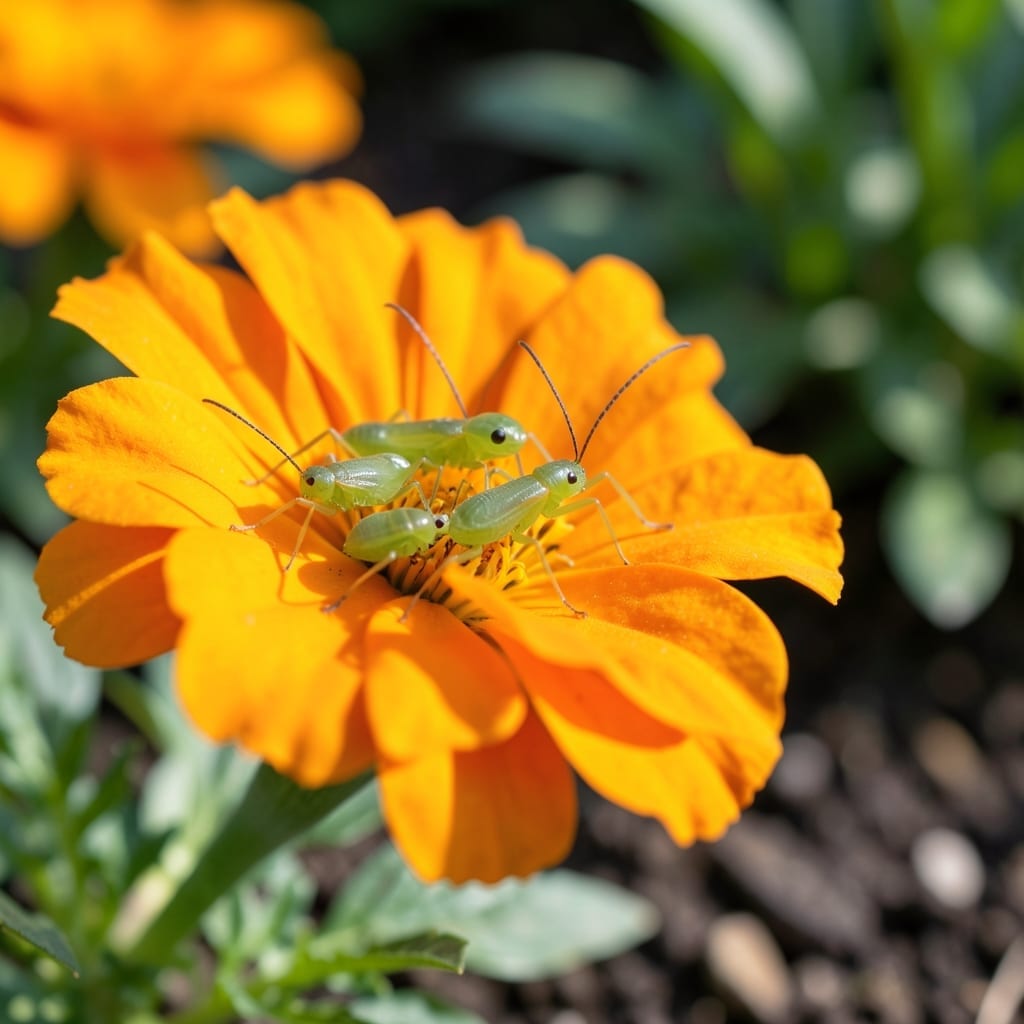
Tiny green invaders on your marigolds are more than annoying. They curl leaves and steal the vigor from your brightest blooms, turning a showstopper into a struggling plant overnight.
I’ve battled aphids on marigolds for seasons, and the solution isn’t harsh sprays—it’s consistent vigilance. A strong blast of water knocks them off, while ladybugs and lacewings do the rest naturally.
With the right approach, your marigolds stay healthy and vibrant, producing those iconic orange and yellow flowers all season long. Prevention beats cure every time.
Works in beds, borders, or containers. Here’s how to keep them thriving.
Aphids thrive on marigolds due to a combination of environmental, biological, and cultural factors. Understanding these causes helps you address the root of the problem and prevent future outbreaks.
Excess nitrogen in soil promotes soft, lush growth—exactly what aphids love. Marigolds fertilized heavily with nitrogen-rich products produce tender new shoots and leaves, which are aphids’ primary food source. Action: Switch to a balanced or phosphorus-heavy fertilizer to encourage stronger, less appealing foliage.
Overhead watering leaves moisture on leaves and stems, creating a humid environment that aphids favor. Additionally, drought-stressed plants emit signals that attract aphids, as they sense weakened defenses. Action: Water at the base of the plant in the morning to allow foliage to dry quickly.
Monocultures (planting only marigolds) eliminate natural predators like ladybugs, lacewings, and parasitic wasps. Without these checks, aphid populations explode. Action: Interplant marigolds with aphid-repelling companions like basil, mint, or nasturtiums to restore balance.
Aphids reproduce rapidly in temperatures between 60–80°F (15–27°C) with low humidity. These conditions accelerate their life cycle, leading to large colonies in days. Action: Use shade cloth during heatwaves and mist plants lightly to deter them.
Dealing with aphids on your marigolds doesn’t have to be a losing battle. Here’s how to tackle the issue head-on with practical, easy-to-follow solutions for each common cause—and how to keep these pests from returning.
Too many marigolds crammed together create a humid, sheltered paradise for aphids. Fix it by thinning out crowded plants to improve airflow. Space marigolds at least 12–18 inches apart. This reduces hiding spots and makes it harder for aphids to spread.
Aphids thrive in damp conditions. Fix it by watering marigolds at the base early in the day, allowing foliage to dry quickly. Avoid overhead sprinkling, which wets leaves and attracts pests. Drip irrigation is ideal.
No ladybugs or lacewings? Aphids multiply unchecked. Fix it by planting companion flowers like yarrow, dill, or cosmos nearby to attract these helpful insects. You can also purchase ladybugs from garden centers and release them at dusk.
If aphids are already present, act fast. Fix it with a DIY spray: mix 1 teaspoon of mild dish soap with 1 quart of water and spray directly on aphids (test on a few leaves first). Neem oil or insecticidal soap also work well—apply in the evening to avoid harming bees.
Prevention Tips:
Check the undersides of leaves for clusters of tiny green or black insects. Look for curled leaves and sticky residue called honeydew, which indicates their presence.
Plant basil, mint, or nasturtiums near your marigolds. These release scents that deter aphids while attracting beneficial predators like ladybugs.
Yes, mix 1 teaspoon of mild dish soap with 1 quart of water. Test on a few leaves first to avoid damaging the plant.
Apply sprays in the evening to avoid harming bees and other pollinators. Early morning is the second-best option if evening isn’t possible.