
Beautiful Plants For Your Interior
Beautiful Plants For Your Interior
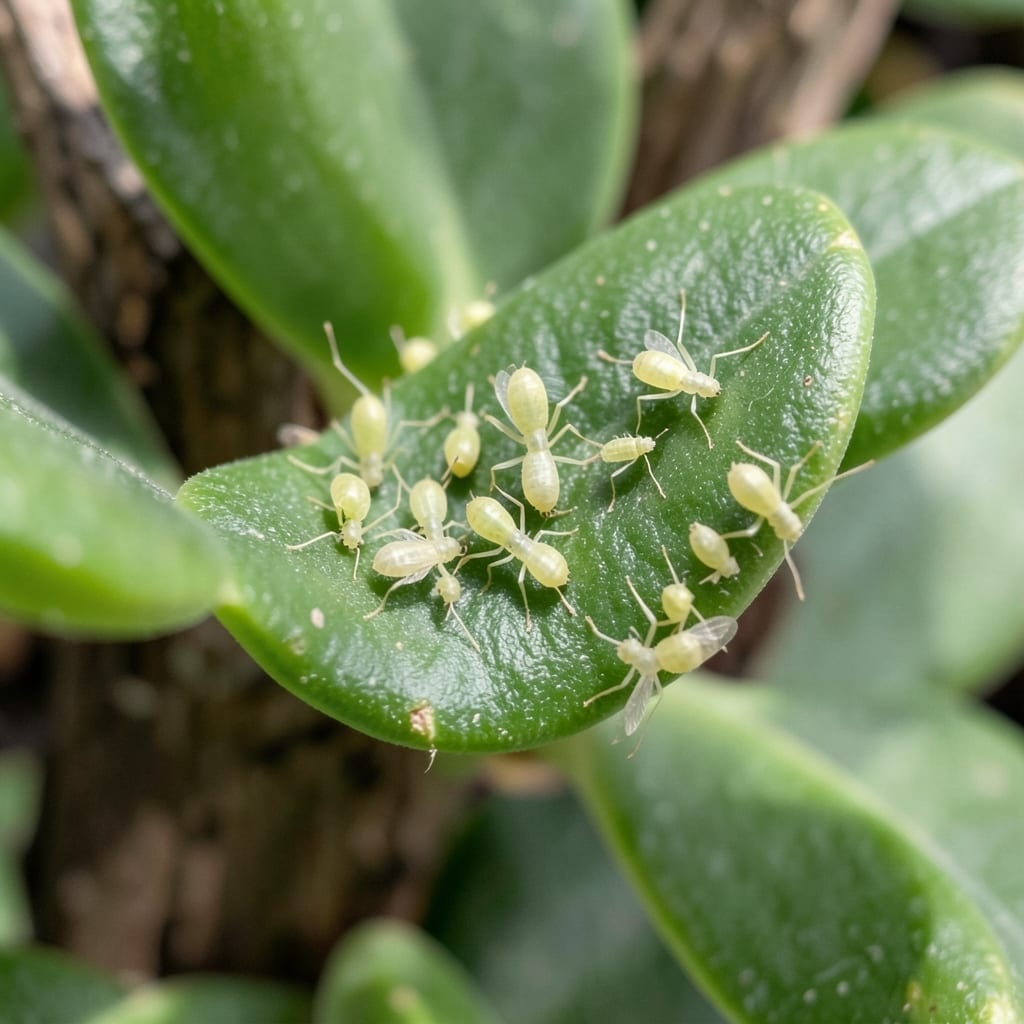
Tiny green invaders on your jade plant’s leaves are more than annoying—they’re stealing its strength. I spotted my first aphid cluster last spring and nearly panicked, but a simple organic treatment saved my plant within days.
The signs are unmistakable: sticky residue on leaves, curled new growth, and those pesky bugs clustering on stems. Jade plants attract aphids when stressed by overwatering or poor light, but they bounce back fast with the right care.
You’ll see new growth return to that signature vibrant green within a week of treatment. The plant regains its thick, glossy leaves and stops dropping them prematurely, looking healthier than before the attack.
Works for indoor and outdoor jades alike. Here’s how to evict those pests for good.
Aphids on jade plants don’t appear out of nowhere—they thrive under specific conditions. Understanding these triggers helps you prevent infestations before they start.
Jade plants (Crassula ovata) grown in dense clusters or cramped spaces create the perfect microclimate for aphids. Stagnant air traps moisture, while crowded foliage provides hiding spots. Aphids reproduce rapidly in such environments, as they feed on the plant’s sap without natural predators (like ladybugs) to control them. Ensure at least 6–12 inches of space between plants and prune regularly to improve airflow.
Aphids are drawn to soft, new growth, which jade plants produce in response to overwatering or high humidity. While jade plants are drought-tolerant succulents, consistent moisture weakens their defenses. The stress from soggy soil also reduces the plant’s ability to produce protective compounds (e.g., terpenes), making it more vulnerable. Water only when the top 1–2 inches of soil are dry, and avoid misting the leaves.
Over-fertilizing with nitrogen-rich products promotes lush, tender growth—a buffet for aphids. Jade plants prefer low-nitrogen, balanced fertilizers (e.g., 5-10-10) applied sparingly during the growing season. Excess nitrogen not only attracts pests but also disrupts the plant’s natural resistance. Stick to a diluted fertilizer every 4–6 weeks in spring and summer, and skip feeding entirely in winter.
Moving jade plants outdoors in warm months exposes them to aphids hitchhiking on wind, other plants, or even your clothing. Aphids are highly mobile and can infest a plant within hours. If you bring your jade outside, inspect it daily and use a fine mesh cover or natural repellents like neem oil as a preventive barrier.
Tackling aphids on your jade plant is simpler than you think! Here’s how to address the most common causes and restore your plant’s health with practical, easy-to-follow fixes.
If soggy soil is attracting aphids, let the top inch of soil dry out between waterings. Jade plants thrive on neglect—water only when the soil feels dry. Use a well-draining potting mix and ensure the container has drainage holes to prevent root rot.
Prevention tip: 💡 Stick your finger in the soil; if it’s damp, wait a few more days.
Aphids love stagnant air. Move your jade plant to a breezy spot or use a small fan on low to keep air moving. If indoors, crack a window or place it near an open space. Outdoors, ensure it’s not crowded by other plants.
Prevention tip: 🌬️ Group plants with space between them to encourage airflow.
A stressed jade plant is an aphid magnet. Boost its resilience with diluted neem oil (1 tsp per gallon of water) or insecticidal soap spray (1 tbsp mild soap + 1 quart water). Spray every 3–5 days until aphids vanish.
Prevention tip: 🛡️ Feed your plant with a balanced fertilizer (10-10-10) monthly in spring/summer to keep it robust.
Catch aphids early by checking the undersides of leaves weekly. If you spot clusters, isolate the plant and wipe them off with a damp cloth or cotton swab dipped in rubbing alcohol. For severe cases, prune heavily infested leaves and discard them in a sealed bag.
Prevention tip: 🔍 Quarantine new plants for 2–3 weeks before introducing them to your collection.
With these targeted fixes and consistent care, your jade plant will bounce back—aphid-free and thriving! 🌟
Overwatering, poor airflow, and nutrient imbalances create ideal conditions. Aphids thrive on stressed plants with soft new growth.
Wipe leaves with a damp cloth or use a soapy water spray (1 tbsp mild soap + 1 quart water). Repeat every 3-5 days until gone.
No, diluted neem oil (1 tsp per gallon) is safe and effective. Test on a small area first and apply in the evening.
Improve airflow, avoid overwatering, and quarantine new plants for 2-3 weeks. Inspect leaves weekly for early signs.