
Beautiful Plants For Your Interior
Beautiful Plants For Your Interior
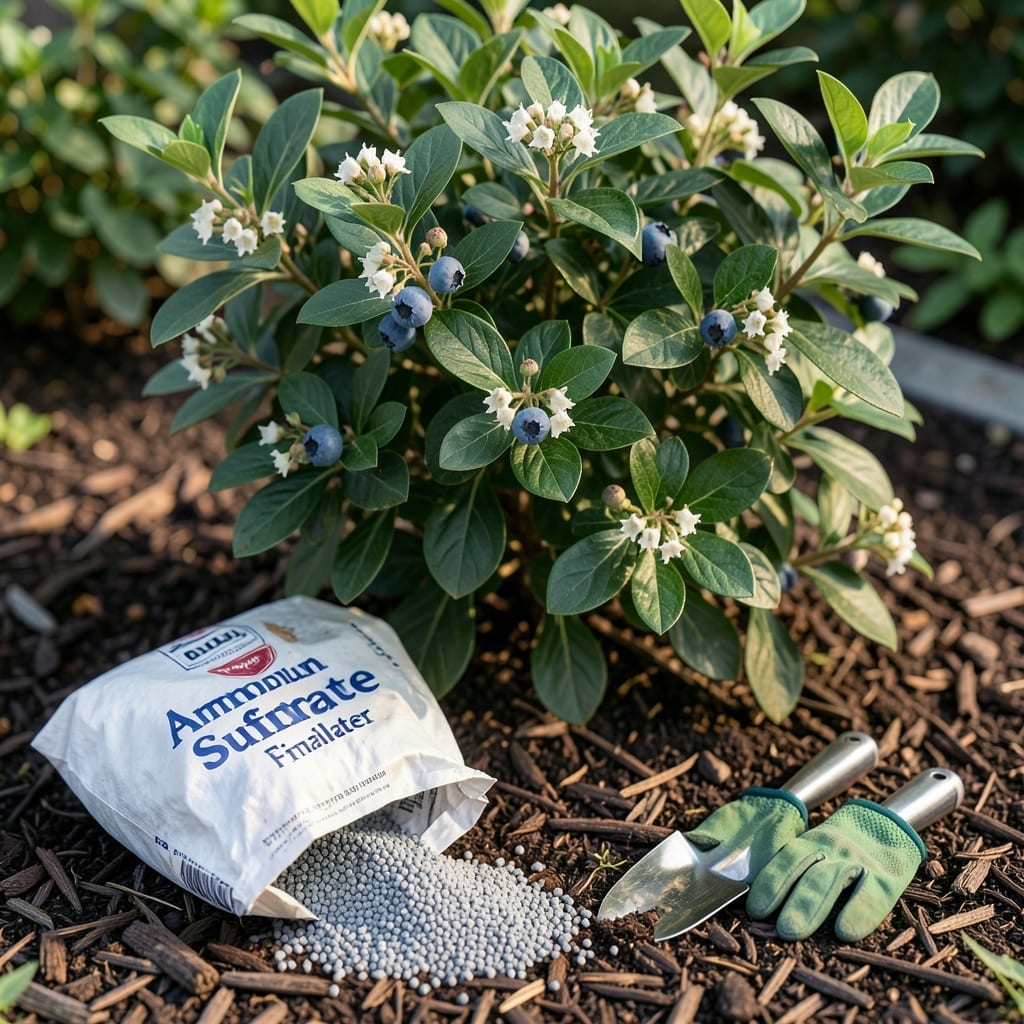
Ammonium sulfate lowers soil pH, making it more acidic for blueberries. Apply 1/4 to 1/2 pound per bush annually, watering in thoroughly to avoid root burn and ensure even distribution.
I’ve found this sulfur-based fertilizer particularly effective because it provides nitrogen while gradually acidifying the soil—exactly what blueberry roots crave. 🔥 The ammonium ion breaks down quickly, but the sulfur continues working for weeks, creating that ideal 4.5-5.5 pH range. Just remember to test your soil first and space applications to prevent over-acidification.
💡 In This Article
The chemical magic happens through a two-step process. First, soil bacteria convert the sulfur in ammonium sulfate into sulfuric acid, which directly lowers pH. Then, the ammonium provides nitrogen, an essential nutrient that blueberries absorb efficiently in acidic conditions. This dual action makes it uniquely suited for acid-loving plants.
Blueberries thrive in 4.5-5.5 pH ranges because their roots can’t access iron and other micronutrients in neutral or alkaline soils. The sulfuric acid from ammonium sulfate dissolves these locked-up nutrients, making them available. Without this acidity, blueberry leaves often turn yellow from iron deficiency, a condition called chlorosis.
What most gardeners don’t realize is that this pH adjustment isn’t instant. The sulfur conversion takes 4-6 weeks as soil microbes do their work. Temperature matters too—warmer soils (60-70°F) speed up the process, while cold spring soils may delay the acidifying effect. 🔥
You’ll see the best results in well-drained soils. In clay-heavy ground, the acidification happens more slowly because water movement is restricted. Sandy soils, on the other hand, may require more frequent applications since nutrients leach out faster. Always test your soil before applying to avoid over-acidification.
This fertilizer also outperform others for pH adjustment because it contains 21% nitrogen and 24% sulfur. Compare this to elemental sulfur (90-99% sulfur but no nitrogen) or aluminum sulfate (which can cause aluminum toxicity in plants). The balanced ratio in ammonium sulfate provides immediate feeding while gradually adjusting pH.
The visual proof comes in your plants. After proper application, you’ll notice darker green leaves within 2-3 weeks, followed by increased fruit production. The berries themselves often develop more intense flavor in properly acidified soil, a bonus to the health benefits. ✨
Apply 2-3 times per year, spacing applications 6-8 weeks apart. Early spring and late fall are ideal. Avoid applying during peak fruiting to prevent over-acidification.
Over-application can drop pH too low, causing nutrient deficiencies or root damage. Yellowing leaves or stunted growth may appear. Always test soil first and follow recommended rates.
Yes, but avoid combining with lime or wood ash, as they raise pH. Pairing with compost helps buffer the acidifying effect while providing organic matter.
It works best in well-drained soils. In clay, acidification is slower. Sandy soils may need more frequent, smaller applications to prevent nutrient leaching.