
Beautiful Plants For Your Interior
Beautiful Plants For Your Interior
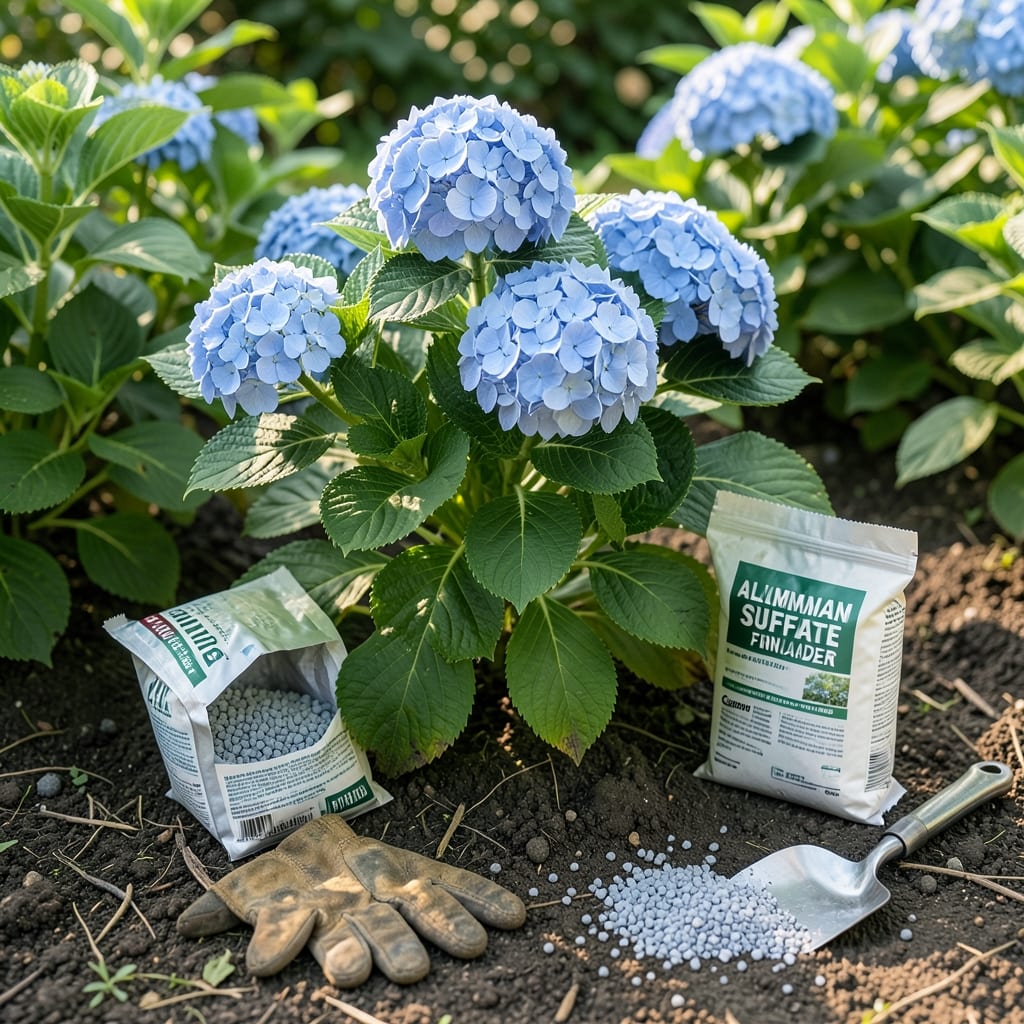
Aluminium sulfate fertilizer lowers soil pH quickly, making it ideal for acid-loving plants like blueberries and azaleas. It also provides sulfur, an essential nutrient for plant growth.
I’ve seen gardeners transform struggling hydrangeas into vibrant bloomers overnight using this. The sulfur boost is particularly valuable for crops that need it to produce vital proteins and enzymes. 🌟
Just remember that too much can make soil overly acidic, so I always test pH levels before and after application. A little goes a long way with this powerful amendment.
💡 In This Article
When aluminium sulfate dissolves in moist soil, it undergoes hydrolysis, splitting into aluminium hydroxide and sulfuric acid. This chemical reaction releases hydrogen ions that directly replace calcium and magnesium on soil particles, creating immediate acidification.
The process is so efficient that you can drop soil pH by 1.0 unit with just 5 lbs of aluminium sulfate per 100 sq ft of soil. 🔥
The sulfuric acid component further enhances this effect by dissolving soil minerals that contain calcium and magnesium, freeing up these nutrients while maintaining acidity. For gardeners, this means faster pH adjustment compared to organic materials like peat moss, which can take months to show effects.
The aluminium ions also form compounds that help stabilize this new acidic environment.
This rapid pH change unlocks essential micronutrients like iron, manganese, and zinc that become more available in acidic conditions. Blueberry bushes, which require pH between 4.0-5.5, often show dramatic improvement within 2-3 weeks of application as these nutrients become accessible. The sulfur component simultaneously feeds the plant’s protein synthesis needs. ✨
What’s particularly interesting is how aluminium sulfate affects different soil types. Sandy soils respond almost immediately to application, while clay soils may require 2-3 times the amount due to their higher buffering capacity. This is why testing your soil’s current pH and texture before application is crucial for determining the right dosage.
For comparison, elemental sulfur achieves similar pH reduction but requires soil bacteria to convert it to sulfuric acid—a process that can take several months. Aluminium sulfate’s immediate chemical reaction makes it the go-to for quick corrections, especially when preparing beds for acid-loving plants like azaleas or camellias. 💫
You’ll see results within 2-3 weeks of application. This is much faster than organic alternatives like peat moss, which can take months to show effects.
Always wear gloves and a dust mask when handling. The powder can irritate skin and lungs, and it should never come into direct contact with plant foliage.
No, it’s best for acid-loving plants like blueberries, azaleas, and hydrangeas. Using it on plants that prefer neutral or alkaline soil can harm them.
Test soil pH after 4 weeks before reapplying. Overuse can make soil too acidic, which may damage plant roots and reduce nutrient availability.