
Beautiful Plants For Your Interior
Beautiful Plants For Your Interior
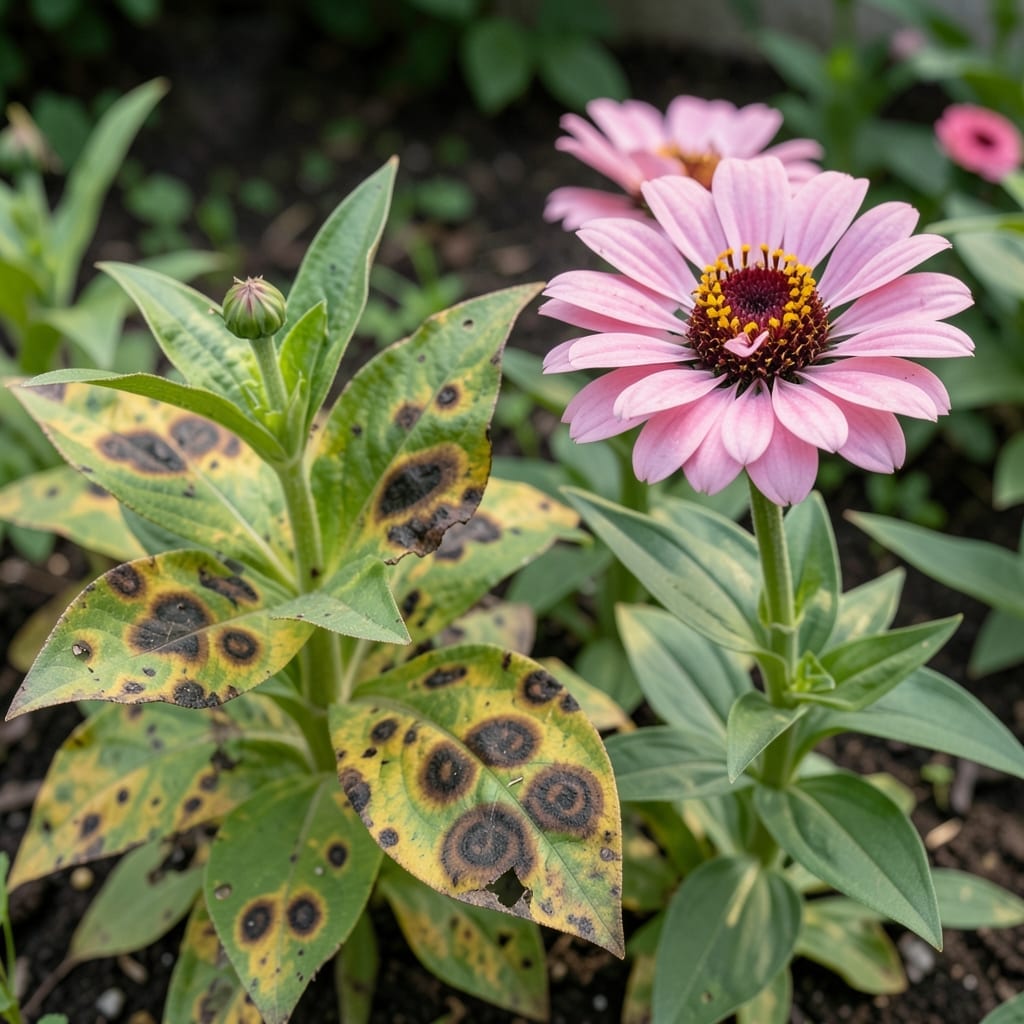
Brown spots appearing on your zinnia leaves isn’t just unsightly—it’s often the first sign of alternaria blight. I’ve lost entire beds to this fungus, but early action saves the season.
This disease thrives in warm, wet conditions, spreading quickly through splashing water or contaminated tools. The key is catching it before those dark, concentric rings multiply and defoliate your plants.
Prevention is simpler than cure: space plants for airflow, water at soil level, and remove affected leaves immediately. A weekly copper fungicide spray can stop it in its tracks.
With the right approach, your zinnias will stay vibrant and healthy all summer long.
Alternaria blight in zinnias doesn’t appear out of nowhere—it thrives under specific environmental and cultural conditions. Understanding these causes helps you disrupt the disease cycle before it damages your plants. Below are the primary triggers, explained in clear, actionable terms.
The fungus Alternaria zinniae spreads rapidly in wet, humid conditions. Overhead watering, dense plantings, or prolonged leaf wetness (from rain or dew) create the perfect breeding ground. Without proper airflow, moisture lingers on foliage, allowing spores to germinate and infect tissues.
This disease flourishes in temperatures between 75–85°F (24–29°C) with high humidity (above 85%). These conditions accelerate spore production and shortens the time between infection and symptom appearance. Regions with hot, wet summers are especially vulnerable.
Alternaria spores can overwinter in infected plant debris or soil. If you don’t remove and destroy diseased plants or rotate crops, the pathogen persists, ready to reinfect new zinnias the following season. Even tools or gloves used on infected plants can spread the fungus.
Some zinnia cultivars lack genetic resistance to Alternaria blight. Heirloom or older varieties, in particular, may be more prone to infection. Choosing resistant hybrids (e.g., ‘Benary’s Giant’ or ‘Profusion’ series) can significantly reduce risk.
Overcrowding plants, neglecting to prune for airflow, or failing to sanitize gardening tools can all contribute to outbreaks. Even excessive nitrogen fertilization (which promotes lush, soft growth) can make zinnias more susceptible to fungal invasion.
Tackling Alternaria blight in zinnias requires a mix of cultural adjustments and targeted treatments. Below are actionable solutions mapped to common causes, along with prevention tips to keep your garden thriving. 🌱
Overcrowded plants trap moisture, creating a haven for fungal spores. Fix it: Thin out zinnias to ensure 12–18 inches of space between plants. Prune dense foliage to boost airflow, and avoid overhead watering to reduce leaf wetness. Prevention tip: 💡 Plant zinnias in raised beds or containers if your garden has limited spacing.
Wet foliage is a breeding ground for Alternaria. Fix it: Water at the base of plants using a soaker hose or drip irrigation, ideally in the early morning so leaves dry quickly. If fungal spots appear, switch to a fungicide labeled for Alternaria (e.g., copper-based or chlorothalonil) and apply every 7–10 days. Prevention tip: 🌡️ Mulch with straw to prevent soil splashing onto leaves.
The fungus can linger in soil and plant debris. Fix it: Remove and destroy infected plant material—do not compost it. Rotate zinnias with non-host plants (like marigolds or petunias) for at least 2 years. For severe cases, treat soil with a biofungicide containing Bacillus subtilis. Prevention tip: ✨ Solarize soil in summer by covering it with clear plastic for 4–6 weeks to kill pathogens.
Stressed zinnias are more susceptible. Fix it: Ensure they get full sun (6+ hours daily) and well-draining soil. Fertilize lightly with a balanced formula (10-10-10) to avoid excessive leafy growth, which can trap humidity. Prevention tip: 🎯 Choose resistant zinnia varieties like ‘Benary’s Giant’ or ‘Profusion’ for future plantings.
Look for small, dark brown spots with concentric rings on lower leaves first. These spread upward, turning yellow as they grow. Severe cases cause leaf drop and stunted growth.
Yes, but only if done early and thoroughly. Remove and destroy spotted leaves immediately, then disinfect your tools. This prevents spores from spreading to healthy foliage.
Avoid replanting zinnias in the same area for at least 2 years. Rotate with non-host plants like marigolds. Soil solarization can help eliminate lingering spores.
Yes! ‘Benary’s Giant’ and ‘Profusion’ series show strong resistance. Always check seed packets for disease-resistant labels before planting.