
Beautiful Plants For Your Interior
Beautiful Plants For Your Interior
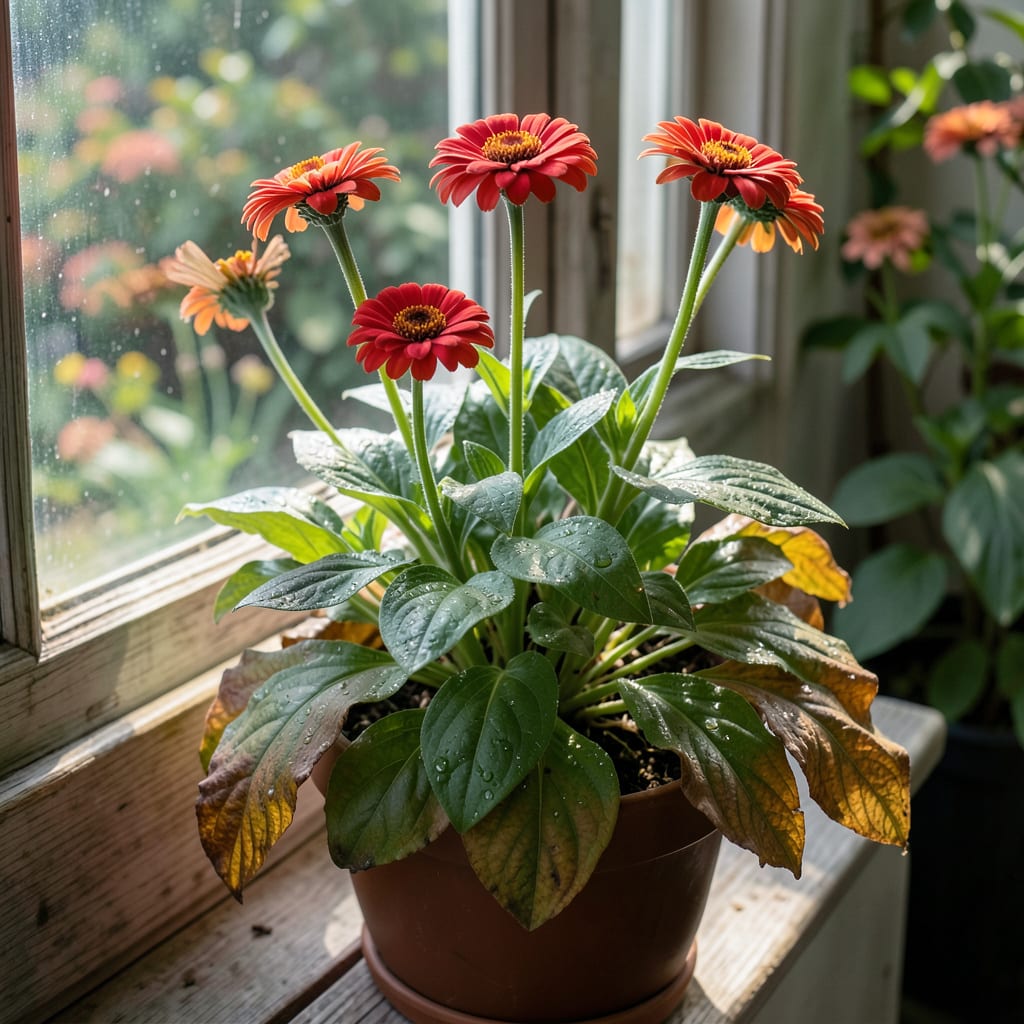
Brown zinnia leaves hit me hard my first growing season. 🌱 I lost half my plants before figuring out the pattern—it’s rarely just one issue, but a combination of stress factors pushing them over the edge.
Most cases trace back to 3 main culprits: too much water, not enough air circulation, or pests hiding where you least expect them. The leaves turn crispy at the edges first, then work their way inward.
What saved my zinnias was catching problems early. Morning inspections with a flashlight reveal what daytime hides—fungal spores, aphid clusters, or wilting that starts at the base.
With the right adjustments, new growth returns green and vigorous within 2-3 weeks. Here’s how to diagnose and fix it before it spreads.
When your zinnia leaves start turning brown, it’s usually a sign of stress or disease. Here are the most common causes and why they happen:
Zinnias are prone to fungal diseases like Alternaria or Septoria leaf spot, which thrive in warm, humid conditions. These pathogens invade leaf tissues, disrupting photosynthesis and causing brown, necrotic spots. Overhead watering or poor air circulation can worsen the problem.
Underwatering leads to dry, crispy brown edges as cells die from lack of moisture. Conversely, overwatering suffocates roots, preventing nutrient uptake and causing leaves to yellow before browning. Zinnias prefer consistent moisture but hate soggy soil.
Extreme heat or cold can scorch or freeze zinnia leaves, turning them brown. Sunburn from intense afternoon sun may also cause dry, papery brown patches. Ensure plants are in well-draining soil and provide afternoon shade in scorching climates.
A lack of potassium or magnesium can lead to brown leaf edges or interveinal browning. These nutrients are essential for chlorophyll production and cell function. Test your soil and amend with a balanced fertilizer if needed.
Addressing browning zinnias starts with pinpointing the cause. Below are targeted fixes for each common issue, paired with prevention tips to keep your plants thriving.
Fix: Check soil moisture 1–2 inches deep. If bone-dry, water deeply at the base until the topsoil is moist but not soggy. If waterlogged, stop watering and let the soil dry out. For severe cases, repot in fresh, well-draining soil.
Prevent: Water zinnias only when the top inch of soil feels dry. Use a moisture meter for accuracy, and ensure pots have drainage holes.
Fix: Remove infected leaves immediately and discard (do not compost). Spray the plant with a baking soda solution (1 tsp baking soda + 1 quart water + a few drops of dish soap) or a copper-based fungicide. Improve airflow by pruning dense foliage.
Prevent: Space plants 12–18 inches apart for airflow. Water at the base to keep leaves dry, and avoid overhead watering in the evening.
Fix: Blast pests off with a strong stream of water. For stubborn infestations, apply neem oil or insecticidal soap, covering both sides of leaves. Repeat every 5–7 days until pests are gone.
Prevent: Inspect leaves weekly for early signs of pests. Attract beneficial insects like ladybugs by planting companion flowers (e.g., marigolds).
Fix: Move potted zinnias to a spot with afternoon shade. For in-ground plants, create temporary shade with a garden fabric or umbrella during peak heat (1–4 PM). Trim heavily damaged leaves to redirect energy.
Prevent: Plant zinnias in a location with 6–8 hours of morning sun. Mulch around the base to retain moisture and cool roots.
Fix: Apply a balanced, water-soluble fertilizer (10-10-10) every 2–4 weeks during the growing season. Yellowing leaves with brown edges often signal a potassium or magnesium deficiency—use a fertilizer rich in these nutrients.
Prevent: Amend soil with compost before planting. Test soil every 2–3 years to monitor nutrient levels.
💡 Pro Tip: Healthy zinnias start with consistency. Stick to a care routine—watering, feeding, and inspecting—and you’ll catch issues before they escalate!
Once leaves turn fully brown, they won’t regain their green color. Remove them to prevent disease spread. New, healthy growth will emerge in 2-3 weeks with proper care.
Improve airflow by spacing plants 12-18 inches apart. Water at the base in the morning to keep foliage dry. A baking soda spray can also help deter fungi.
Water when the top 1 inch of soil feels dry. Use a moisture meter for accuracy. Zinnias prefer consistent moisture but dislike soggy roots.
Yes, but first identify the issue. Use a balanced 10-10-10 fertilizer every 2-4 weeks. Avoid over-fertilizing, which can worsen stress.
