
Beautiful Plants For Your Interior
Beautiful Plants For Your Interior
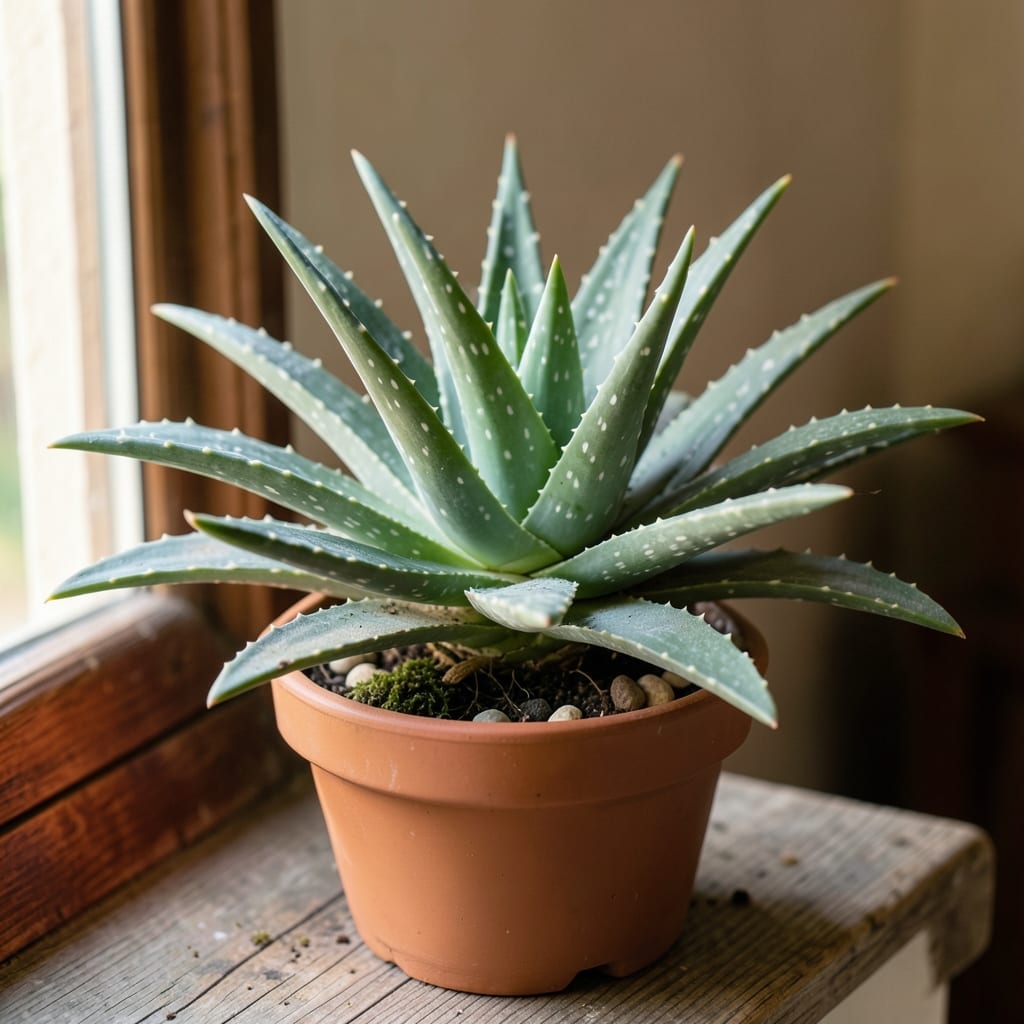
Aloe vera belongs to the Asphodelaceae family, classified under the genus Aloe with the scientific name Aloe barbadensis miller. It is a succulent perennial plant.
This classification places aloe vera in a group known for its thick, fleshy leaves that store water. Asphodelaceae includes over 400 species, but aloe vera stands out for its medicinal and cosmetic uses. I find it fascinating that this plant thrives in arid climates, which explains its ability to retain moisture so effectively. 🌟
💡 In This Article
This plant’s full scientific hierarchy starts with Plantae (kingdom), then Tracheophyta (phylum) for its vascular system. It falls under Liliopsida (class) as a monocot, sharing this with lilies and palms. The order Asparagales groups it with asparagus and orchids, showing its evolutionary connections. 🔥
The Asphodelaceae family includes over 400 species, but aloe vera’s genus Aloe contains about 500 species alone. What sets it apart is its rosette growth pattern and thick, gel-filled leaves. These adaptations allow it to survive in deserts with minimal rainfall. ✨
Within the genus, Aloe barbadensis miller is the most widely cultivated. Its species name honors Philip Miller, an 18th-century botanist. Unlike other aloes, this variety has spotted stems and flowers that range from yellow to red. The gel inside its leaves contains 99% water and compounds like acemannan. 💫
This classification system helps botanists track evolutionary relationships. For gardeners, it explains why aloe vera thrives in conditions similar to cacti but has different care needs. The plant’s ability to reproduce both sexually (via flowers) and asexually (via offsets) contributes to its hardiness. 🌟
Interesting fact: DNA analysis shows aloe vera is more closely related to hawthorn plants than to agave, despite similar appearances. This molecular evidence supports its placement in Asphodelaceae rather than older classifications that grouped it with lilies. ⚡
Aloe vera is part of the Asphodelaceae family, which includes over 400 species. This classification groups it with other succulents known for their water-storing leaves and resilience in dry climates.
Look for thick, gray-green leaves with serrated edges and white speckles, growing in a rosette pattern. True aloe vera also has clear gel inside its leaves, unlike agave’s bitter sap.
As a monocot, aloe vera has parallel leaf veins and flower parts in multiples of three. This places it in the Liliopsida class, sharing traits with lilies and palms despite its desert adaptations.
The name Aloe barbadensis miller honors Philip Miller, an 18th-century botanist. The term “barbadensis” references Barbados, where the species was first documented.
Yes, but hybrids are rare in nature. Most aloe vera plants reproduce asexually via offsets, maintaining their distinct traits. Crossbreeding typically requires controlled conditions.