
Beautiful Plants For Your Interior
Beautiful Plants For Your Interior
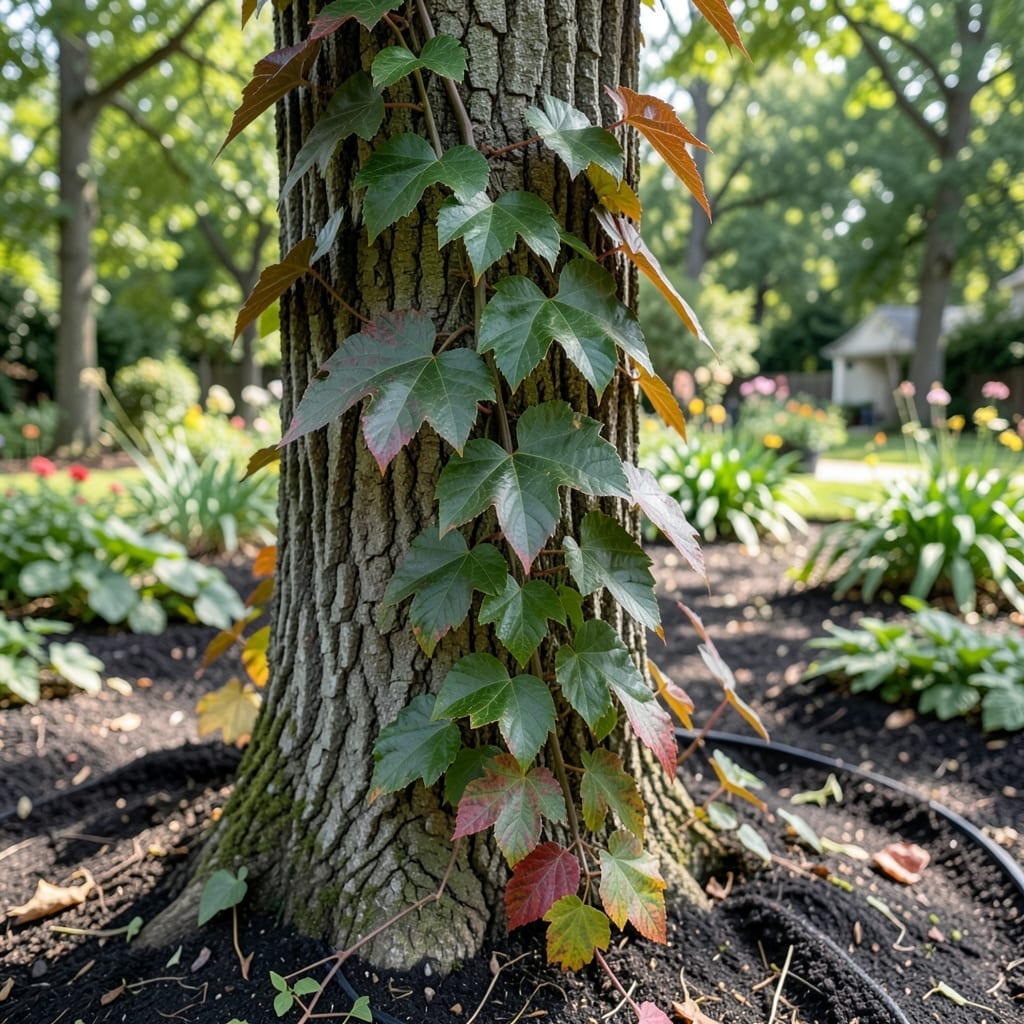
That vine climbing your tree isn’t just a pretty sight—it might be choking it. 🌿 I’ve seen Virginia Creeper and poison ivy disguise themselves as harmless ornaments, only to strangle the host over time.
Here’s the thing—removing it wrong can damage both vine and tree. The key is cutting strategically at the base, then gently unwinding the stems. No yanking, no pulling, just patient separation.
You’ll protect your tree’s bark and keep it thriving while clearing the unwanted growth. The process takes 30 minutes but prevents years of potential harm.
Works for most climbing vines, from ivy to wild grape. Let’s save that tree.
The 5-leaf vine (often Virginia Creeper or Poison Ivy) scales trees due to a combination of biological adaptations and environmental triggers. Below are the primary causes, explained with actionable insights.
Many 5-leaf vines are woody lianas, evolved to climb for sunlight. They use tendrils or adhesive rootlets to grip bark, leveraging the tree’s height to outcompete ground-level plants. This is a survival strategy—not an attack on the host.
In shaded forests or yards, vines grow toward light aggressively. Trees provide vertical access to sunlit canopies. If your tree is in partial shade, the vine may accelerate climbing to reach unobstructed sunlight.
Vines lack rigid stems to stand upright. Trees offer a free, sturdy scaffold, allowing the vine to conserve energy. Without this support, many vines would sprawl weakly across the ground, limiting their growth potential.
Tree bark traps humidity, creating a microclimate that benefits climbing vines. In dry conditions, this moisture can help the vine thrive where ground soil might be parched. Check your tree’s base—consistent dampness may encourage vine growth.
If a five-leaf vine is climbing your tree and you want to remove it without harming the host, follow these targeted solutions based on the root cause.
Use clean, sharp pruners to cut the vine at the base and at eye-level sections to prevent regrowth. Remove all cuttings from the area to avoid re-rooting. Prevention tip: 💡 Inspect trees monthly during growing seasons and trim vines early before they spiral out of control.
For persistent vines, trace the stems to the root crown and dig it out entirely. Use a garden fork to loosen soil and expose deeper roots. Prevention tip: 🎯 Install a root barrier (like metal edging) 6–12 inches deep around trees to block invasive roots before they reach the trunk.
If birds or wind carry seeds, apply a 2–3 inch layer of mulch around the tree’s base to suppress germination. Pull seedlings by hand when young. Prevention tip: ✨ Plant ground covers like creeping thyme to outcompete vine seeds naturally.
New vines are easier to remove. Gently unwind them from branches and snip at the base. Avoid tugging, as this can damage bark. Prevention tip: 🌡️ Mark new vine growth with flags or stakes for quick identification and removal.
Look for clusters of 3 leaflets—not 5. Poison ivy has a middle leaflet with a longer stem, while Virginia Creeper has 5 leaflets radiating from a central point. When in doubt, avoid touching and check a plant ID app.
Cutting at the base stops upward growth, but existing vines may persist. For full removal, sever at the base and pull down all stems from the tree. Expect regrowth if roots remain in the soil.
Avoid herbicides near trees—they can harm the host. Instead, manually remove vines or apply herbicide only to cut stems (not the tree bark). Always wear gloves and long sleeves.
Inspect monthly during spring and summer. New shoots appear quickly and are easiest to remove when young. Mark calendar reminders to stay ahead of regrowth.