
Beautiful Plants For Your Interior
Beautiful Plants For Your Interior
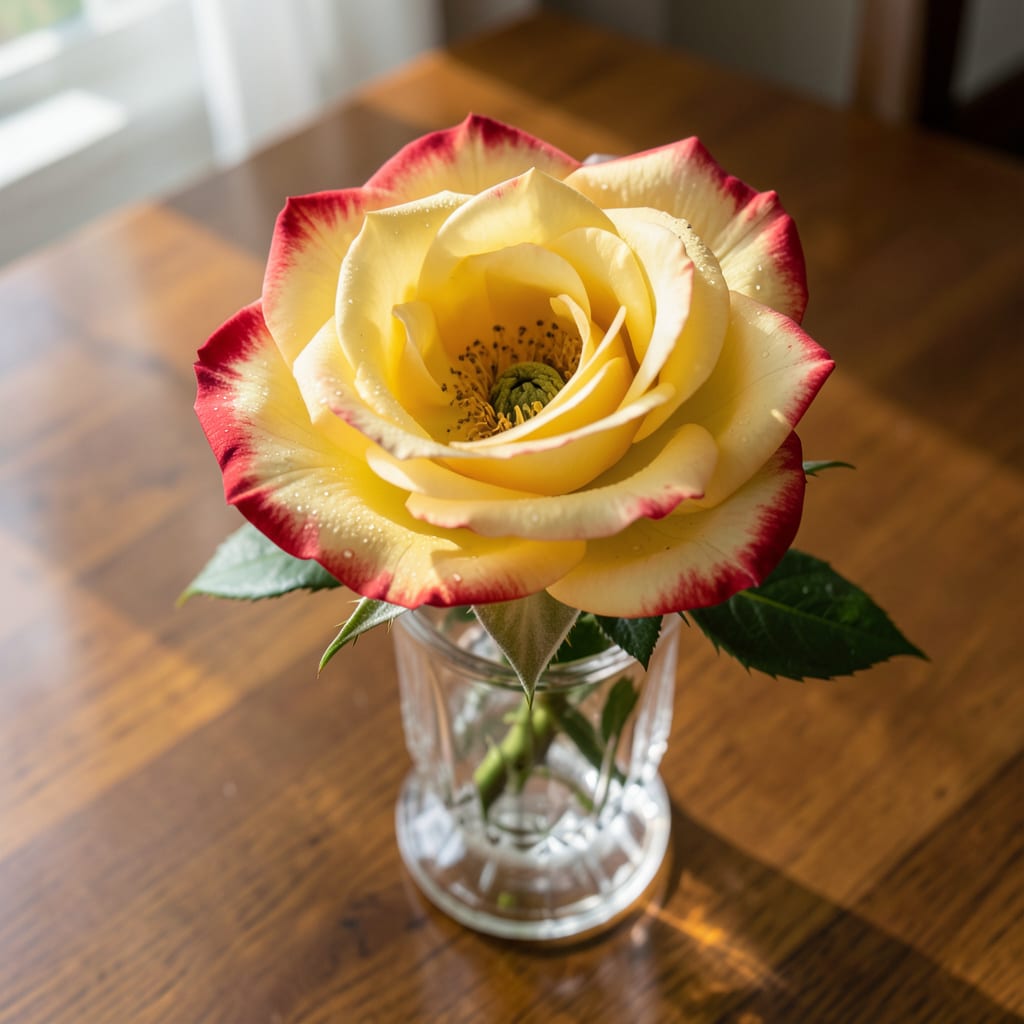
Yellow roses with red tips create a show-stopping display that turns heads every time. I planted my first one last spring, and the contrast between the golden petals and fiery edges still makes me pause mid-garden.
These roses thrive in 6+ hours of sunlight with well-draining soil. The secret is consistent watering at the base—never overhead—to prevent disease. You’ll get blooms that look hand-painted, adding drama to any landscape.
📚 In This Guide
This method ensures vibrant color contrast and healthy blooms with minimal fuss.
Select a bi-color rose cultivar specifically bred for yellow petals with red tips—varieties like ‘Double Delight’ or ‘Mister Lincoln’ offer this striking contrast. Avoid generic yellow roses, as they won’t produce the desired effect.
Plant in a spot with full sun (at least 6-8 hours daily) and well-draining soil. Partial shade dulls the color intensity and weakens stems. Test drainage by digging a 1-foot hole and filling it with water—if it drains within 1 hour, the soil is suitable.
Amend the planting area with 2-3 inches of compost worked into the top 12 inches of soil. Roses thrive in slightly acidic to neutral soil (pH 6.0-7.0). A soil test kit helps confirm this—adjust with lime or sulfur if needed.
Space plants 3-4 feet apart to allow air circulation, which prevents fungal diseases like black spot. Dig the hole twice as wide as the root ball but no deeper—burying the graft union (the bulge near the base) too deep suffocates the plant.
Water deeply at planting, soaking the root zone to a depth of 12-18 inches. Afterward, maintain 1-2 inches of water per week, either through rainfall or irrigation. Drip irrigation at the base is ideal—overhead watering wets foliage and invites disease.
Apply a 2-3 inch layer of organic mulch (shredded bark or straw) around the base, keeping it 2 inches away from the stem. Mulch retains moisture, suppresses weeds, and insulates roots from temperature swings. Refresh it annually as it decomposes.
Prune in early spring, just as new growth begins, removing dead or diseased wood first. Cut back 1/3 of the oldest canes to the base to encourage new, vigorous growth. Always use sharp, clean pruners to avoid tearing stems.
Deadhead spent blooms by cutting just above a 5-leaflet set to promote reblooming. This prevents the plant from wasting energy on seed production. For the strongest color contrast, remove any blooms that revert to solid yellow or red—this ensures the bi-color trait dominates.
Apply a balanced rose fertilizer (10-10-10 or 12-12-12) every 4-6 weeks during the growing season, following package instructions. Stop fertilizing 6-8 weeks before the first frost to harden off growth for winter.
Watch for aphids, which cluster on new growth and buds, or Japanese beetles, which skeletonize leaves. Spray aphids off with a strong jet of water, and handpick beetles early in the morning when they’re sluggish. Neem oil works for both but avoid applying in temperatures above 90°F to prevent leaf burn.
Small adjustments in technique and timing make a surprising difference in color vibrancy and plant health.
Variety Selection: Stick with bi-color cultivars like ‘Double Delight’ or ‘Mister Lincoln’—generic yellow roses simply won’t give you that dramatic red-tipped contrast. I learned this the hard way after planting the wrong variety and ending up with solid yellow blooms.
Sunlight and Drainage: The 6-8 hours of daily full sun isn’t just a suggestion—it’s critical for maintaining that bold color contrast. Test your soil’s drainage with the 1-foot hole method; if water lingers beyond 1 hour, your roses will struggle with root rot.
Pruning Precision: When you cut back 1/3 of the oldest canes in Step 4, use sharp pruners and make clean cuts at a 45-degree angle. This prevents tearing and encourages strong new growth, which is essential for vibrant blooms.
Red tips on yellow roses often appear due to environmental stress like cold temperatures or intense sunlight. Some varieties, like ‘Julia Child’, naturally have red-tinted edges as they mature.
Early spring or fall is ideal, as cooler temperatures help roots establish before extreme heat or frost. Avoid planting in peak summer or winter.
Yes! Consider ‘Double Delight’ (white with red edges) or ‘Tahitian Sunset’ (orange-yellow with red). Both offer bold color combos similar to yellow-red roses.
Ensure they get 6+ hours of sunlight daily and use a balanced fertilizer. If tips fade, check for nutrient deficiencies or overly shaded conditions.
