
Beautiful Plants For Your Interior
Beautiful Plants For Your Interior
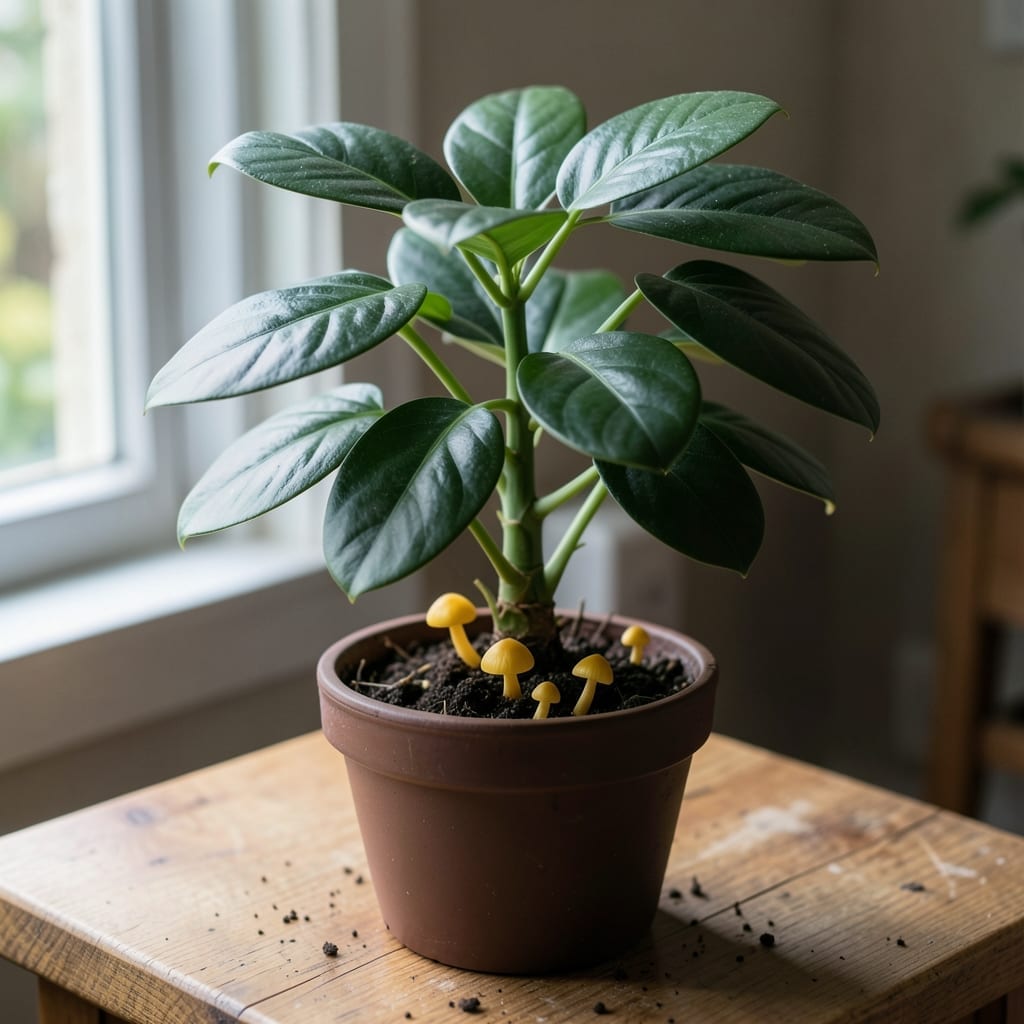
Yellow mushrooms popping up in your potted plants aren’t just unsightly—they’re a red flag. I’ve seen these uninvited guests turn a healthy container garden into a fungal free-for-all in 48 hours if ignored.
They thrive in overly moist soil, decaying organic matter, or poor drainage. The good news? They’re more about your plant’s environment than the plant itself. Fix the conditions, and you’ve solved 90% of the problem.
Removal is simple: pluck them out, adjust your watering, and improve airflow. No fancy tools required—just consistency. Your plants will thank you with greener leaves and stronger roots.
Prevention is even easier. A few tweaks to your routine keeps these yellow intruders from ever returning. Here’s how to lock them out for good.
Yellow mushrooms in potted plants are a sign of underlying fungal activity, often triggered by specific environmental conditions. Below are the most common causes, explained clearly so you can address them effectively.
Overwatering is the #1 cause of fungal growth, including yellow mushrooms. When soil stays soggy, it creates an anaerobic (low-oxygen) environment that fungi love. Potted plants with poor drainage or compacted soil are especially vulnerable. Fungi like Leucocoprinus (a common yellow mushroom genus) thrive in these damp, dark conditions, breaking down organic matter and producing visible fruiting bodies (the mushrooms you see).
Decaying plant material—such as fallen leaves, dead roots, or uncomposted mulch—provides a rich food source for fungi. If your potted plant has accumulated organic debris on the soil surface or within the pot, it’s essentially a buffet for mushroom-spawning fungi. These organisms decompose the matter, and yellow mushrooms may emerge as part of their reproductive cycle.
Fungi proliferate in warm (60–80°F / 15–27°C) and humid conditions. If your potted plants are kept in a greenhouse, bathroom, or other high-humidity area with limited airflow, you’re rolling out the welcome mat for mushrooms. Poor ventilation traps moisture and heat, accelerating fungal growth. Even indoor plants near humidifiers or in densely grouped arrangements can develop yellow mushrooms.
Sometimes, the problem starts before you even pot your plant. Commercial potting mixes can contain fungal spores, especially if they include uncomposted wood chips or forest soil. If the mix wasn’t sterilized, dormant fungi may activate once watered, leading to mushroom growth. Always check that your potting soil is labeled as sterilized or pasteurized to minimize this risk.
Dealing with yellow mushrooms in your potted plants is simpler than it seems. Below are targeted solutions for common causes, along with prevention tips to keep them from returning.
If excess moisture is the culprit, let the soil dry out between waterings. Stick your finger an inch into the soil—if it feels damp, hold off. Use pots with drainage holes and empty saucers after watering to prevent standing water. Prevention tip: Water only when the top layer of soil is dry. 💡
Repot your plant in a well-draining mix, like a combination of potting soil, perlite, and coarse sand. Ensure your pot has drainage holes, or add a layer of gravel at the bottom. Prevention tip: Avoid compacted soil—loosen it gently with a fork every few weeks. ✨
Clear away fallen leaves, dead plant material, or old mulch from the soil surface. These are prime food sources for fungi. Replace the top layer of soil if it’s heavily contaminated. Prevention tip: Keep the pot area clean and free of plant debris. 🎯
If mushrooms persist, the soil may be infected. Remove the plant, discard the old soil, and repot with fresh, sterile potting mix. For mild cases, you can bake the soil at 200°F (93°C) for 30 minutes to kill spores. Prevention tip: Use pasteurized soil for new plantings. 🌡️
With these steps, your potted plants will stay mushroom-free and healthy!
Generally, no—they feed on decaying matter, not living plants. However, they signal excess moisture which can harm roots. Remove them to prevent potential spread.
Reduce watering frequency, ensure pots have drainage holes, and remove organic debris. Improve airflow around plants.
Yes, but this is a temporary fix. Pluck mushrooms at the base, then address the root cause—usually overwatering or poor drainage.
Only if the soil smells foul or stays soggy after 2-3 days of no watering. Otherwise, adjust care first.