
Beautiful Plants For Your Interior
Beautiful Plants For Your Interior
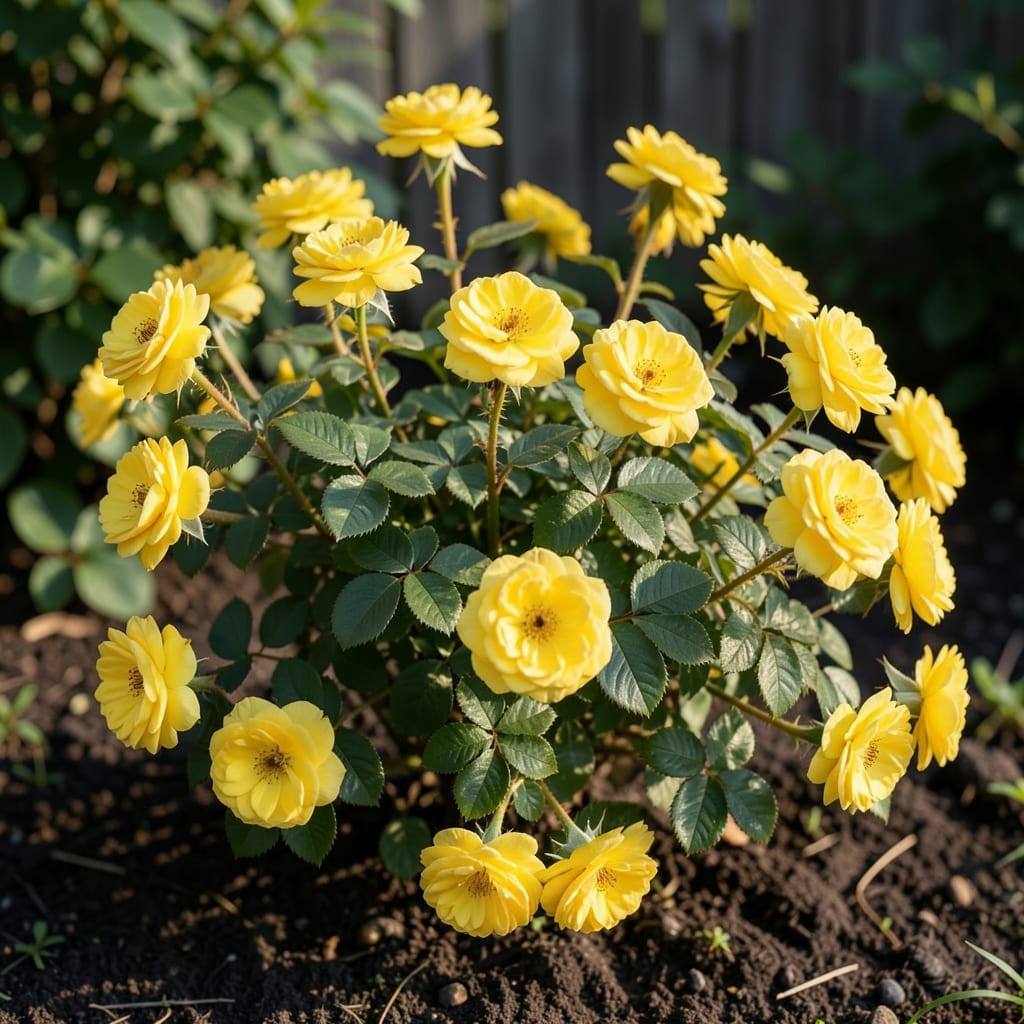
Yellow drift roses are low-maintenance, disease-resistant shrubs that thrive in full sun. They produce vibrant yellow blooms from spring to frost and spread widely for ground cover.
I love how these shrubs transform gardens with minimal effort. Their spreading habit comes from vigorous, above-ground runners that root as they grow, creating a lush carpet of color. 🌟 For best results, I plant them 2-3 feet apart in well-draining soil and water deeply once a week during dry spells.
💡 In This Article
The secret lies in their vigorous, trailing growth habit. These roses develop long, arching canes that can extend 3-4 feet in a single season, with each stem producing multiple flowering nodes. This horizontal growth pattern allows them to quickly fill empty spaces in your landscape. 🌟
Beneath the surface, drift roses have a fibrous root system that spreads outward rather than downward. This shallow network allows them to establish quickly and anchor new growth as the canes extend. The roots also produce suckers—new shoots that emerge from the base—further expanding the plant’s footprint.
What most gardeners don’t realize is that drift roses are actually a type of groundcover rose, specifically bred to stay low and wide. Their compact height (1.5-2 feet) combined with this spreading nature makes them ideal for slopes, borders, or mass plantings where you want continuous color. ✨
The flowers themselves play a role in this expansion. Each bloom produces hips (seed pods) that can drop and potentially germinate, though most propagation happens through the plant’s natural vegetative spread. The continuous blooming cycle from spring to frost means more opportunities for this gentle expansion.
This growth pattern isn’t aggressive like some invasive plants. Instead, it’s controlled and predictable, typically spreading at a rate of 1-2 feet per year under ideal conditions. This makes them perfect for filling in spaces without overwhelming neighboring plants. 💛
They thrive with at least 6-8 hours of direct sunlight each day. While they can tolerate partial shade, full sun produces the most vibrant blooms and healthy growth. Less light may result in fewer flowers and leggy stems.
Well-draining loamy soil with a pH between 6.0-6.5 is ideal. Amend heavy clay or sandy soil with compost to improve drainage and fertility. They’re adaptable but perform best in rich, moist soil.
Water deeply once or twice a week, providing about 1 inch of water each time. Increase frequency during extreme heat or drought. Always water at the base to avoid wetting the foliage.
Their bright blooms draw bees, butterflies, and other pollinators. This makes them a great choice for gardens aiming to support local ecosystems while adding beauty.
Yes, but use a container at least 18 inches wide with drainage holes. They’ll need more frequent watering and occasional pruning to manage their spreading habit in confined spaces.