
Beautiful Plants For Your Interior
Beautiful Plants For Your Interior
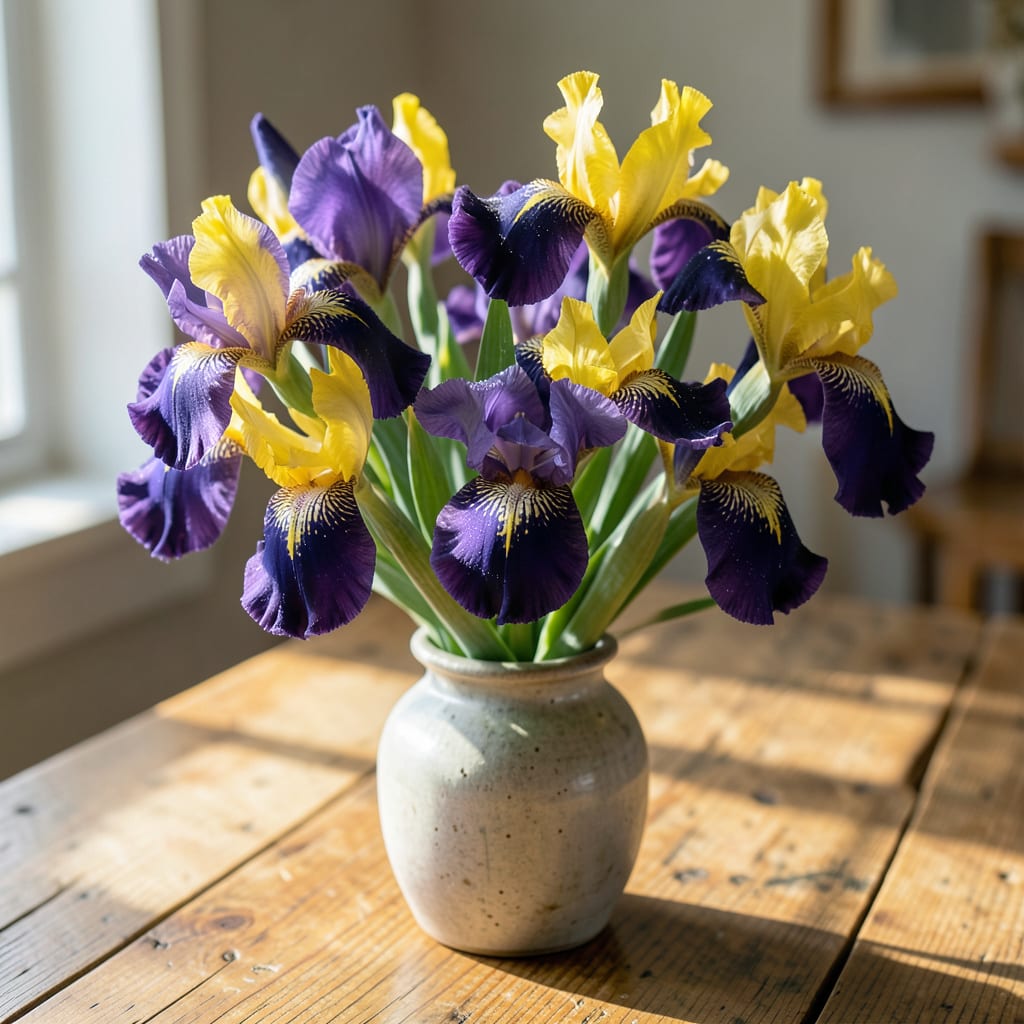
These bicolor beauties bring a painter’s palette to your garden borders. I first planted yellow and blue iris along my fence line, and now every spring feels like walking through a living watercolor.
They thrive in full sun with well-draining soil, rewarding you with striking blooms that return year after year. A little care goes a long way—these plants are as resilient as they are stunning.
📚 In This Guide
Here’s how I get these stunning bicolor blooms to thrive in my garden borders every year.
Select a spot with full sun to partial shade, as these irises perform best with at least 6 hours of sunlight daily. I’ve found they tolerate some afternoon shade, especially in hotter climates, but too much shade results in fewer blooms.
Ensure the soil is well-draining to prevent bulb rot. If your garden has heavy clay, amend it with compost or plant in raised beds. The ideal soil pH is 6.8 to 7.0, slightly alkaline, which helps the colors pop.
Loosen the soil to a depth of 12 inches and mix in a 2-inch layer of compost for added nutrients. Iris rhizomes need room to spread, so space them 12 to 24 inches apart, depending on the mature size of your variety.
Plant the rhizomes shallowly, with the top partially exposed to sunlight. This prevents rot and encourages strong growth. Press the soil gently around the roots to remove air pockets, but don’t bury the rhizome completely—it should peek above the soil line.
After planting, water deeply to settle the soil around the roots. Keep the soil consistently moist for the first 2 to 3 weeks to help the rhizomes establish. Once established, irises are drought-tolerant and prefer moderate moisture—overwatering is a common mistake.
Apply a 1 to 2-inch layer of mulch around the plants to retain moisture and suppress weeds, but keep the mulch away from the rhizome itself to avoid rot. I use straw or shredded bark, which break down slowly and improve soil texture over time.
In early spring, apply a low-nitrogen, high-phosphorus fertilizer (like 6-10-10) to encourage blooming. Avoid high-nitrogen fertilizers, which promote leaf growth at the expense of flowers. I feed mine once at the start of the season and again after blooming to support next year’s growth.
Remove spent flower stalks after blooming to prevent seed formation, which diverts energy from the rhizome. However, leave the foliage intact until it yellows in late summer—this allows the plant to store energy for next year’s display.
Yellow and blue irises benefit from division every 3 to 5 years to prevent overcrowding, which reduces blooming. Dig up the clumps in late summer after the foliage has died back. Use a sharp knife to separate the rhizomes, discarding any soft or diseased sections.
Replant the healthy rhizomes immediately, following the same shallow planting method as before. This is also a great time to share extras with gardening friends—irises are generous multipliers and make wonderful pass-along plants.
These small adjustments will help your garden thrive with vibrant colors year after year.
Sunlight Strategy: The 6 hours of daily sunlight requirement is non-negotiable for maximum blooms. I’ve noticed that morning sun with afternoon shade works particularly well in warmer climates, while full sun produces the most intense color in cooler areas. Position your plants accordingly.
Planting Depth Insight: In Step 2, when planting rhizomes, remember that shallow is better. I’ve ruined several by burying them too deep – the top should absolutely peek above soil level. This prevents rot and ensures the rhizome can absorb sunlight, which is crucial for healthy growth.
Watering Wisdom: During those first 2 to 3 weeks after planting, consistency is key. I set a daily reminder to check moisture levels, as new rhizomes need that steady supply to establish roots. After establishment, you’ll be surprised at how drought-tolerant these become.
Division Timing: For Step 5, late summer is ideal for dividing – I mark my calendar for when foliage starts yellowing. This timing gives the divided rhizomes enough time to establish before winter. Don’t wait until they’re completely overcrowded, as this reduces blooming significantly.
The ideal time is late summer to early fall, allowing roots to establish before winter. Planting in spring is also possible, but avoid extreme heat or frost for best results.
Ensure full sun to partial shade and well-drained soil. Water moderately, avoiding soggy conditions. Divide clumps every 3-4 years to maintain vigor and prevent overcrowding.
Consider purple coneflowers, black-eyed Susans, or daylilies for similar height and color contrast. These perennials also thrive in borders and attract pollinators.
Lack of sun, overcrowding, or poor soil drainage may be the issue. Ensure they get 6+ hours of sunlight, divide clumps if needed, and fertilize lightly in early spring.
