
Beautiful Plants For Your Interior
Beautiful Plants For Your Interior
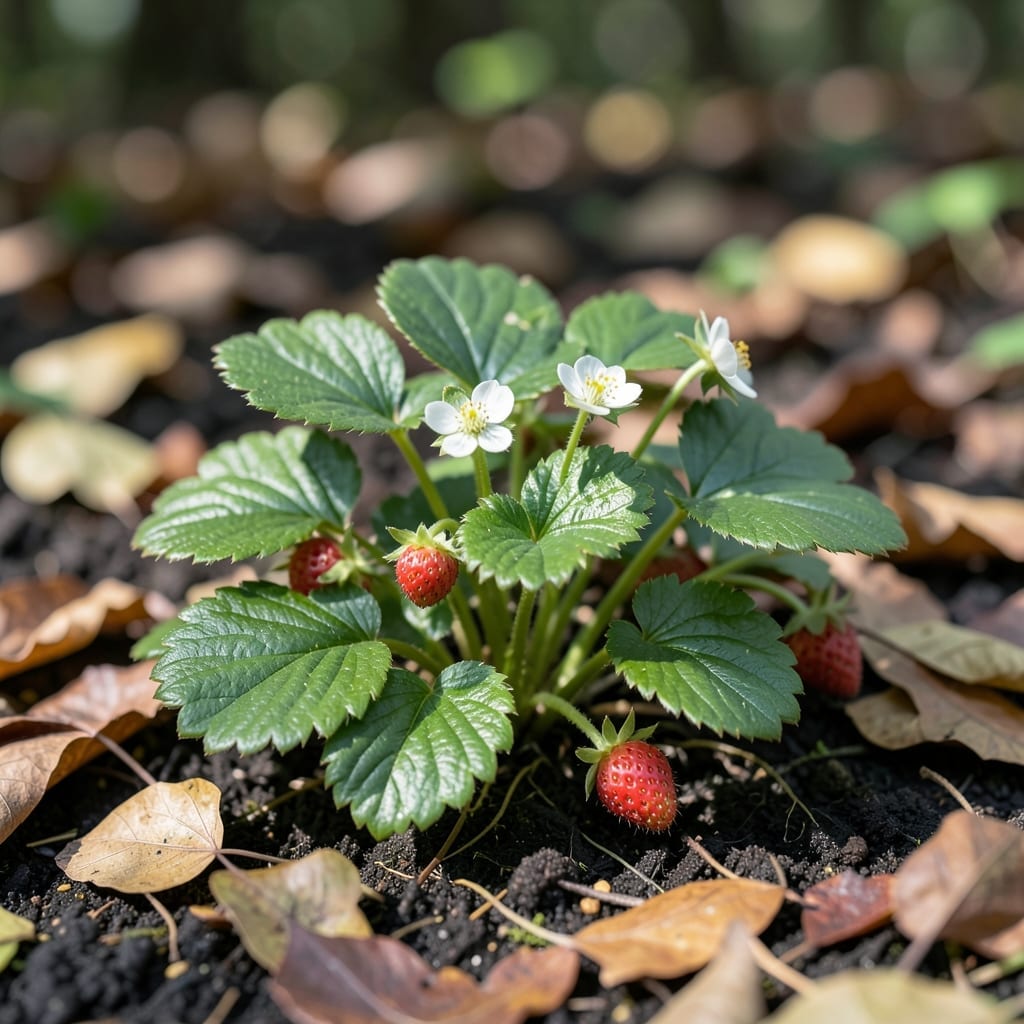
Spotted a strawberry-like berry in your yard? Don’t pop it in your mouth yet. Mock strawberries spread fast and look convincing, but they’re not the sweet treat you expect.
I’ve seen these pop up in lawns and wooded edges—yellow flowers, red fruit, even little seeds on the outside. The taste is bland at best, and some look-alikes can make you sick.
Learning to tell the difference keeps you safe while foraging. The real giveaway is the leaf shape and how the fruit holds on the stem.
Use this guide before you pick anything wild. Your stomach will thank you later.
The resemblance between mock strawberries (Duchesnea indica) and true strawberries (Fragaria spp.) isn’t accidental—it’s rooted in botany and ecology. Here’s why these lookalikes fool even seasoned foragers.
Mock strawberries evolved to mimic their edible cousins as a survival tactic. Their bright red color and strawberry-like shape attract animals that disperse seeds, even if the fruit itself is less palatable. This Batesian mimicry (where a harmless species copies a beneficial one) ensures their seeds spread widely, despite offering little nutritional reward.
Both mock strawberries and true strawberries belong to the Rosaceae family, sharing genetic and structural similarities. Their aggregated fruit (a cluster of tiny achenes on a fleshy receptacle) and trifoliate leaves stem from this close relation. While true strawberries develop from a single flower, mock strawberries often form from multiple flowers, but the visual overlap persists.
These plants thrive in similar conditions: disturbed soils, lawns, and wooded edges. Mock strawberries, native to Asia, have naturalized in the U.S. and Europe, often growing alongside wild strawberries. Their ability to tolerate poor soil and partial shade means they’re frequently found where foragers expect to see the real thing.
Our brains are wired to recognize patterns quickly—sometimes too quickly. The color red (a universal signal for ripe, sweet fruit) and the familiar strawberry silhouette trigger instant recognition, overriding subtler cues like leaf shape or seed arrangement. This cognitive shortcut makes it easy to misidentify them in the wild.
Spotting wild berries that resemble strawberries can be tricky, but these practical solutions will help you avoid confusion and stay safe.
Mock strawberries often have yellow flowers instead of white, and their berries sit upright on the stem rather than hanging down. True wild strawberries also have a sweeter scent. Always compare these traits before picking.
When in doubt, snap a photo and run it through a trusted plant identification app like iNaturalist or PictureThis. These tools cross-reference visual details with databases to confirm the species. Pro tip: 💡 Check multiple angles of the plant, including leaves and stems, for accurate results.
Reach out to a botanist, forager, or your nearest cooperative extension office. They can provide region-specific guidance and may even offer workshops on safe foraging. Many communities also have Facebook groups or forums where experienced foragers share insights.
By combining observation, technology, and expert advice, you can confidently distinguish wild strawberries from their imposters.
Mock strawberries are not toxic but taste bland. However, some look-alikes can be harmful. Never eat wild berries unless you’re absolutely certain of their identity.
Real strawberries have white flowers and hang downward from the stem. Mock strawberries have yellow flowers, and their fruit sits upright. The leaves also differ—real ones are more serrated.
They thrive in disturbed soils like lawns, gardens, and wooded edges. Mock strawberries are often found in partial shade and can spread quickly in these environments.