
Beautiful Plants For Your Interior
Beautiful Plants For Your Interior
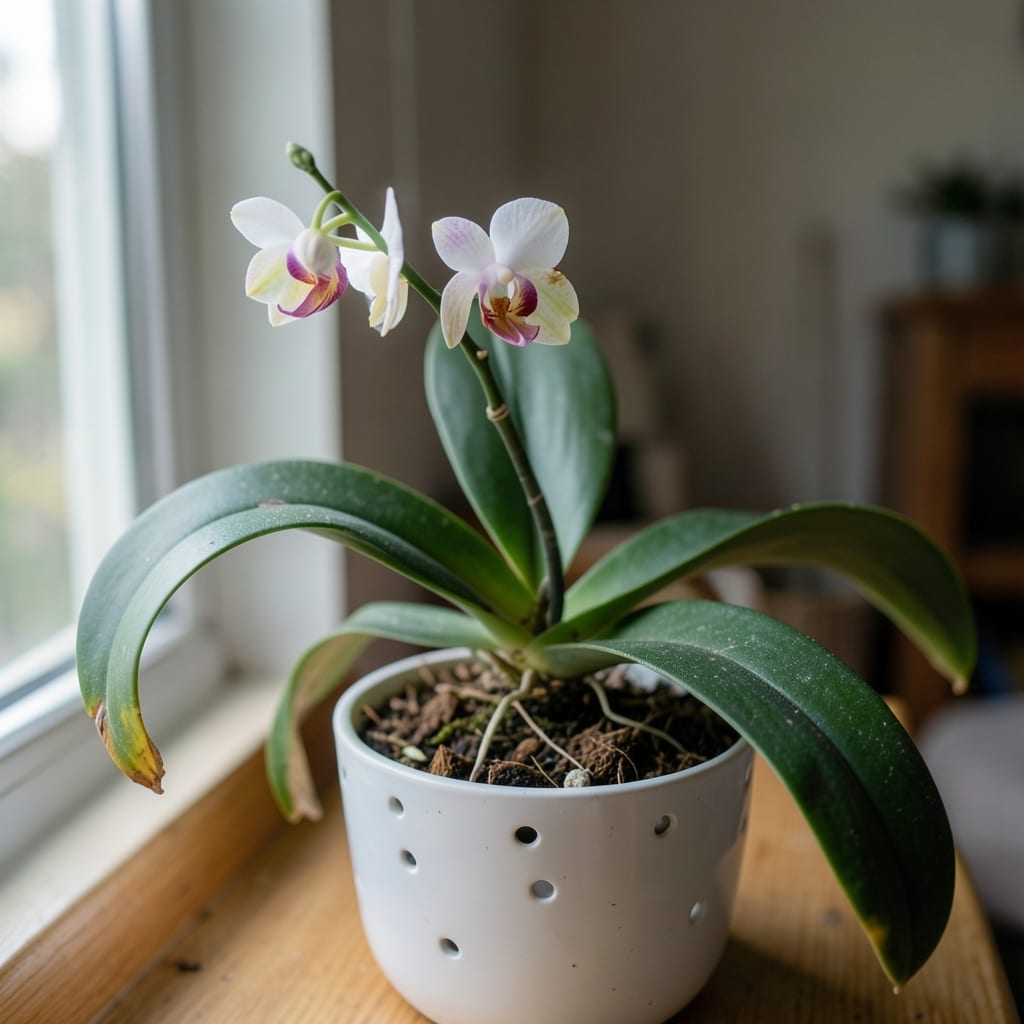
Your orchid’s drooping blooms aren’t a death sentence. I’ve saved dozens from the brink with just a few simple checks.
Most wilting comes from overwatering or poor drainage—roots drowning in soggy bark. Sometimes it’s underwatering, low humidity, or that drafty windowsill you didn’t notice. The fix starts with examining the roots and adjusting your care routine.
You’ll often see perky blooms again within 2-3 days of the right intervention. Yellow roots mean too much water; silver roots scream for more. The solution is usually simpler than you’d think.
Works for Phalaenopsis, Cattleya, and most common house orchids. Let’s diagnose it.
Orchids wilt when their basic needs aren’t met, but the underlying causes often surprise even experienced growers. Below are the most common—and fixable—reasons your plant’s leaves or blooms may be drooping.
Orchids hate soggy roots. When potting media stays wet, it suffocates the roots, blocking oxygen uptake. This triggers root rot, where fungal or bacterial infections destroy healthy tissue. Without functional roots, the plant can’t absorb water or nutrients, leading to wilting. Phalaenopsis and Dendrobium are especially sensitive—always use a chunky, fast-draining mix (like bark or sphagnum moss) and pots with drainage holes.
Orchids thrive in stable environments. A sudden drop below 50°F (10°C) or spike above 85°F (29°C) can shock the plant, causing cells to lose turgor pressure (internal water balance). Even drafts from AC vents or heaters can trigger wilting. Tropical varieties like Cattleya prefer a 10–15°F (5–8°C) day-night temperature difference to bloom, but extreme fluctuations spell trouble.
Too little light weakens the plant, starving it of the energy needed for photosynthesis. Without enough sugars, stems and leaves lose rigidity. Conversely, direct midday sun can scorch orchid tissues, causing rapid water loss and wilting. Most orchids prefer bright, indirect light (1,000–2,000 foot-candles). A pale green or reddish leaf hue often signals light stress.
Orchids are light feeders but still need balanced nutrition. A lack of potassium (critical for water regulation) or calcium (for cell wall strength) can lead to floppy growth. Over-fertilizing is just as harmful—salt buildup in the media burns roots, mimicking drought stress. Use a diluted, orchid-specific fertilizer (e.g., 20-20-20 at half-strength) every 2–4 weeks during active growth.
If your orchid is wilting, don’t panic—most causes are fixable with a few simple adjustments. Below are targeted solutions for the most common issues, along with prevention tips to keep your plant thriving long-term.
Orchids need consistent moisture but hate soggy roots. If the potting mix is bone-dry and the roots look shriveled, it’s time to water. Soak the pot in room-temperature water for 10–15 minutes, then let it drain completely. Prevention tip: Water when the top inch of mix feels dry, usually every 7–10 days. 💡 Use clear pots to monitor root health—plump, green roots mean happy hydration.
Yellowing leaves or mushy, black roots signal overwatering. Stop watering immediately and check the roots. Trim any rotten roots with sterilized scissors, then repot in fresh, airy mix (like bark or sphagnum moss). Prevention tip: Ensure your pot has drainage holes and avoid letting the plant sit in water. ✨ Orchids prefer a “dry out” period between waterings.
If leaves look sunburned (yellow or brown patches), move your orchid to a spot with bright, indirect light. East or north-facing windows are ideal. Prevention tip: A sheer curtain can filter harsh rays while keeping light levels optimal. 🎯 Aim for 6–8 hours of gentle light daily.
Leggy growth or dark green leaves with no blooms? Your orchid needs more light. Gradually introduce it to a brighter area, avoiding direct sun. Prevention tip: Rotate the pot weekly for even exposure. 🌡️ Ideal light is like a well-lit room—bright but not blinding.
Stagnant air encourages rot and pests. Place your orchid in a well-ventilated area with gentle airflow, like near an open window (but not in a draft). Prevention tip: A small fan on low can mimic a natural breeze—just don’t point it directly at the plant.
Water when the top 1 inch of potting mix feels dry, typically every 7-10 days. Soak the pot for 10-15 minutes then let it drain completely. Overwatering is more dangerous than underwatering for most orchids.
Yes! Trim all black, mushy roots with sterilized scissors, then repot in fresh bark mix. Water lightly and place in bright, indirect light. New roots often appear in 2-4 weeks with proper care.
This usually signals underwatering or sudden temperature changes. Check if the potting mix is bone-dry or if the plant was exposed to drafts below 50°F. Adjust watering or move to a stable environment.
Misting provides temporary humidity but doesn’t replace proper watering. It can even promote fungal issues if overdone. Focus on consistent watering and good airflow instead.