
Beautiful Plants For Your Interior
Beautiful Plants For Your Interior
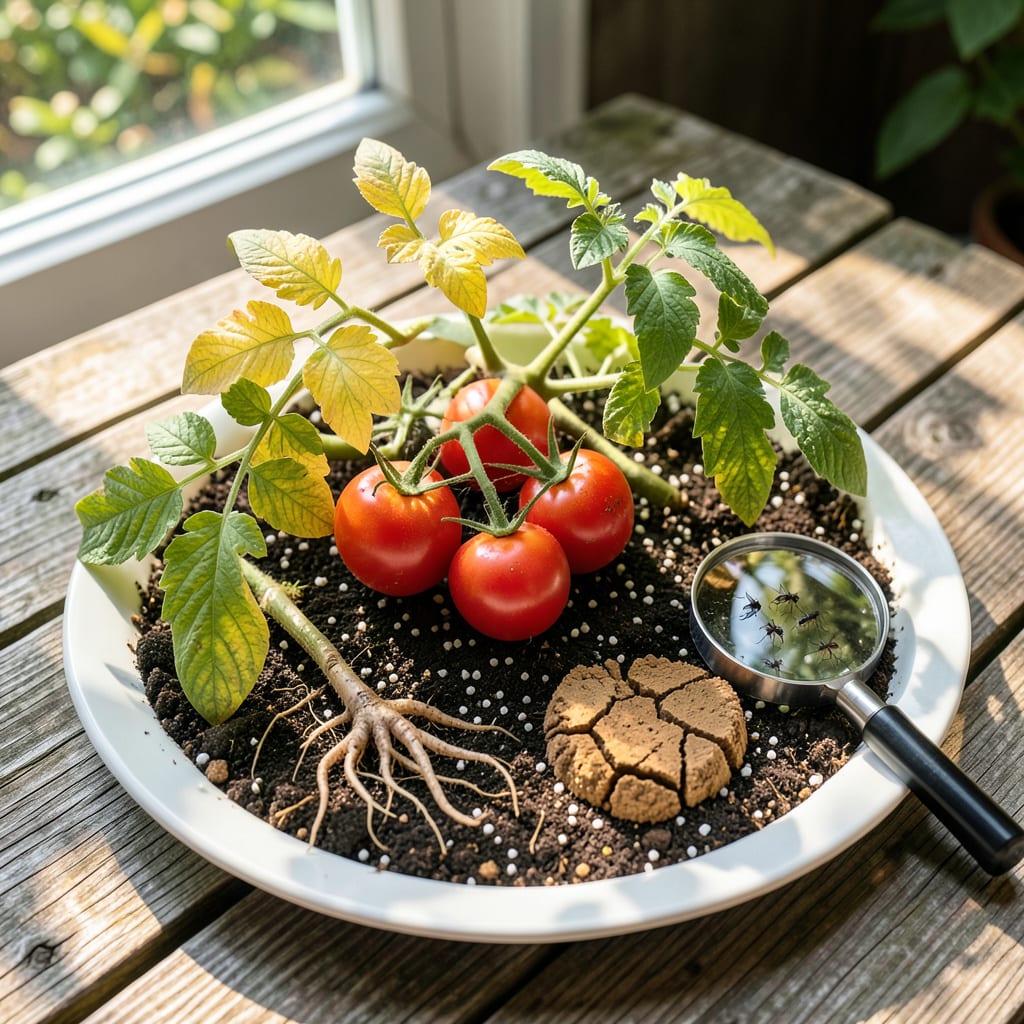
Yellow leaves on tomato plants always send me into detective mode. I’ve seen this happen with new seedlings, mature plants, and even right before harvest, and each case points to a different culprit.
Sometimes it’s too much water suffocating the roots, other times it’s not enough nutrients in the soil. I once lost half my crop to a nitrogen deficiency that started with just a few yellow bottom leaves.
What most people miss is that yellowing can also signal pests, disease, or even environmental stress like extreme heat. The pattern and location of the yellowing usually tells the story.
The fix is often simpler than you think—adjust watering, add fertilizer, or improve air circulation. Here’s how to diagnose and treat each case.
Yellow leaves on tomato plants are a distress signal, often tied to specific environmental or care-related issues. Here’s a breakdown of the most common causes, explained scientifically and with actionable insights.
Nitrogen, magnesium, or iron shortages are primary culprits. Nitrogen deficiency typically starts with lower leaves turning pale yellow, as the plant diverts nitrogen to newer growth. Magnesium deficiency (common in sandy or acidic soils) causes interveinal chlorosis—yellowing between leaf veins—while iron deficiency (often in alkaline soils) leads to yellowing of younger leaves first. A soil test can confirm the exact imbalance, and targeted fertilizers (e.g., Epsom salt for magnesium) restore health.
Roots need oxygen as much as water. Overwatering suffocates roots, reducing their ability to absorb nutrients, while underwatering stresses the plant, halting chlorophyll production. Both result in yellowing, often accompanied by wilting or crispy edges. Check soil moisture 2 inches deep—ideally, it should be damp but not soggy. Adjust watering frequency and ensure well-draining soil to prevent root rot.
Extreme temperatures, excessive sunlight, or sudden changes in conditions can shock tomato plants. Heat stress (above 90°F) may cause leaves to yellow and curl, while cold snaps (below 50°F) slow nutrient uptake. Similarly, too much direct sunlight can scorch leaves, leading to discoloration. Use shade cloth during peak heat or row covers for cold protection to stabilize the environment.
Insects like aphids and whiteflies sap plant juices, weakening the plant and causing yellowing. Fungal diseases, such as early blight or septoria leaf spot, create yellow spots or patches with dark centers. Inspect leaves for pests or fungal spores, and treat with neem oil or copper-based fungicides as needed. Remove heavily infested leaves to prevent spread.
Yellow leaves on tomato plants can often be fixed with the right approach. Below are targeted solutions based on common causes, along with prevention tips to keep your plants thriving.
If yellowing starts at the bottom leaves, your plant may lack nitrogen. Use a balanced fertilizer (10-10-10) or a nitrogen-rich option like compost tea. For yellowing between veins (magnesium deficiency), apply Epsom salt (1 tbsp per gallon of water) as a foliar spray. Prevention tip: 💡 Test soil annually and amend with organic matter before planting.
Check soil moisture 1–2 inches deep—it should feel like a wrung-out sponge. If soggy, hold off on watering and improve drainage with perlite or sand. For dry soil, water deeply 1–2 times per week (more in heatwaves). Prevention tip: ✨ Use drip irrigation to avoid wetting leaves, which can invite fungal issues.
If leaves turn yellow and crispy, your plant may be sunburned. Use 30–40% shade cloth during peak afternoon hours, especially for young seedlings. Prevention tip: 🌡️ Acclimate plants gradually to full sun over 7–10 days.
Inspect leaves for spots, webbing, or sticky residue (signs of pests like aphids or whiteflies). Spray with neem oil or insecticidal soap. For fungal diseases (e.g., early blight), remove infected leaves and apply copper fungicide. Prevention tip: 🎯 Rotate crops yearly and space plants 18–24 inches apart for airflow.
Tomatoes dislike temps below 50°F or above 90°F. Use row covers for cold snaps and mulch to regulate soil temp. Prevention tip: ⏰ Plant after the last frost and choose heat-tolerant varieties for hot climates.
Overwatered leaves often turn yellow and feel soft or mushy. Check the soil 2 inches deep—if it’s soggy, hold off on watering. Wilting despite wet soil is another red flag.
Lower leaves yellow first with nitrogen deficiency. Magnesium shortage causes yellowing between veins on older leaves. Iron deficiency affects new growth first.
If the plant recovers quickly, some leaves may regain color. Severely damaged leaves won’t recover, but new growth will be healthy. Remove dead leaves to redirect energy.
First, check soil moisture and adjust watering. Then, apply a balanced fertilizer or Epsom salt for magnesium. For pests, use neem oil immediately.
