
Beautiful Plants For Your Interior
Beautiful Plants For Your Interior
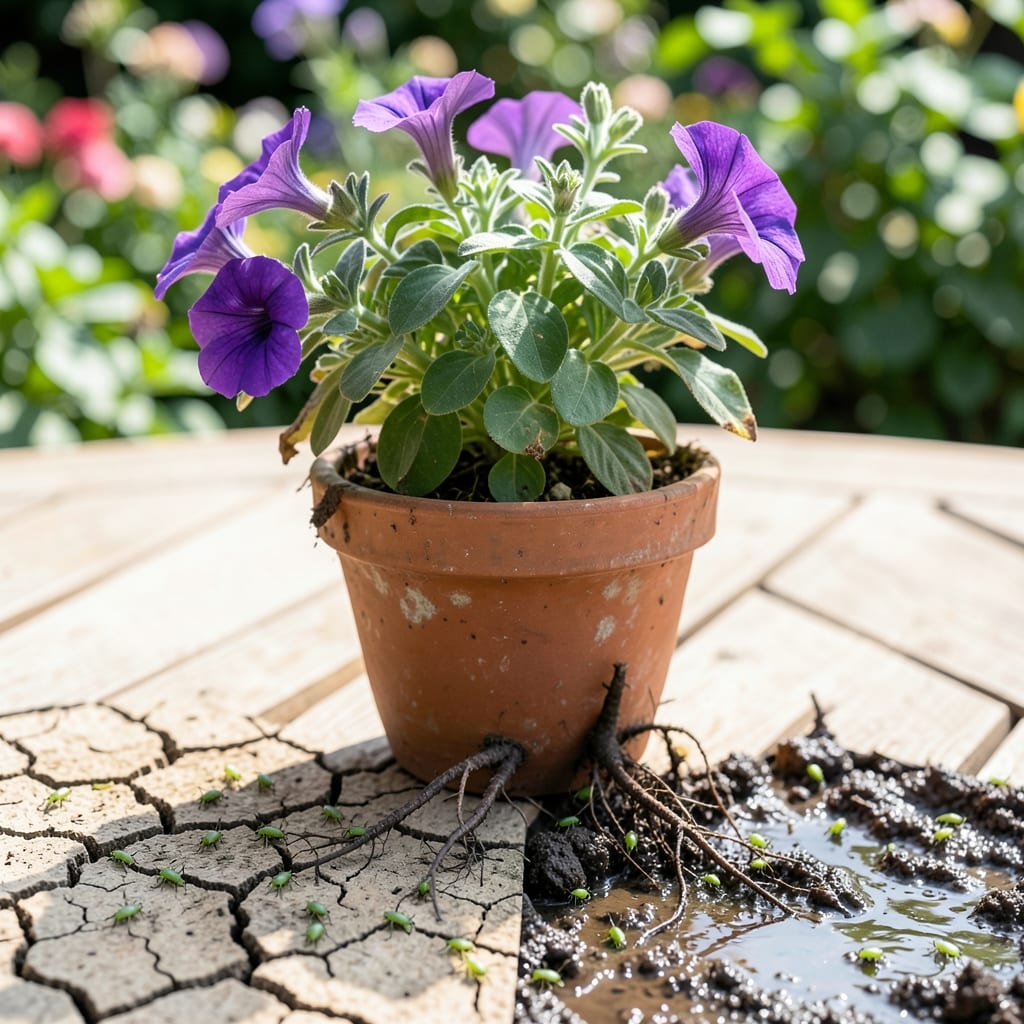
Nothing stings like watching vibrant petunias fade to crispy brown. I’ve lost count of how many I’ve revived by catching the warning signs early—before the whole plant gives up.
Usually, it’s one of four culprits: too much water, not enough, hungry pests, or soil that’s more dust than dirt. Each leaves a distinct clue if you know where to look. My journal’s full of notes from the times I got it wrong.
Most wilting petunias bounce back within 24-48 hours of the right fix. The key is checking soil moisture with your finger (my go-to method) before assuming they’re thirsty.
Prevent future heartbreak with consistent watering, well-draining soil, and a sharp eye for early trouble. Simple checks now save blooms later.
Petunias are hardy, but even the toughest plants can falter under stress. Here’s what’s likely going wrong under the surface:
Petunias thrive in consistently moist but well-drained soil. Too much water suffocates roots, blocking oxygen uptake and inviting fungal rot like Pythium or Phytophthora. Conversely, drought stress shuts down photosynthesis, causing leaves to crisp and flowers to drop. Check soil moisture 1 inch deep—if it’s soggy or bone-dry, adjust your watering schedule.
These sun-lovers wilt in extreme heat (above 90°F/32°C) or cold snaps (below 40°F/4°C). Heat scorch disrupts cellular function, while frost damages cell walls. Petunias in containers are especially vulnerable to temperature swings. Move pots to shade during peak heat or cover them during unexpected frosts.
Yellowing leaves (chlorosis) or stunted growth often signal a lack of nitrogen (for foliage) or phosphorus (for blooms). Over-fertilizing, however, can burn roots with salt buildup. Use a balanced, water-soluble fertilizer (10-10-10 or 20-20-20) every 2–3 weeks during the growing season, and flush the soil with water monthly to prevent salt accumulation.
Aphids, spider mites, and whiteflies sap plant juices, weakening petunias and spreading viruses. Fungal diseases like powdery mildew (white coating on leaves) thrive in humid, crowded conditions. Prune affected areas, improve airflow, and apply neem oil or insecticidal soap at the first sign of trouble.
Petunias need 6–8 hours of full sun daily. Too little light leads to leggy, weak stems and fewer blooms as the plant stretches for energy. If your petunias are in shade, relocate them or trim overhanging branches to let the sunlight in.
Petunias can bounce back with the right care. Here’s how to tackle common issues and bring your blooms back to life.
If your petunias are soggy or yellowing, stop watering immediately and check the soil. Repot in fresh, well-draining potting mix with perlite or sand. Ensure containers have drainage holes. Prevention tip: 💡 Water only when the top inch of soil feels dry.
Wilting or crispy leaves often mean sunburn. Move potted petunias to a spot with morning sun and afternoon shade. For garden beds, use shade cloth during peak heat. Prevention tip: ✨ Acclimate plants gradually to full sun over a week.
Spotted or sticky leaves? Check for aphids, spider mites, or fungal infections. Spray with neem oil or insecticidal soap for pests. For fungus, remove affected leaves and improve air circulation. Prevention tip: 🎯 Space plants 12–18 inches apart for better airflow.
Pale leaves or weak growth? Your petunias may need fertilizer. Use a balanced, water-soluble fertilizer (10-10-10) every 2–3 weeks. Avoid over-fertilizing, which can burn roots. Prevention tip: 🌡️ Mix fertilizer at half-strength for young or stressed plants.
Extreme heat or cold can shock petunias. In summer, mulch to retain moisture and water deeply in the morning. In cooler months, cover plants with frost cloth if needed. Prevention tip: 🔥 Choose heat-tolerant varieties like ‘Wave’ petunias for hot climates.
Water when the top 1 inch of soil feels dry, typically every 2-3 days in hot weather. Always check soil moisture with your finger first to avoid overwatering.
Yes, in extreme heat above 90°F, petunias can wilt. Provide afternoon shade or use shade cloth during peak temperatures to prevent sunburn.
A balanced, water-soluble 10-10-10 or 20-20-20 fertilizer works well. Apply every 2-3 weeks during the growing season.
Yellow leaves often signal overwatering or nutrient deficiency. Check soil moisture and consider adding fertilizer if the soil is dry and the plant looks weak.