
Beautiful Plants For Your Interior
Beautiful Plants For Your Interior
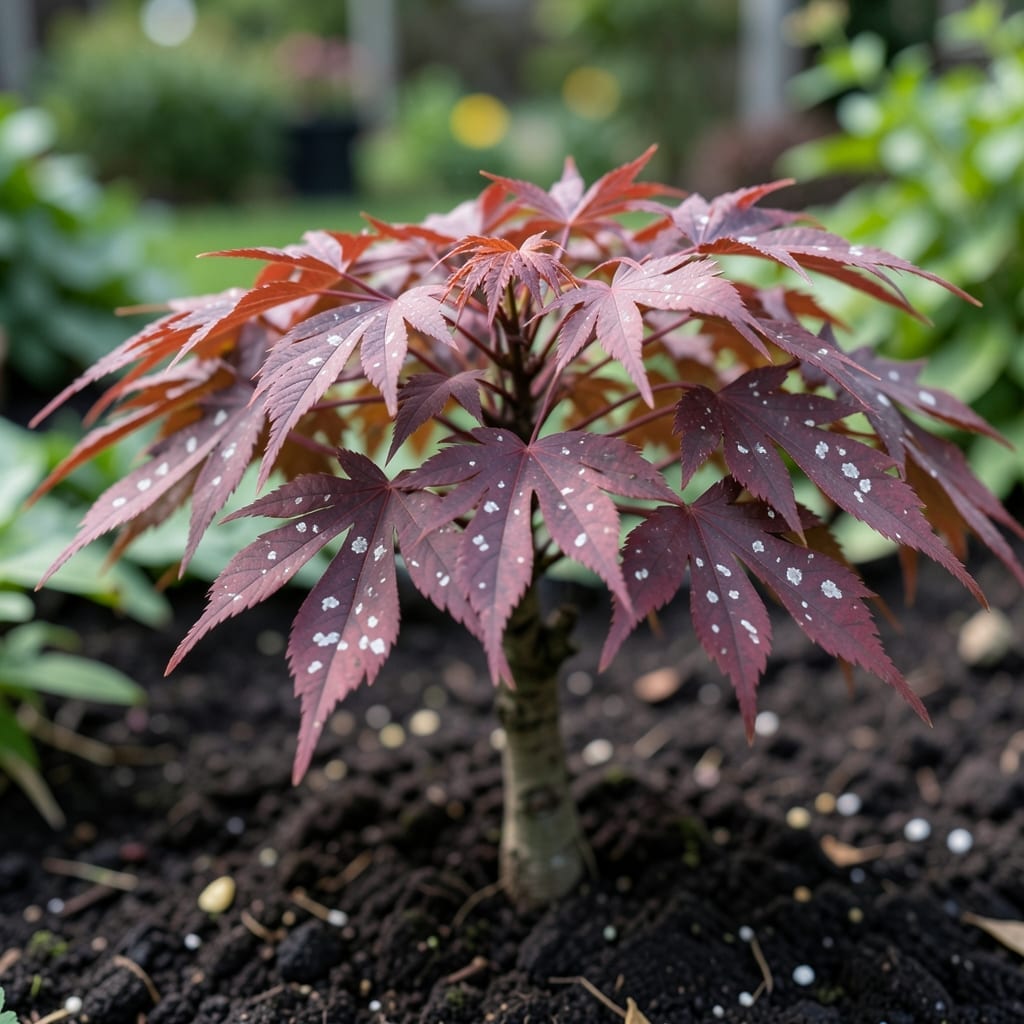
White spots on your Japanese maple leaves are a clear signal something’s off. I’ve seen this issue wipe out entire sections of prized trees when ignored.
These spots often start as small white specks before spreading, and they’re usually caused by fungal infections, pests, or environmental stress. The good news is that early intervention can reverse the damage.
With the right diagnosis and treatment, your maple can recover its vibrant foliage within 2-3 weeks. The key is identifying the root cause before it spreads to healthy leaves.
Works for all Japanese maple varieties, from laceleaf to upright. Here’s how to diagnose and treat it effectively.
White spots on Japanese maples often signal an underlying issue that disrupts the tree’s health or appearance. Below are the most common causes, explained with actionable insights.
Fungi like Phyllosticta or powdery mildew thrive in damp, poorly ventilated conditions. These pathogens create circular, white or tan spots on leaves, often with dark borders. Overhead watering and high humidity accelerate their spread. Improve airflow and avoid wetting foliage to reduce risk.
Scale insects and mealybugs feed on sap, leaving behind white, cottony residues or waxy deposits. These pests weaken the tree and invite secondary infections. Inspect leaf undersides and treat with horticultural oil or insecticidal soap at first signs.
Intense sunlight can bleach leaf tissue, creating irregular white or pale patches, especially on delicate cultivars like laceleaf maples. This often occurs after sudden exposure to full sun. Provide dappled shade and gradually acclimate the tree to brighter conditions.
Hard water or foliar sprays may leave chalky white residues from calcium or magnesium. While not harmful, these deposits can block stomata, reducing photosynthesis. Rinse leaves with distilled water and avoid spraying during peak heat.
Magnesium or iron deficiencies can cause interveinal chlorosis, where tissue between leaf veins turns pale or white. This is common in alkaline soils. Test soil pH and amend with sulfur or chelated iron to restore balance.
White spots on your Japanese maple can be frustrating, but the good news is most causes are treatable. Below are practical solutions for common issues, paired with prevention tips to keep your tree thriving.
If the spots are caused by powdery mildew or leaf spot fungi, apply a copper-based fungicide or neem oil spray at the first sign of trouble. Spray both sides of the leaves, and reapply every 7–10 days until the spots disappear. Prevention tip: 💡 Improve air circulation by pruning crowded branches and avoiding overhead watering.
For scale insects, mealybugs, or spider mites, wipe leaves with a soapy water solution (1 tsp mild dish soap per quart of water) or use insecticidal soap. For severe cases, apply horticultural oil in early morning or evening. Prevention tip: 🎯 Encourage natural predators like ladybugs and lacewings by planting companion flowers nearby.
If the spots are dry and crispy, your maple may be getting too much direct sunlight. Move potted trees to a shadier spot or use shade cloth during peak afternoon hours. For in-ground trees, mulch heavily to retain soil moisture. Prevention tip: 🌡️ Water deeply in the early morning to help the tree cope with heat stress.
Hard water or foliar sprays can leave chalky white residues. Gently rinse leaves with distilled or rainwater to remove buildup. If using tap water, let it sit out for 24 hours before watering to reduce mineral content. Prevention tip: ✨ Use a water softener or collect rainwater for consistent care.
Yellowing leaves with white spots may signal a magnesium or iron deficiency. Apply a balanced, slow-release fertilizer (10-10-10) or a specialized maple formula. For iron issues, use chelated iron supplements. Prevention tip: 📊 Test soil pH annually—Japanese maples prefer slightly acidic soil (pH 5.5–6.5).
Fungal spots are usually circular with dark edges, while pests leave cottony or waxy residues. Check leaf undersides for tiny insects or sticky residue.
Yes, fungal spores and pests can transfer between plants. Isolate affected maples and avoid overhead watering to prevent spreading.
Damaged leaves won’t heal, but new growth will be healthy. Remove severely spotted leaves and focus on improving overall tree health.
Apply fungicide or insecticide every 7-10 days during active growing season. Reduce frequency if no new spots appear.