
Beautiful Plants For Your Interior
Beautiful Plants For Your Interior
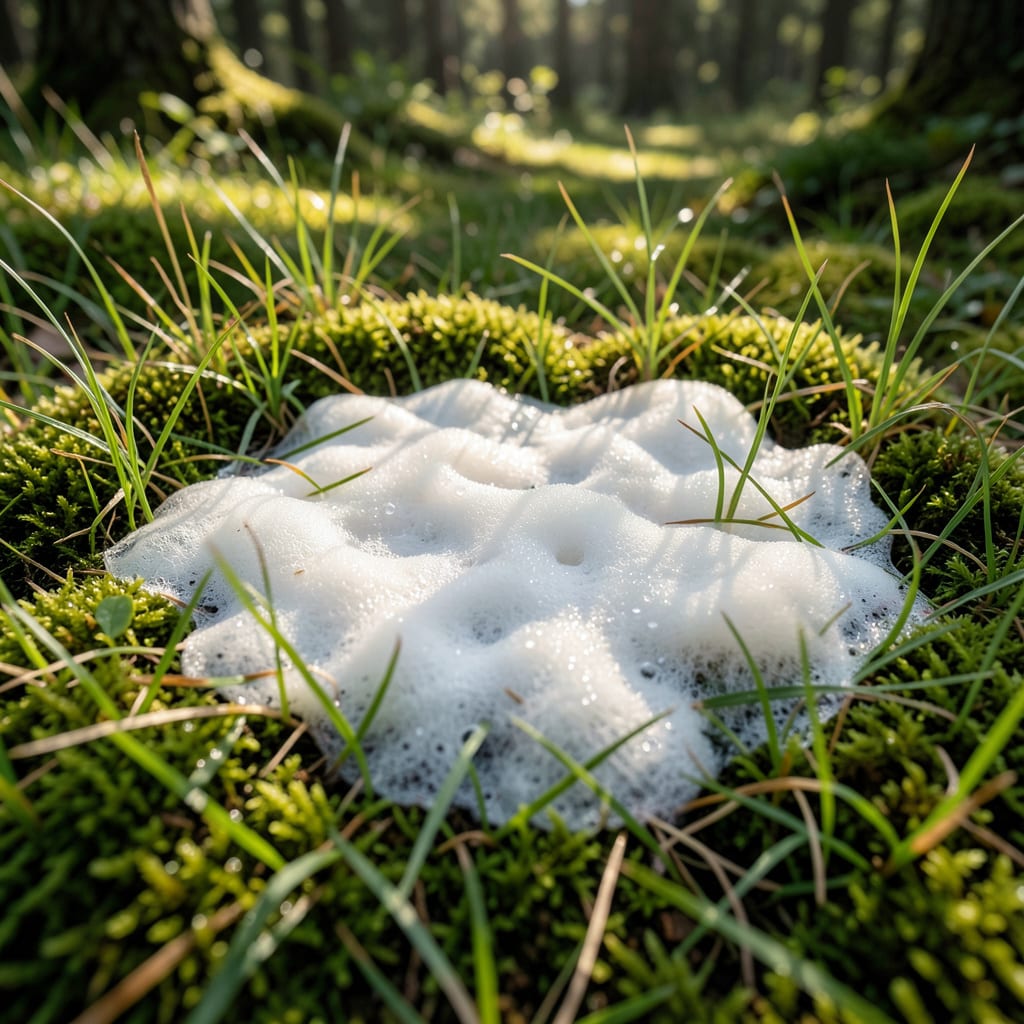
White slime mold on your lawn looks alarming, but it’s not as bad as it seems. I’ve dealt with this funky growth in my own yard, and the good news is it’s more of a nuisance than a real threat to your grass.
This stuff pops up when conditions are just right—usually after a stretch of wet weather and high humidity. It’s not a disease, just a temporary visitor feeding on organic matter in your soil.
You can rake it up when it’s dry, and it’ll disappear on its own once the weather changes. The key is improving drainage and airflow to keep it from returning.
With a few simple tweaks to your lawn care routine, you’ll keep your grass healthy and mold-free all season long.
White slime mold on grass, often caused by Fuligo septica or other myxomycetes, thrives under specific environmental conditions. Here’s why it appears and how to address the root causes.
Slime molds flourish in damp environments. Overwatering, poor drainage, or prolonged rainy weather create the perfect breeding ground. Grass that stays wet for 24+ hours is especially vulnerable. Action: Improve drainage and adjust irrigation schedules to allow the lawn to dry between waterings.
Decaying leaves, thatch, or grass clippings provide food for slime molds. These organisms feed on bacteria and organic matter, so a lawn littered with debris is a buffet. Action: Regularly rake and remove organic buildup to starve the mold.
Slime molds are most active in temperatures between 60–80°F (15–27°C) with high humidity. Spring and early summer are peak seasons. Action: Increase airflow by aerating compacted soil and pruning nearby shrubs to reduce humidity.
Compacted or nutrient-poor soil weakens grass, making it easier for slime mold to take hold. Overuse of synthetic fertilizers can also disrupt the natural microbial balance. Action: Test soil pH and amend with organic matter (e.g., compost) to boost grass resilience.
White slime mold on your lawn is unsightly but manageable. Here’s how to tackle it based on the root cause, plus tips to keep it from coming back.
Slime mold thrives in damp conditions. If your grass stays soggy, aerate the soil with a garden fork or core aerator to help water drain faster. For low-lying areas, consider installing a French drain or adding topsoil to level the ground. Prevention tip: Water your lawn early in the morning so the grass dries quickly in the sun. 💡 Avoid overwatering—1 to 1.5 inches per week is plenty for most lawns.
Slime mold feeds on decaying leaves, thatch, and wood chips. Rake up fallen leaves, twigs, and grass clippings regularly, especially in shady or damp spots. If thatch (a layer of dead grass and roots) is thicker than ½ inch, dethatch your lawn with a rake or dethatching machine. Prevention tip: Bag grass clippings if your lawn is prone to mold, or compost them far from the grass. ✨ A thin layer of mulch is fine, but keep it away from the lawn’s edge.
Slime mold loves dark, still environments. Trim overhanging tree branches to let more sunlight reach the grass, and prune nearby shrubs to improve airflow. If your lawn has persistent shady spots, consider replacing grass with shade-tolerant ground covers like clover or moss. Prevention tip: Use a fan or open up fencing temporarily to boost airflow in stagnant areas. 🎯 Aim for at least 4-6 hours of sunlight daily for a healthy lawn.
Slime mold can appear in soil that’s too acidic or compacted. Test your soil’s pH with a home kit (available at garden centers) and adjust as needed: add lime to raise pH or sulfur to lower it. For compacted soil, loosen it with a garden fork and mix in compost to improve structure. Prevention tip: Fertilize moderately—over-fertilizing can create conditions mold loves. 🌡️ Ideal lawn pH is between 6.0 and 7.0.
No, it’s not toxic or dangerous. While unsightly, this growth won’t harm people, pets, or your grass.
It usually fades within 1-2 weeks once dry conditions return. Raking when dry speeds up the process significantly.
Yes, mowing wet mold can spread spores. Wait until it’s dry and rake first, then mow as usual.
Fungicides aren’t effective since it’s not a fungal disease. Focus on improving drainage and removing organic debris instead.
