
Beautiful Plants For Your Interior
Beautiful Plants For Your Interior
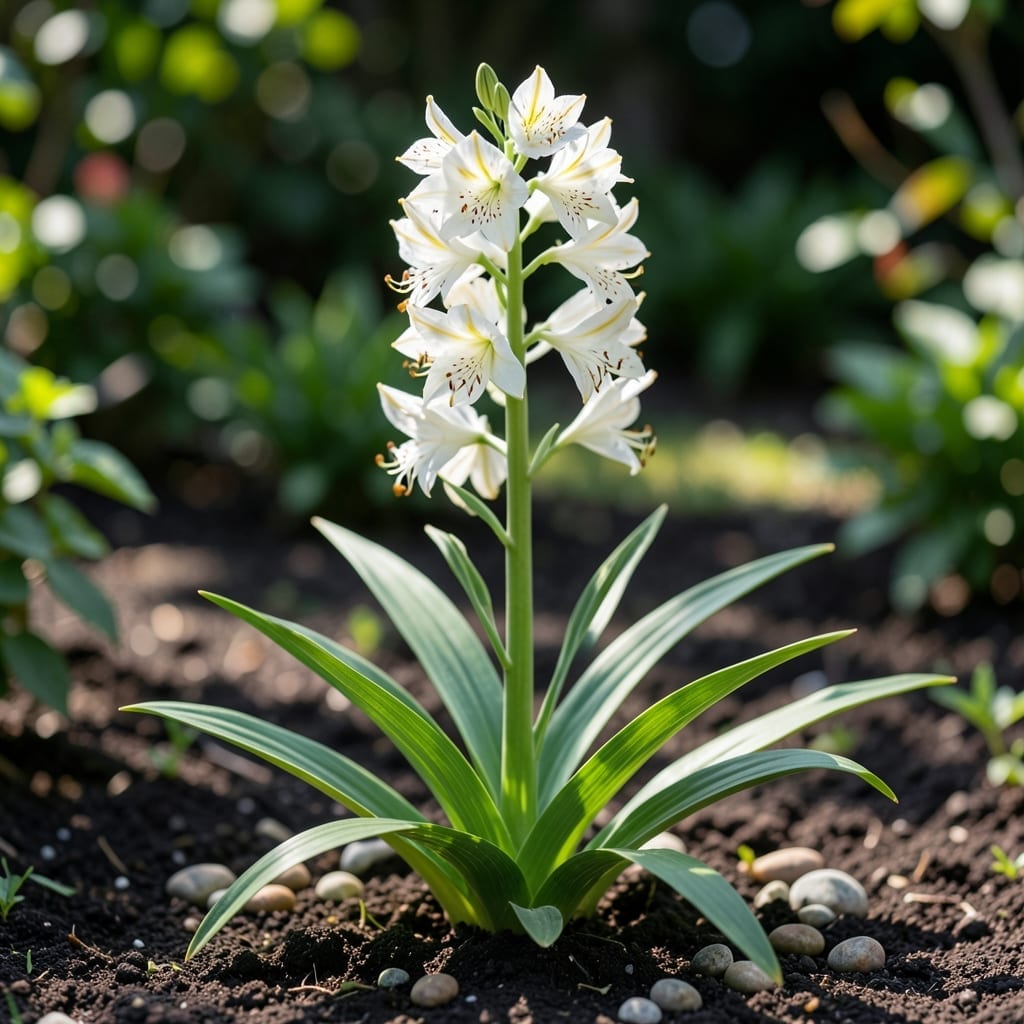
White Peruvian lilies transformed my shady garden corner into a disease-resistant oasis. Their elegant blooms thrive where other plants struggle—under trees, along north-facing walls, anywhere with filtered light.
I’ve grown these for years with minimal fuss. They tolerate poor soil better than most perennials, and their glossy foliage stays pristine even in humid summers. Proper spacing and airflow are the real secrets to keeping them healthy.
📚 In This Guide
Here’s my proven method for cultivating healthy, vibrant plants with minimal disease pressure.
Select a site with partial to full shade—white Peruvian lilies thrive in filtered light but will scorch in direct afternoon sun. I’ve found they perform best under tree canopies or on the north side of buildings where they get gentle morning light.
The soil must be well-draining with a pH of 6.0-7.0. Test your soil first; if it’s too alkaline, amend with sulfur, or if it’s too compacted, work in 2-3 inches of compost to improve structure. Avoid low-lying areas where water pools after rain.
Dig holes twice the width of the root ball and position plants so the crown sits 1 inch above soil level. This prevents rot. Space them 18-24 inches apart to allow for air circulation, which reduces fungal diseases like powdery mildew.
After planting, water deeply to settle the soil, then add a 2-inch layer of mulch around the base. I use shredded bark—it retains moisture while keeping the crown dry. Keep mulch 3 inches away from the stem to avoid stem rot.
Water when the top inch of soil feels dry, aiming for 1 inch of water per week, including rainfall. These plants dislike soggy roots, so I check moisture with my finger before irrigating. Drip irrigation works best to keep foliage dry.
During extreme heat, you may need to water every 2-3 days, but always test the soil first. Overwatering is the fastest way to kill them—yellowing leaves and mushy stems are clear signs of too much moisture.
Apply a balanced, water-soluble fertilizer (10-10-10) every 4-6 weeks during the growing season. I dilute it to half strength to avoid burning the roots. Stop fertilizing in late summer to let the plant harden off for winter.
Remove spent blooms promptly to encourage more flowers and prevent seed formation, which can weaken the plant. Use clean, sharp pruners to avoid tearing stems. If leaves turn brown or crispy, it’s often a sign of too much sun or inconsistent moisture.
Inspect plants weekly for early signs of trouble. Powdery mildew appears as white, powdery spots on leaves, while botrytis causes brown, mushy patches. If you spot issues, remove affected foliage immediately and treat with a copper-based fungicide.
Prevent problems by ensuring good air flow—thin crowded plants if needed. I also avoid overhead watering in the evening, as wet foliage overnight invites fungal growth. A little vigilance goes a long way in keeping these plants healthy.
Small adjustments make a surprising difference when cultivating these elegant plants.
Lighting Nuance: Confession: I lost several plants before realizing that “partial shade” means dappled light or morning sun only. Direct afternoon sun, even for a few hours, will scorch the delicate foliage. A north-facing wall or the shadow of a tall tree provides ideal conditions.
Soil Preparation Insight: The pH range of 6.0-7.0 is non-negotiable for these lilies. Test your soil before planting—if it’s below 6.0, lime can help raise it, while sulfur works for levels above 7.0. I learned the hard way that even slightly off pH leads to stunted growth and poor blooming.
Planting Depth Precision: That 1 inch of crown above soil level isn’t arbitrary. Planting too deep causes rot, while too shallow exposes roots. When in doubt, err on the shallower side—these plants prefer to sit slightly proud of the soil surface.
Watering Discipline: The “top inch dry” rule saves more plants than any other tip. I check by inserting my finger into the soil up to the first knuckle. During heat waves, I might water every 2 days, but always verify the soil first. Yellow leaves mean you’re overdoing it.
Water when the top inch of soil feels dry, typically every 7-10 days. Avoid overwatering, as soggy soil can lead to root rot. Ensure good drainage for healthy growth.
Yellow leaves often signal overwatering or poor drainage. Check the roots for rot and adjust your watering routine. Nutrient deficiencies or pests may also be the cause.
Plant in spring or early summer when frost is no longer a risk. This gives the plant time to establish roots before cooler weather arrives.
Consider Alstroemeria ‘Princess Lilies’ or Hemerocallis (daylilies), which are hardy and less prone to common fungal diseases.
Remove affected leaves, improve air circulation, and apply a fungicide or neem oil. Avoid overhead watering to prevent future outbreaks.