
Beautiful Plants For Your Interior
Beautiful Plants For Your Interior
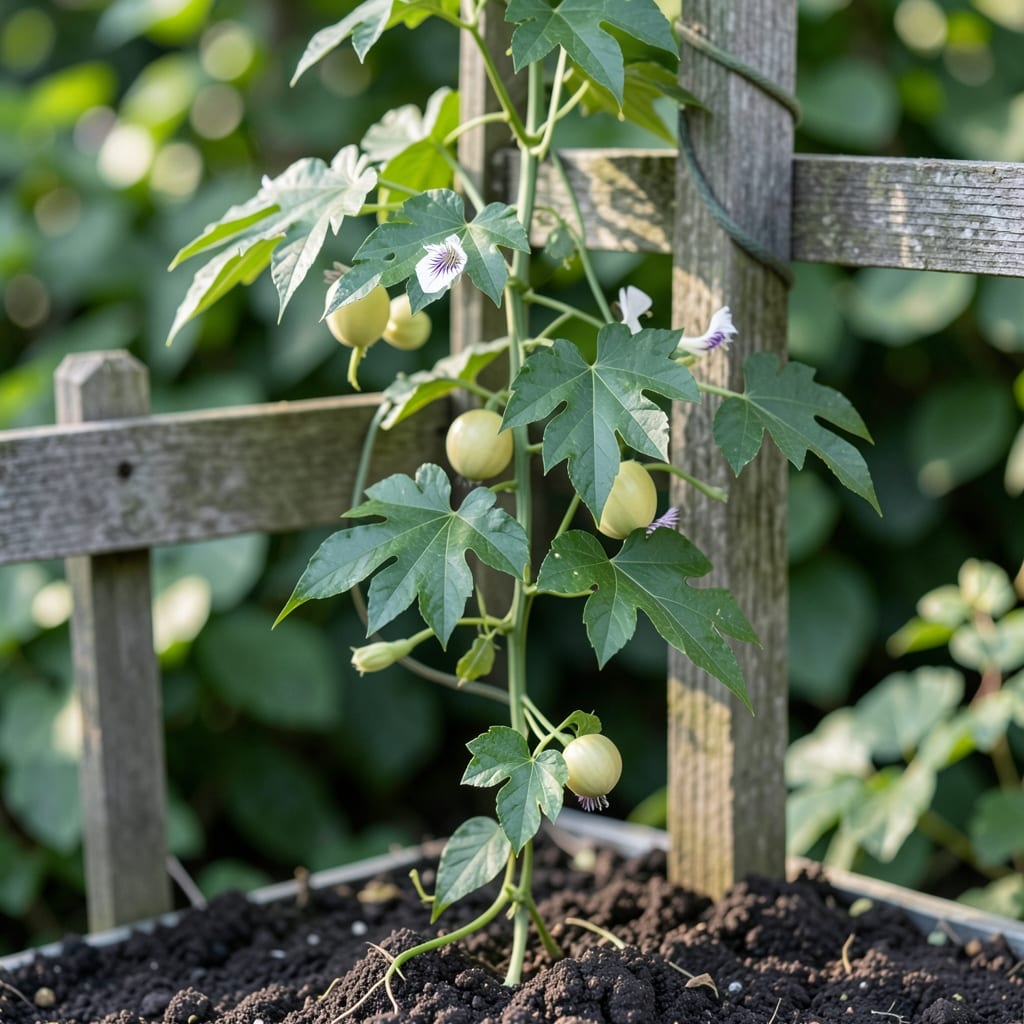
White passion fruit vines bring tropical flavor to any backyard. I’ve grown them in Zone 9 with surprising ease, even in containers on my patio.
They thrive with full sun, well-draining soil, and consistent moisture. The real reward comes in 12-18 months when those exotic blooms turn into sweet, fragrant fruit.
📚 In This Guide
Here’s the method I use to grow vigorous white passion fruit vines in my own backyard.
Choose a spot with full sun exposure for at least 6-8 hours daily, as white passion fruit thrives in bright, direct light. The vine needs protection from strong winds, so I position mine along a south-facing fence or trellis. Ensure the soil is well-draining with a pH between 6.0 and 7.0.
Test the drainage by digging a 1-foot hole and filling it with water. If it drains within 1-2 hours, you’re good. If not, amend the soil with compost or sand to improve drainage. This prevents root rot, which is a common issue with these vines.
Loosen the soil to a depth of 12-18 inches and mix in 2-3 inches of organic compost to enrich the soil with nutrients. White passion fruit prefers slightly sandy, loamy soil that retains moisture without becoming waterlogged.
Space the plants 10-12 feet apart if growing multiple vines, as they spread aggressively once established. I dig a hole twice as wide and deep as the root ball, then place the plant so the crown sits slightly above the soil line. This prevents water from pooling around the base.
White passion fruit is a fast-growing vine that requires a strong support system. I use a 6-foot tall trellis or a series of horizontal wires spaced 18 inches apart. The vine will climb rapidly, so ensure the structure can handle its weight, especially when laden with fruit.
Train the young shoots to climb the support by gently tying them with soft garden twine. Avoid tight ties, as they can damage the stems. The vine will eventually cling on its own, but early guidance ensures it grows in the right direction.
Water deeply 2-3 times per week during the first growing season, ensuring the soil stays consistently moist but not soggy. Once established, reduce watering to once a week, but increase frequency during dry spells or extreme heat.
Fertilize every 4-6 weeks with a balanced 10-10-10 fertilizer or a high-potassium option to encourage flowering and fruiting. I apply it at the base of the vine, keeping it 6 inches away from the stem to avoid burning the roots. Watch for yellowing leaves, a sign of overwatering or nutrient deficiency.
Prune the vine in early spring to remove dead or overgrown branches, which improves air circulation and reduces disease risk. I cut back any growth that looks weak or tangled, focusing on maintaining an open canopy.
Monitor for pests like aphids or spider mites, which are attracted to the tender new growth. A strong spray of water or insecticidal soap usually keeps them in check. Harvest fruit when the skin turns pale yellow or white and the pulp is sweet and aromatic.
Small adjustments make a big difference when growing these vigorous vines.
Sunlight Priority: The 6-8 hours of daily full sun mentioned in Step 1 isn’t just a suggestion—it’s essential for fruit production. I’ve found that morning sun is particularly valuable as it dries dew quickly, reducing fungal risks. Position your vines where they’ll get that eastern exposure if possible.
Drainage Test: Don’t skip the 1-foot hole drainage test from Step 1. If water sits longer than 2 hours, you’ll need to amend aggressively with compost or sand. Confession: I skipped this once and lost three plants to root rot within a month.
Support Strength: The 6-foot trellis recommendation in Step 3 is your minimum—these vines can grow 20 feet in a season. Use pressure-treated wood or metal; I’ve seen flimsy bamboo trellises collapse under the weight of mature vines laden with fruit.
Fertilizer Placement: That 6-inch buffer from the stem when fertilizing (Step 4) is crucial. I learned this the hard way after burning several young plants. The roots spread outward, not downward, so placement matters more than depth.
Look for yellowing leaves, brown spots, or wilting vines. Powdery mildew appears as white dust, while bacterial blight causes dark, water-soaked patches. Early detection helps prevent spread.
Act at the first sign of trouble—early morning or late evening is ideal for applying treatments. Avoid midday heat to prevent leaf burn and ensure better absorption.
Neem oil, baking soda sprays, or copper-based solutions work well. Remove infected parts and improve airflow. These methods are eco-friendly and safe for beneficial insects.
Lack of pollination, poor soil nutrients, or insufficient sunlight may be the cause. Hand-pollinate flowers, fertilize regularly, and ensure 6-8 hours of sunlight daily.
Practice crop rotation, avoid overwatering, and keep the garden clean. Use mulch to reduce soil-borne diseases and inspect plants regularly for early intervention.