
Beautiful Plants For Your Interior
Beautiful Plants For Your Interior
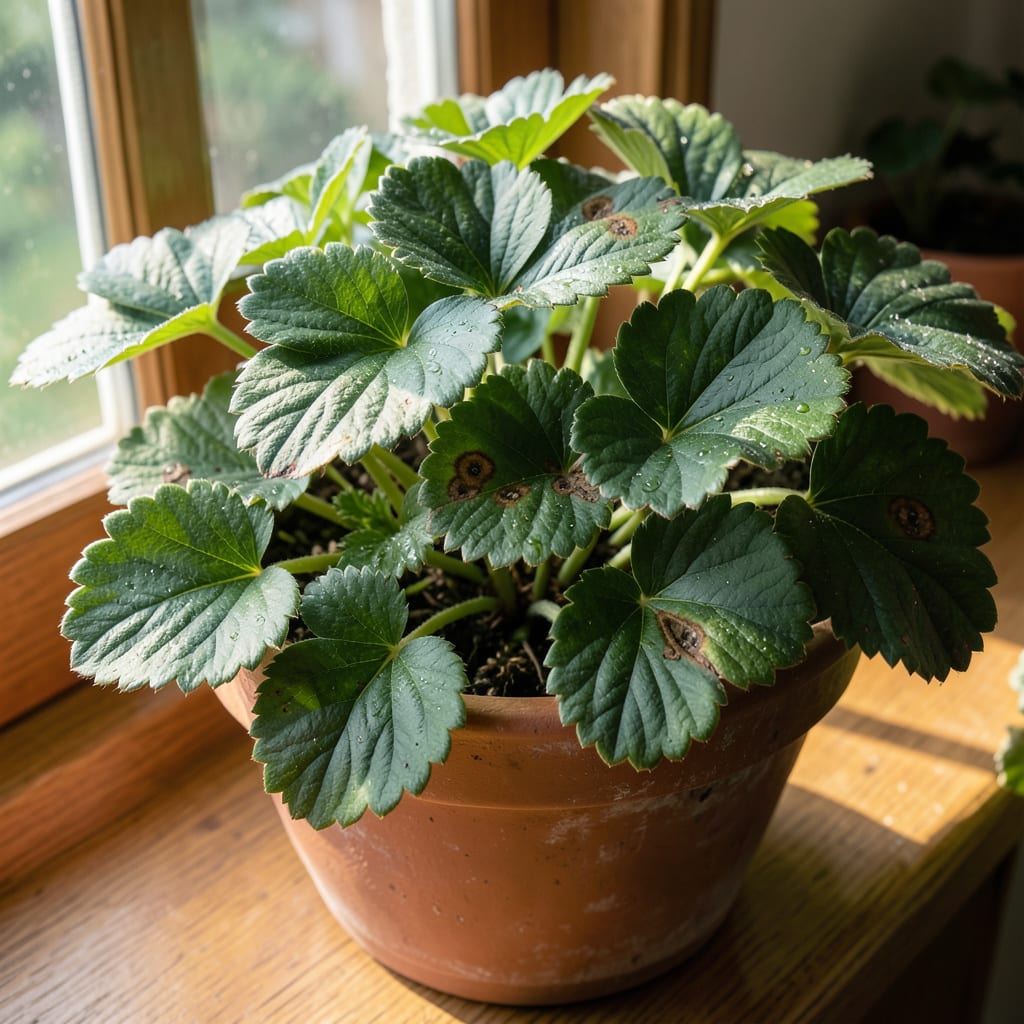
Those brown spots on your strawberry leaves aren’t just ugly—they’re a warning sign. I’ve lost entire patches to leaf spot disease before learning to catch it early.
Most cases come from fungal infections thriving in wet conditions, but pest damage and environmental stress can mimic the same symptoms. The key is examining the pattern: irregular edges suggest fungus, while tiny holes point to pests.
Organic solutions work surprisingly well. A baking soda spray stops fungal spread, while neem oil handles pests. Remove affected leaves immediately to prevent further damage.
Early action saves your harvest. Don’t wait until spots multiply—treat at the first sign for the best results.
Brown spots on strawberry leaves are usually a sign of trouble, and pinpointing the cause is the first step to fixing it. Below are the most common culprits, explained clearly so you can act fast.
Fungi like Mycosphaerella fragariae (leaf spot disease) thrive in wet, humid conditions. They produce spores that land on leaves, germinate, and create circular brown or purple spots with gray centers. Overhead watering and poor air circulation speed up their spread.
Xanthomonas fragariae causes angular, water-soaked brown spots that later dry and turn brittle. Bacteria enter through wounds or stomata, often spread by splashing water or contaminated tools. Warm, rainy weather accelerates infection.
Sap-sucking insects like spider mites and aphids pierce leaf cells, causing stippling or small brown spots. Their feeding weakens the plant and can introduce secondary pathogens. Check leaf undersides for webbing or tiny bugs.
Extreme heat, drought, or nutrient deficiencies (especially potassium or magnesium) can trigger leaf scorch. Brown spots appear at leaf margins first, often crispy to the touch. Poor soil drainage or excessive salt from fertilizers may also contribute.
Overuse of synthetic fungicides, herbicides, or even organic sprays (like neem oil in high concentrations) can cause phytotoxicity. Spots appear suddenly after application, often with a scorched look.
Brown spots on your strawberry plant leaves can often be tackled with simple, targeted fixes. Below are practical solutions for each common cause, along with prevention tips to keep your plants thriving.
Fix: Remove and destroy infected leaves immediately to prevent spread. Apply a copper-based fungicide or a homemade mix of 1 tsp baking soda + 1 quart water + a few drops of dish soap. Spray every 7–10 days until the issue clears.
Prevention: Improve air circulation by spacing plants 12–18 inches apart. Water at the base of the plant (avoid wetting leaves) and use drip irrigation to reduce moisture on foliage. 💡 Pro Tip: Mulch with straw to keep leaves dry.
Fix: Blast pests off with a strong stream of water. For stubborn infestations, use neem oil or insecticidal soap (apply in the evening to avoid harming bees). Introduce beneficial insects like ladybugs for natural control.
Prevention: Inspect plants weekly for early signs of pests. Encourage biodiversity in your garden to attract predator insects. ✨ Bonus: Plant companion herbs like basil or mint nearby to repel pests.
Fix: Test your soil (kits are available at garden centers). For potassium, add wood ash or a balanced organic fertilizer. For magnesium, use Epsom salt (1 tbsp per gallon of water) as a foliar spray.
Prevention: Enrich soil with compost before planting and top-dress with organic matter annually. Avoid over-fertilizing with nitrogen, which can worsen deficiencies. 🎯 Quick Check: Yellowing leaves with brown edges often signal potassium lack.
Fix: Adjust your watering schedule. Strawberries need 1–1.5 inches of water per week (more in heat waves). If soil is soggy, improve drainage by amending with sand or perlite. For dry soil, water deeply and mulch to retain moisture.
Prevention: Use a moisture meter to monitor soil conditions. Water in the morning to allow excess moisture to evaporate during the day. 🌡️ Note: Container-grown strawberries dry out faster—check them daily.
Fix: Provide afternoon shade with a shade cloth (30–50% coverage) during extreme heat. Trim back damaged leaves to reduce stress on the plant.
Prevention: Plant strawberries in a spot with 6–8 hours of morning sun. In hot climates, use drip irrigation to keep roots cool. ✨ Pro Move: Mulch with light-colored straw to reflect heat.
No, environmental stress like drought or sunburn can also create brown patches. Check leaf edges first—crispy brown tips often signal water or heat issues rather than infection.
Fungal spots usually have irregular edges with gray centers. Pest damage shows as tiny dots or stippling, often with webbing underneath. Use a magnifying glass to spot the difference.
Yes, as long as the fruits themselves show no signs of rot or mold. Wash thoroughly and remove any blemished berries to be safe.
Remove infected leaves immediately and avoid overhead watering. A baking soda spray can halt fungal growth within days. Act at the first sign for best results.
