
Beautiful Plants For Your Interior
Beautiful Plants For Your Interior
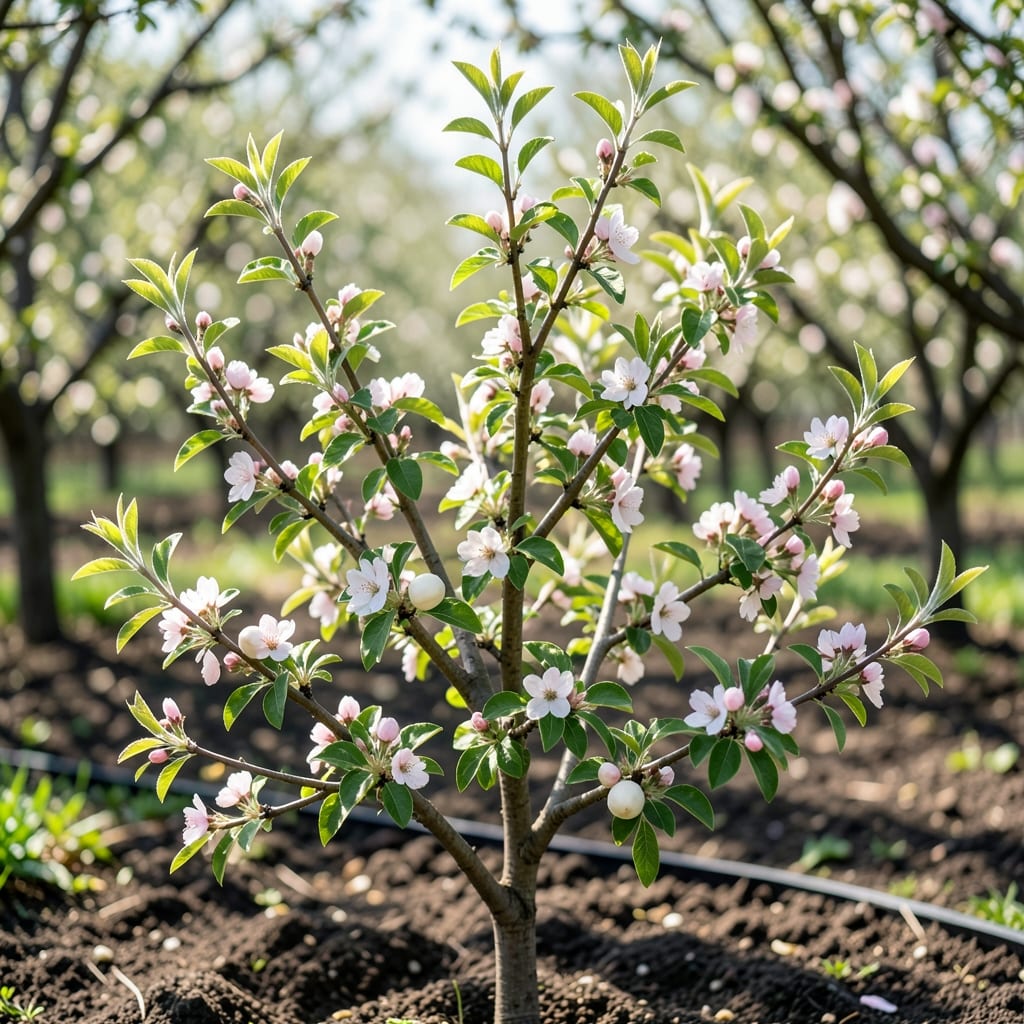
That first bite of a homegrown white nectarine ruined store-bought fruit for me forever. The sweetness is next-level, and the tree itself is a showstopper with its pale blossoms.
Growing one isn’t complicated once you know the basics: full sun, well-draining soil, and consistent watering. You’ll get abundant harvests within 3-4 years with proper care, and the flavor makes every effort worthwhile.
📚 In This Guide
Here’s my proven method for establishing healthy trees that produce sweet, abundant fruit year after year.
Choose a site with full sun exposure—at least 6-8 hours of direct sunlight daily is non-negotiable for fruit production. The location should also have well-draining soil to prevent root rot, which these trees are particularly susceptible to. I always test drainage by digging a 1-foot deep hole and filling it with water—if it hasn’t drained within 2 hours, you’ll need to amend the soil or pick a new spot.
Consider airflow too. A gentle breeze helps pollination and reduces fungal diseases, but avoid windy spots that could break branches when laden with fruit. A south-facing slope is ideal in cooler climates, as it warms up faster in spring and stays warmer longer in fall.
White nectarines thrive in slightly acidic soil with a pH between 6.0 and 6.5. Test your soil first—most garden centers sell inexpensive kits. If your pH is too high, amend with elemental sulfur; if too low, add lime. Work the amendment into the top 12 inches of soil at least 1 month before planting to give it time to take effect.
Incorporate plenty of organic matter like well-rotted compost or aged manure to improve both drainage and fertility. I mix in a 2-inch layer across the entire planting area. This isn’t just about nutrition—good soil structure helps young roots establish quickly and supports the tree’s long-term health.
Dig a hole that’s twice as wide as the root ball but no deeper. The tree should sit at the same depth it was in its container—you can see the soil line on the trunk. Planting too deep suffocates the roots and can lead to disease. If you’re planting a bare-root tree, mound soil in the center of the hole to spread the roots over, ensuring the graft union (that visible bump near the base) stays 2-3 inches above the soil line.
Backfill with native soil, not amendments, to encourage roots to grow outward into the surrounding earth. Water thoroughly as you fill to eliminate air pockets, then create a 3-4 inch high watering basin around the base to help direct moisture to the roots during the critical first year.
Newly planted trees need consistent moisture to establish their root systems. Water deeply 2-3 times per week for the first 6-8 weeks, giving the tree 10-15 gallons each time. The goal is to keep the top 6-8 inches of soil evenly moist but not waterlogged. I check by sticking my finger into the soil—if it feels dry at 2 inches deep, it’s time to water.
After establishment, reduce frequency to once every 7-10 days, but increase the amount to 20-25 gallons per watering. This encourages deep root growth, which makes the tree more drought-tolerant. Always water at the base, never from above, to prevent leaf diseases and fruit rot.
Prune your white nectarine tree in late winter or early spring before buds begin to swell. Start by removing any dead, diseased, or crossing branches. Then, open up the center of the tree to create a vase shape—this allows sunlight to penetrate and air to circulate, which is crucial for fruit development and disease prevention.
Thin out about 40% of the previous year’s growth to encourage larger, sweeter fruit. I also remove any vertical shoots (water sprouts) and branches growing inward. After pruning, apply a dormant oil spray to control overwintering pests. This early attention sets the stage for a productive growing season.
Small adjustments in your approach can make a world of difference in tree health and fruit production.
Sunlight Non-Negotiable: The 6-8 hours of daily sun in Step 1 isn’t just a suggestion—it’s essential for fruit set. Even shade from nearby structures for part of the day can reduce your harvest by half. I use a sun calculator app to track shadows across my yard before planting.
Drainage Test Wisdom: That 2-hour water drainage test in Step 1 is your best insurance against root rot. If water lingers longer, consider raised beds or amending with coarse sand. Confession: I skipped this once and lost a tree within a season.
Planting Depth Critical: In Step 3, keeping the graft union 2-3 inches above soil prevents suffocation. I mark the correct depth with a stick across the hole before backfilling to avoid the common mistake of planting too deep.
Watering Precision: The 2-3 times per week schedule in Step 4 during establishment isn’t flexible—new roots need that consistency. I set phone reminders until the routine becomes second nature.
Most white nectarine trees start producing fruit 2-4 years after planting, depending on the variety and growing conditions. Dwarf varieties may fruit sooner, while standard trees take a bit longer. Proper care, like pruning and fertilizing, can speed up the process!
Yes! Dwarf varieties thrive in large containers (15+ gallons) with well-draining soil. Ensure the pot has drainage holes, and place it in full sun. Container-grown trees need more frequent watering and fertilizing than in-ground ones.
Watch for pests like aphids, peach tree borers, and brown rot. Prevent issues with regular pruning, good airflow, and organic sprays (e.g., neem oil). Remove fallen leaves and fruit to reduce disease risk.
Plant bare-root trees in late winter or early spring (before bud break). Container-grown trees can be planted anytime during the growing season, but avoid extreme heat or frost for best results.