
Beautiful Plants For Your Interior
Beautiful Plants For Your Interior
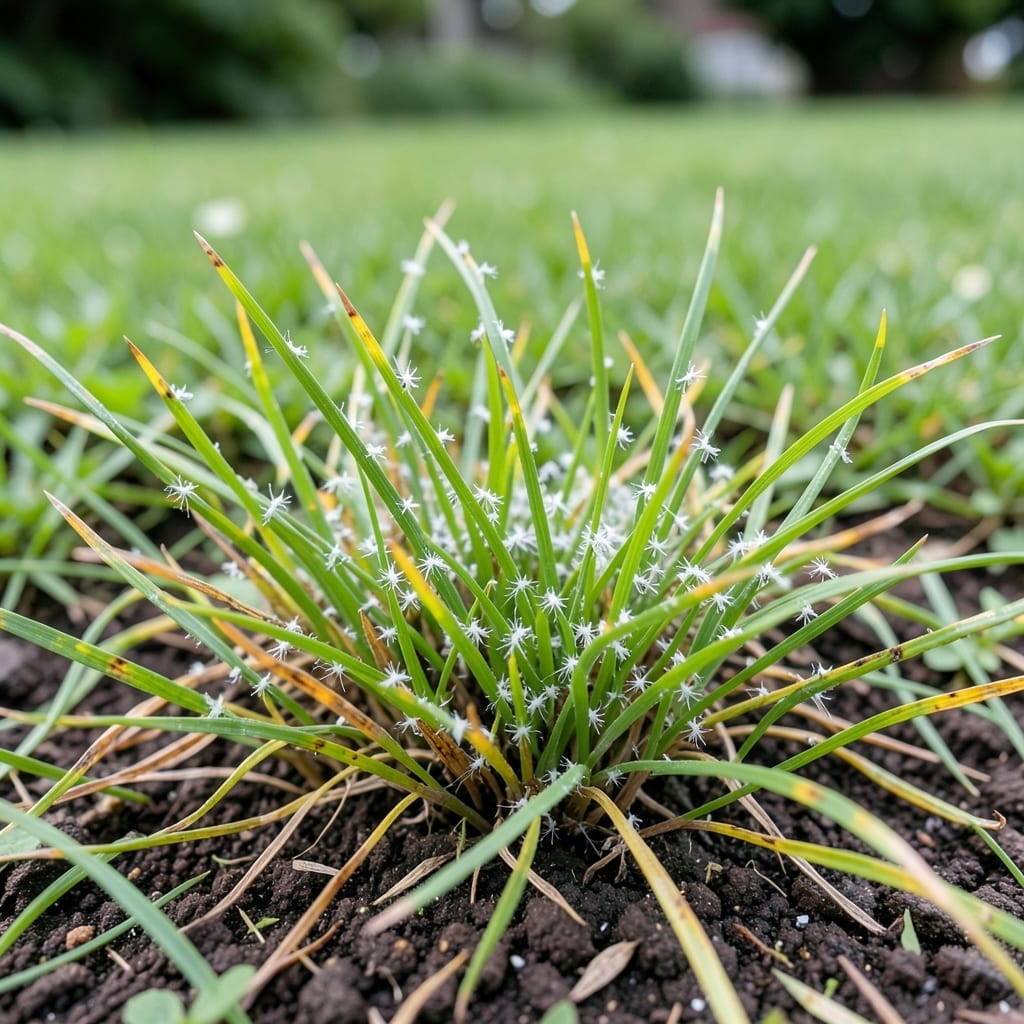
I noticed my lawn looking pale and sticky last summer. Turns out, white flies were sucking the life out of it, leaving behind honeydew that attracted more pests.
These tiny white insects cluster under grass blades, causing yellow patches and stunted growth. They multiply fast, so catching them early is key to saving your turf.
You’ll spot them by shaking the grass or checking the undersides of leaves. A simple soap spray works wonders for organic control, while systemic treatments handle severe cases.
Regular mowing and proper watering help prevent future outbreaks. Here’s how to reclaim your lawn.
Whiteflies are tiny, sap-sucking pests that can quickly turn a lush lawn into a stressed, yellowing mess. Understanding why they appear is the first step to stopping them. Below are the most common causes, explained with science-backed clarity.
Excess nitrogen in your soil promotes rapid, soft growth in grass—perfect for whiteflies. These pests thrive on tender new shoots, which are easier to pierce and feed on. Test your soil and balance fertilizers to avoid creating a whitefly buffet.
Both overwatering and drought stress weaken grass, making it more susceptible to infestations. Whiteflies love stressed plants because their natural defenses (like thick cell walls) are compromised. Water deeply but infrequently to encourage strong root systems.
Whiteflies reproduce rapidly in temperatures between 70–85°F (21–29°C) with high humidity. These conditions speed up their life cycle, leading to explosions in population. If you live in a warm climate, monitor your lawn closely during peak seasons.
Beneficial insects like ladybugs, lacewings, and parasitic wasps keep whitefly numbers in check. If your lawn lacks biodiversity (e.g., due to pesticide overuse), whiteflies face no resistance. Introduce predator-friendly plants or reduce chemical treatments to restore balance.
Whiteflies in your grass can be a persistent nuisance, but with the right approach, you can reclaim your lawn. Below are targeted solutions for common causes, paired with prevention tips to keep them from returning.
Whiteflies thrive in damp environments. If your grass is consistently soggy, cut back on watering. Aim for 1–1.5 inches per week, including rainfall, and water early in the morning so the surface dries by evening. Improve drainage by aerating compacted soil or amending it with organic matter like compost.
Prevention: Install a rain gauge to track moisture and avoid overwatering. 💡
Stressed or thin grass invites pests. Overseed bare spots with a drought-resistant grass variety suited to your climate. Apply a balanced fertilizer (e.g., 10-10-10) to boost growth, but avoid over-fertilizing, which can attract whiteflies. Mow regularly, keeping blades at 3–4 inches to shade the soil and discourage infestations.
Prevention: Test soil pH annually and adjust as needed—whiteflies prefer slightly alkaline conditions. ✨
Encourage natural enemies like ladybugs, lacewings, or parasitic wasps by planting pollinator-friendly flowers (e.g., marigolds, alyssum) near your lawn. Avoid broad-spectrum pesticides, which kill beneficial insects too. For severe infestations, release commercial ladybugs at dusk when they’re less likely to fly away.
Prevention: Maintain a diverse garden ecosystem to sustain predator populations year-round. 🎯
Mix 1–2 tablespoons of insecticidal soap or neem oil per gallon of water and spray directly on whiteflies, focusing on the undersides of grass blades. Reapply every 4–7 days or after rain. Test on a small area first to avoid damaging your grass.
Prevention: Rotate sprays to prevent resistance and combine with other methods for best results. 🌡️
They appear as tiny white, moth-like insects, often clustered on the undersides of grass blades. Shake the grass to spot them flying up in small clouds.
While they rarely kill grass outright, severe infestations weaken turf by sucking sap, causing yellow patches and stunted growth. Early treatment prevents long-term damage.
Use insecticidal soap every 4–7 days or after rain. Always test on a small area first to check for grass sensitivity.
Ladybugs and lacewings can significantly reduce populations, but may need help from sprays for heavy infestations. Encourage them with pollinator plants.