
Beautiful Plants For Your Interior
Beautiful Plants For Your Interior
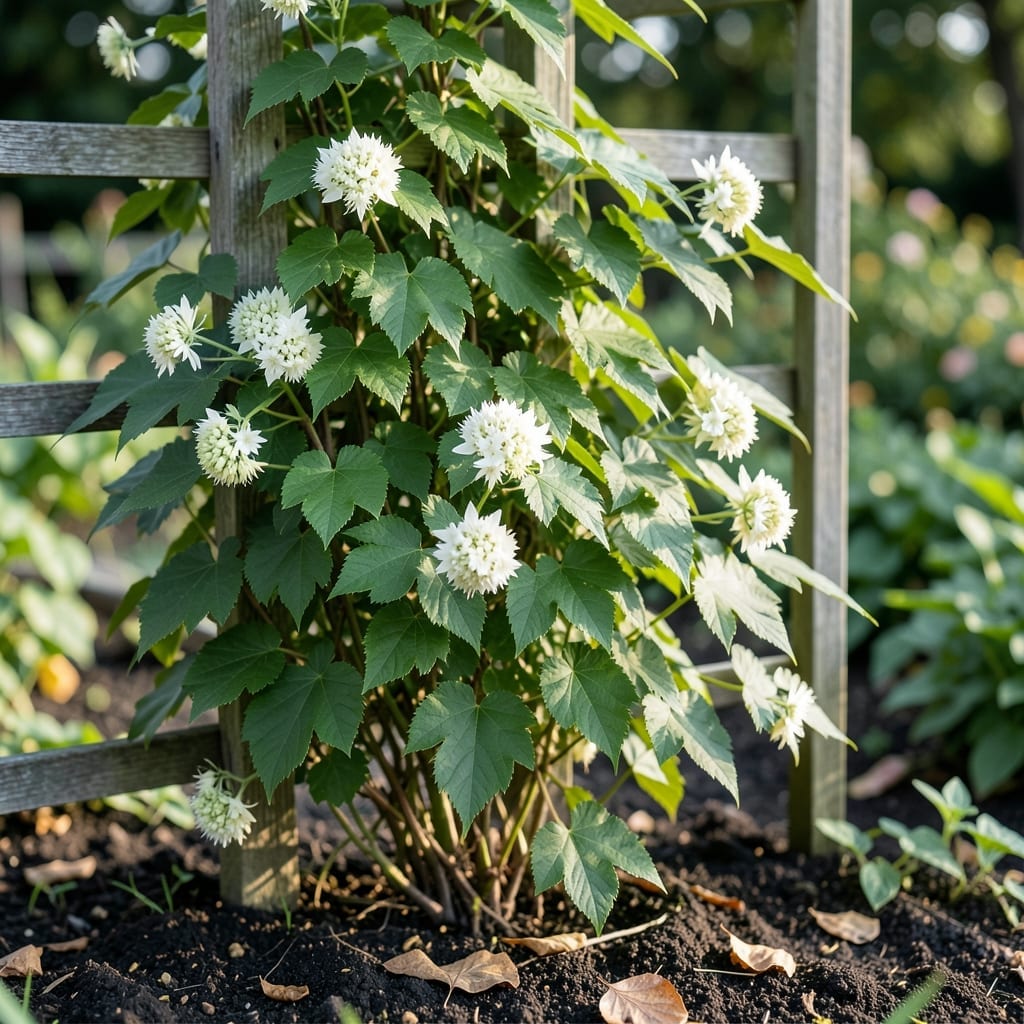
This vine transformed my boring fence into a living curtain of white blooms. White autumn clematis climbs 15-20 feet with fragrant flowers that appear when most plants are fading.
I’ve grown it for years with minimal effort—just give it sun, good drainage, and something to climb. It thrives in zones 4-9 and rewards you with late-season color when you need it most.
📚 In This Guide
Here’s the method I rely on to keep your vine thriving through every season.
Choose a spot with full sun to partial shade, where the soil drains well. This vine tolerates a variety of conditions but performs best in moist, fertile soil. Dig a hole twice as wide and deep as the root ball, then loosen the roots gently before placing it in the hole.
Backfill with soil, ensuring the crown (where roots meet stems) sits 2-3 inches below soil level to encourage new shoots. Water deeply after planting to settle the soil and eliminate air pockets around the roots.
Install a sturdy trellis, arbor, or fence at planting time. The vine climbs by twining its leaf stems around supports, so ensure the structure has small gaps (under 2 inches) for it to grip. Without proper support, it will sprawl on the ground, leading to poor air circulation and increased disease risk.
Train the young stems onto the support as they grow, gently tying them with soft twine if needed. Once established, the vine will attach itself, but early guidance prevents tangling and ensures even coverage.
Keep the soil consistently moist but not waterlogged, especially during the first growing season. Water deeply at the base once or twice weekly, depending on rainfall and soil drainage. A 2-3 inch layer of mulch around the base helps retain moisture and suppresses weeds.
Use organic mulch like shredded bark or compost, keeping it a few inches away from the stems to prevent rot. In hot climates, mulch also keeps the soil cooler, which this vine appreciates during summer heat.
Prune in late winter or early spring before new growth begins. Since this variety blooms on new wood, you can cut it back hard—removing up to one-third of the oldest stems at ground level—to encourage vigorous new growth and abundant flowers.
Remove any dead, damaged, or weak stems first, then thin out crowded areas to improve air circulation. After pruning, apply a balanced fertilizer to support the upcoming growth surge.
In colder climates, apply a 4-6 inch layer of mulch around the base in late fall to protect the roots from freeze-thaw cycles. If your vine is young or in an exposed location, consider wrapping the base with burlap for added insulation.
Even in milder regions, a light winter mulch helps conserve moisture and moderates soil temperature. Come spring, remove any protective wrapping and refresh the mulch layer as new growth emerges.
Here’s what I’ve learned from years of growing this vine successfully.
Planting Depth Insight: In Step 1, placing the crown 2-3 inches below soil level isn’t just a suggestion—it’s critical for encouraging new shoots from the base. I’ve seen vines struggle when planted too shallow, producing weak growth. This depth also helps protect the crown during harsh weather.
Support Structure Details: For Step 2, choose your trellis or arbor carefully. The under 2-inch gap requirement is non-negotiable because this vine twines its leaf stems, not tendrils, around supports. I made the mistake of using a structure with 3-inch gaps once, and the vine kept slipping off until I added smaller cross-pieces.
Mulching Technique: When applying the 2-3 inch layer of mulch in Step 3, resist the urge to pile it right against the stems. Keeping it a few inches away prevents rot while still conserving moisture. In hot climates, this gap also helps air circulate, which I’ve found reduces fungal issues significantly.
Pruning Timing: The late winter or early spring pruning window in Step 4 is ideal because it’s before new growth begins but after the worst winter cold. Since it blooms on new wood, you can be quite aggressive—removing up to that one-third of the oldest stems rejuvenates the plant beautifully. I always do this right before my last expected frost date.
Plant in early spring or fall when the soil is cool and workable. This gives roots time to establish before extreme heat or frost. Avoid planting in peak summer.
Prune aggressively in late winter to remove old growth and shape the vine. It spreads via seeds, so deadhead spent blooms to prevent unwanted seedlings.
Lack of sunlight (needs 6+ hours daily) or improper pruning may be the issue. Ensure it’s planted in well-draining soil and not over-fertilized with nitrogen.
Yes, it can be aggressive in some regions. Check local guidelines and consider native alternatives like Clematis virginiana if invasiveness is a concern.
Improve air circulation by spacing plants properly. Remove affected leaves and apply fungicide if needed. Water at the base to keep foliage dry.